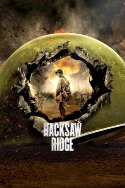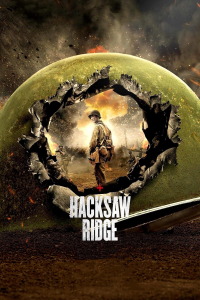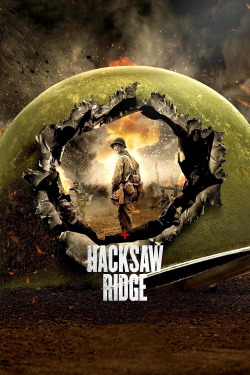
Review of Hacksaw Ridge (2016) by Breno H — 23 Jul 2017
After I saw "The Social Network" for the first time, I knew Andrew Garfield would become a terrific actor. I looked at him as a serious actor with the ability to impress his viewers with dramatic scenes of intensity and good heartiness. I felt he fell into the trap of the Marvel Universe with the Amazing Spider-man films as he did not bring anything special to the character of Peter Parker. Granted the mediocre scripts and overabundance of cartoon-ish CGI did not help Mr. Garfield but even so, his dominance was lacking. He returned to the dramatic role with 2014's underrated "99 Homes," where he plays a father trying to support his family during the recession. It was a great movie that brought Mr. Garfield back into playing field which would eventually lead to "Hacksaw Ridge," an incredible true story of a pacifist's legacy on the battlefield during World War II.
The movie follows the life of Desmond Doss (Andrew Garfield), a conscientious objector who served as an army medic during the Battle of Hacksaw Ridge on Okinawa, one of the bloodiest battles during World War II. Due to Doss' strong beliefs, he was the only soldier during the war who went into battle without a weapon. This is something that his fellow soldiers looked down on and tried to push (and sometimes punch) Doss out of the army. Though even with all the bruises, threats, and potential jail time, Doss stood by his religious and moral beliefs and was able to enter the war and stand by his brothers-in-arms.
The Battle of Hacksaw Ridge is one of the greatest set pieces - as well as one of the bloodiest - in the history of film. Director Mel Gibson, receiving a nomination for his outstanding work, delivers an intense, graphic interpretation of the bloodiest battle of World War II. Soldiers on both sides are torn to shreds by bullets, shrapnel, artillery, and suicide soldiers with grenades. The film reminds me of Mel Gibson's "We Were Soldiers," a war film set during in Vietnam where blood and gore were not wasted. While "We Were Soldiers" have too much excessive gore, "Hacksaw Ridge" does it to gives us an insight to what Doss was looking at throughout the battle.
While the battle is a fantastic, edge-of-your-seat masterpiece, the real tense moments of the film come in the aftermath. After the U.S. army retreats from the ridge after being overrun by the Japanese, Doss stays and continues to send down injured U.S. and enemy soldiers to the medics down below. Throughout the night, Doss rescued and securely lowered 75 soldiers without firing a weapon - the act of heroism that left his fellow soldiers (some of whom did not believe Doss should remain in the military) both shocked and amazed by his actions.
Obviously, a great film cannot be complete without a terrific lead and Andrew Garfield was fantastic. Receiving a nomination for his role, Mr. Garfield plays the hero perfectly. Doss is a kind but serious young man who puts himself before others while not resulting to violence. In one scene, Doss says he took the attack on Pearl Harbor personally. Yet throughout the film, he does not fire a weapon. A true hero who believed that he could win a war by sending wounded soldiers home instead of letting them die on the battlefield. This mindset is brought to life by Mr. Garfield's terrific performance. I hope he continues with his dramatic roles for the rest of his career and hopefully see him on that stage with an Oscar in his hand.
Say what you want about Mel Gibson's personal life but "Hacksaw Ridge" is the director at his best. Bloody, violent, and relentless, "Hacksaw Ridge" is one of the greatest war films ever made.
Grade: A.
This review of Hacksaw Ridge (2016) was written by Breno H on 23 Jul 2017.
Hacksaw Ridge has generally received very positive reviews.
Was this review helpful?