Review of Gone with the Wind (1939) by Kman5473 — 09 Feb 2018
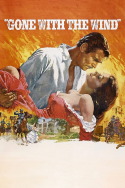
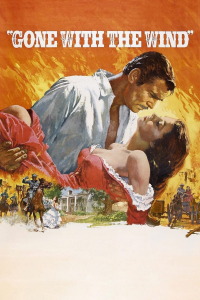
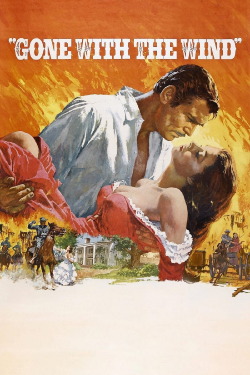
One of the best produced feature films ever made, the historical epic Gone With the Wind is sure to stand the test of time evermore for its technical achievements, historical significance, and most importantly its ability to give an unfiltered and unaltered look into the xenophobic and racist subconscious of American culture. No matter where you stand politically and ethically, there is no denying the continued cultural and artistic merit this film maintains. The writing, the directing, the cinematography, special effects, editing, acting, character development, and score all maintain a sense of timelessness even today--nearly 80 years after this film first premiered. The film itself is very empathetic to the Confederacy and Slave culture as a whole. By all means, the film seeks to glorify and romanticize one of the darkest chapters in American history. Yet, the more socially progressive our society becomes the more important the film remains to be seen. Not as a celebration of our racism, but as a monument to never forget how messed up our culture was and continues to be. If anything, the film becomes almost a camp satire of itself--completely unaware of just how unethical and messed up it really is. This does not diminish its cultural relevance at all, but instead solidifies its importance.
Slightly muted by the over-arching theme of slavery is the theme of a woman living in a society with a significant personality disorder that has gone diagnosed, and thus untreated. To many, including the society in which this story was written into as well as produced into a film, Scarlet's character can be immediately perceived as nothing more than, "the typical woman; the stereotypical woman." She is not supposed to immediately be easy to empathize with; she is, in fact, supposed to represent the audience member that immediately does not care about history--she is the self-centered, privileged white woman in the enslaved south with only frivolous pursuits of social dominance and courtship to occupy her immediate head space and concerns. This works on many levels to really expose her character, and in turn something about the human condition as a whole: Scarlet starts from the absolute top of societal privilege--she is young, beautiful, and so immensely wealthy that she literally has no concerns in the world other than the one she chooses to makeup in her own head. On top of this, you've got Rhett--for all intensive purposes, the primary actual love interest of Scarlet throughout the movie. The two, in fact, do belong together because have how morally corrupted the both of them are. They, if anything, represent the two most morally corrupted people in all Confederate society. Willing to compromise loyalties for the sake of getting ahead. Then, of course, you have Ashley Wilkes and his wife that represent to Rhett and Scarlet the, "idealistic, morally centered" role models. However, nowadays this is the point where the satire comes in for screenings 80+ years later. EVERYONE is a slave owner, EVERYONE is fighting for the continued rate to use and profit from slave labor, so EVERYONE is already damned. If anything, Gone With the Wind is now a great representation of how an entire culture of people can be morally corrupted from the get go, but when you're surrounded by **** the debate comes down to which person's **** smells less bad. When it comes to that final line exchange of dialogue between Rhett and Scarlet at the end--at one time, the audience was supposed to side solely with Rhett who is now completely fed up both with himself, Scarlet, and the relationship as a whole. No one is truly, "innocent" in this mess--but, now with the added awareness of people with personality disorders, if anyone, Scarlet remains the most sympathetic character. Rhett is just a piece of **** unable to get over himself for anyone but the reflection of himself he saw in his daughter. But still--no one can actually be empathized with anymore because everyone owns slaves! It's a hilarious conundrum of already being damned by birthright.
This review of Gone with the Wind (1939) was written by Kman5473 on 09 Feb 2018.
Gone with the Wind has generally received very positive reviews.
Was this review helpful?