Review of Giant (1956) by Paul Z — 21 Oct 2008
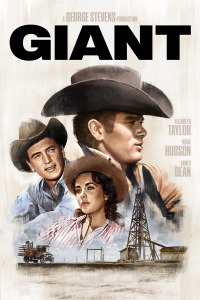
Giant is a racially, historically and visually important film that is emboldened by the time in which it was made, 1956, smack in the middle of a decade well known for its superficial luxuries that acted as the furthest limitations of the communal perception of the American masses, the movie industry remaining reticent to showcasing anything too close to reality. Around the same time when another fearless filmmaker named Otto Preminger was releasing The Man With the Golden Arm, the first film for Americans to experience about heroin addiction, George Stevens released this epic, an exposé on degeneration by traditional values, the blood and guts of the classism, racism, and chauvinism in perhaps the proudest of America's fifty states, the core of how a regional community of people had convinced themselves of the justification in their ways and values and imposed these persuasions on generations and outsiders.
Rock Hudson, achieving an astonishing embodiment of his role, plays the head of the rich Benedict ranching family of Texas, who as the film opens has gone north to Maryland to buy a stud horse. There he meets the socially prominent knockout who becomes his wife, played by the insatiably beautiful Liz Taylor. They travel to Texas to start their life together on his family ranch, Reata. Reata is a magnificent cinematic creation, as perhaps in a single shot it tells the entire story, sets the tone and atmosphere, and sketches the backstory for its characters: In its establishing shot, we see Reata, a giant, leviathan home that is nonetheless a mere blemish in the middle of the rest of its property, a shameful waste of acres upon acres upon acres of land, left dry, barren, depressing, and hardly used in its entirety. It's a perfect characterization of white privilege and ignorant, overindulged upper crust, and their severe detriment to nature, that which is sugar-coated by just how impressive something like Reata really is.
This 3-hour-and-21-minute-long Technicolor drama incites fury into its audience, making us resent the community it renders. Truly heartbreaking tragedies and infuriating conflicts occur, the said feelings drawn out to a tee by director George Stevens, a painstaking craftsman with a gifted eye for visual arrangement and a receptive, insightful strike home with actors. He captures things like Liz Taylor's horse following her with its crushingly tender and loving eyes after bucking off Rock Hudson's cruel, vindictive sister, a single shot that makes me weep. I have heard of a brilliant actor's director, but Stevens has transcended this term. He gets heartrending performances out of animals! When oil is discovered in a complicated situation involving James Dean's dense but ambitious young character, pushed around by Hudson, Hudson's blood boils. Tensions in the household later revolve around how the parents want to bring up their children.
Really at the core of its intentions, Giant is an epic about the racism against Mexican Americans in Texas, set against the backdrop of how the oil industry transformed the Texas ranchers into the super rich of their generation. When the film begins, Hudson and his sister, played by Mercedes McCambridge (who voiced many of the frightening sounds and freakish fragments coming from Linda Blair's possessed mouth in The Exorcist years later) are racist towards the Mexicans who work on their ranch, which shocks Liz Taylor, who is forbidden to assist the ill and suffering Mexican workers whose living conditions are miserable. By the end of this five o' clock shadow-producing work of genius, however, Hudson has grown just enough to see the wrongs of racism in terms of how it effects his proudly treasured family, which to his dismay has become more ethnically diverse than he ever imagined it would be, and in a surprisingly but earnestly small-scale climactic scene, he finally earns his wife's respect.
It's a portrait of the very kind of person perpetuating the disgrace, injustice and erroneous pride inherited by America. He is a wealthy Southern white man, racist, chauvinist, intractable, and obsessively defensive of his masculinity. However, it shows a slow, unpredictable transformation, or at least a shell of one, as life does nothing more than happen, and the natural process of progression and integration force him to change.
This review of Giant (1956) was written by Paul Z on 21 Oct 2008.
Giant has generally received positive reviews.
Was this review helpful?