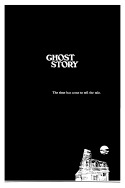
Review of Ghost Story (1981) by Mel V — 07 Jan 2005
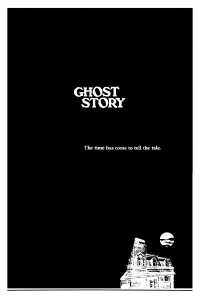
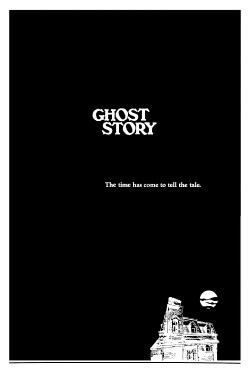
[i]Ghost Story[/i], directed by John Irvin ([i]The Dogs of War[/i], [i]Hamburger Hill[/i]) and written for the screen by ([i]Carrie[/i], [i]It[/i], [i]The Tommyknockers[/i]), is an underwritten, poorly directed, sub-par adaptation of Peter Straub?s superior supernatural horror/suspense novel of the same title. With the possible exception of its octogenarian cast (e.g., Fred Astaire, Melvyn Douglas, Douglas Fairbanks, Jr., and John Houseman), and an eerie performance by Alice Krige, as a woman both haunted and haunting, [i]Ghost Story[/i] is a mediocre film with minimal suspense and even fewer shocks or scares. In fact, [i]Ghost Story[/i] should be used as a counter-example in screenwriting courses on how not to adapt a successful genre novel for the screen. Irvin and Cohen eviscerated the novel into a pale imitation, stripping the adaptation of key secondary characters and subplots, and more importantly, altering the rationale and nature of the willfully destructive supernatural beings that haunt Peter Straub?s novel, beings that can interact fully with their surroundings, leading "false" lives among their intended victims.
In [i]Ghost Story[/i], four longtime friends, Ricky Hawthorne (Fred Astaire), Sears James (John Houseman), John Jaffrey (Melvyn Douglas), and Edward Wanderley (Douglas Fairbanks, Jr.) meet regularly to exchange ghost stories in the small town of Milburn, New York. The men, prosperous in their retirement or their semi-retirement (two are lawyers, one is a doctor, and the fourth the small town's mayor), and call themselves the Chowder Society. Each month, the men take turns in telling a story, sometimes fictional, sometimes not, by answering the question, ?What was the worst thing you?ve ever done?? with a ritualistic response, ?I won?t tell you that, but I will tell you the worst thing that?s ever happened to me.? The men?s monthly activity, however, has come with a cost: each man suffers through regular nightmares. Have their overactive imaginations, spurred by fear of their impending mortality, led to waking nightmares or hallucinations?
The audience knows better, of course (otherwise there?d be no ghost story). [i]Ghost Story[/i] opens with a prologue added for the film, the apparent suicide of Edward?s son, David Wanderley (Craig Wasson), whose encounter with the beautiful, enigmatic Alma Mobley (Alice Krige) leads to a startling discovery. The audience is unfortunately treated to a series of quick edits, one shock cut, and crude, obvious special effects (with gratuitous male nudity thrown into the mix). David, however, has a brother, Don (Craig Wasson, again), who also encountered (and fell in love with) Alma Mobley. Alma, of course, is more (and less) than she appears, the motives of her actions tied to a key event fifty years ago, one in which the four old men played a tragic part.
The action proper gets underway in Milburn, with David?s funeral (again, an element missing from the novel), Don?s return to the town (in the novel, Don is actually Edward?s nephew, a writer invited to Milburn to investigate the strange occurrences that have filled the four old men with existential dread). Don?s investigation leads him to the Chowder Society, but not before the death of one of the Chowder?s Society?s members on a wintry bridge, the appearance of a stranger, Gregory Bate (Miguel Fernandes) and his cross-dressing younger brother, Fenny Bate (Lance Holcomb). In the first of two extended flashbacks embedded in the narrative, Don ?buys? his way into the Chowder Society by recounting the events behind his relationship with Alma (they were lovers, engaged to be married), the end of their relationship as fascination turned to dread, and his brother?s ultimately tragic encounter with Alma. Alma, of course, reappears in Milburn. In the second of two flashbacks, the surviving members of the Chowder Society recount the story that sealed their lifelong friendship, a series of events fifty years in their past that centered around a beautiful woman new to Milburn, Eva Galli (Alice Krige, in a dual role). These poorly integrated flashbacks are lengthy, momentum halting diversions from the main narrative, taking more than a third of the entire running time.
The clumsy use of flashbacks, however, is only one of several, equally significant problems with [i]Ghost Story[/i]. The almost complete lack of suspense is due to Irvin?s apathetic approach to directing the key set pieces, ending each one with an all-too-predictable shock cut (makeup effects by longtime makeup artist, Dick Smith). Even legendary cinematographer Jack Cardiff ([i]The red Shoes[/i], [i]Black Narcissus[/i], [i]A Matter of Life and Death[/i], Powell/Pressberger productions made in England in the 1940s) adds little of distinction here, beyond the occasional chiaroscuro composition or light filters to color a scene (and evoke a specific mood). Each shock cut of a decomposing body is less impressive, and less effective, than the last (with the possible exception of the climactic last shot). Lawrence D. Cohen, in adapting Peter Straub?s sprawling 600-page novel, also went astray by choosing to eliminate key characters that made significant contributions to the plot. By eliminating those characters (and several subplots), Cohen focused too little on Alma?s return, and the consequences of her return, and far too much on the past, reflected in the overlong flashbacks (which should have been trimmed, or intercut with the main storyline). The novel's apocalyptic finale, as Milburn is sealed off from the outside world by a series of freakish snowstorms, is also missing from Cohen and Irving's film version. The performances, like the direction and writing, are sadly rote and undistinguished, but there is some obvious pleasure for fans of the octogenarian actors to see them in their last, or nearly last roles; here?s some sadness too, of course. For Melvyn Douglas, his role as Dr. John Jaffrey was his second-to-last role. For Fred Astaire, his role as the nominal lead character, Ricky Hawthorne, was, in fact, his last film role.
For everyone else, there?s little here to recommend here (per the ?R? rating, there are several gratuitous nude scenes, but little onscreen violence). Fans of the source novel, however, should give this adaptation a pass and simply re-read the novel. For better or for worse, in time a young, inexperienced producer researching properties to serve as the basis for a television mini-series will likely rediscover Peter Straub?s superb novel. Hopefully, next time, a better screenwriter and a more accomplished director will be selected to adapt [i]Ghost Story[/i] for the (small) screen.
This review of Ghost Story (1981) was written by Mel V on 07 Jan 2005.
Ghost Story has generally received mixed reviews.
Was this review helpful?