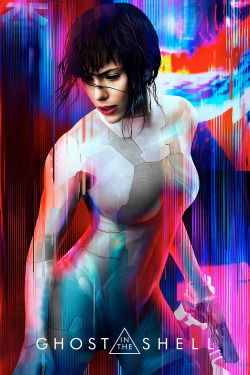
Review of Ghost in the Shell (2017) by Kevin F — 19 Jul 2017
Eyes Wide Open, Deaf Ears.
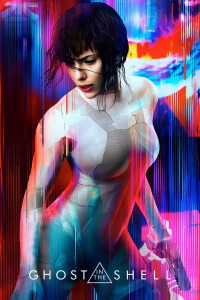
"Ghost in the Shell" has live-action adaptation thanks to American feature film production and distribution studio, Paramount Pictures. The fifth oldest surviving film studio in the world secured the rights of the cyberpunk Bible with the conviction of marking the beginning of its own franchise based on oriental manga's cosmos, getting one of the best-paid actresses in front. The feature film is the second work by director Rupert Sanders, and the third Johansson's performance as the heroine, after her brilliant job in "Lucy" and vigorous saga Marvel's "Avengers". Even so the Japanese anime had already been materialized by Palme d'Or winner Mamoru Oshii on a couple of occasions and the final result is indeed admirable in every way, the first flesh and blood appearance (metaphorically speaking) of Motoko Kusanagi comes, a cyborg-human hybrid leader of an elite group of covert operations baptized as "section 9", she's been conceived in order to help the helpless, and although she shows up clichés of the machine with own intelligence that saves humanity from other gloomy machines and sets a chain of ethical and philosophical aftermaths on her past and future, Sanders' work, too scrupulous to the panels of the reference source, feels like a progression of skills refreshing the unproductive creative day-to-day.
At a glance, everyone infers which aspect takes all the praises. Visual effects and production design carry out fully what they were proposing, arousing a thorough immersion in that futuristic city of a reality that is not too far away, which drinks respectfully from sci-fi masterpieces as Ridley Scott's "Blade Runner" and Steven Spielberg's "Minority Report". Transferring the majority of wonders of the cyberpunk book to live action was a total insanity, considering that they should overcome two major hindrances: The first one is the difficulty that surrounds manufacture of every notion of the world on which it is based, work elaborated with mastery by artistic directors, who spent whole months handcrafting many of the elements which are seen on screen, improving their meritorious work; and the second one is to free itself from American mania about maximizing even the dullest feature, losing the basic elements of the main culture. Although the artists uproot the most notorious traditions of the Eastern country, they convince of the tempestuous empowerment of science technologies in our daily life. If a cinematographic production was to be regarded a masterpiece by the glory of its pictures, Paramount's work would obtain the award without delay; it's a delectation to be carried away by the gorgeous skill of the filmmaker: the visual section. He showed his half-baked talent regularly in his directorial debut, now he ratifies his knowledge with sinister robotic geishas, a palette of nuanced colors which represent the scintillation of social darkness, choreographed fight moves and exciting action sequences that benefit from bullet time and magic sound distortions to achieve the desired impact, technological atmosphere isn't lost even in the most futile fragment, all here fits, this conformity has power and harmony, which demands to be contemplated on the big screen.
Considering that the story has the signatures of three dissonant writers, clearly, the plot, based on the comic of Masamune Shirow, was going to be saturated with a complex of different proposals and looks, with resolutions don't maintain a common term. Although screenwriters trio were very respectful by extracting the vital skeleton of the manga and the films, they palliate metaphysical burden, perhaps it wasn't decided lightly, since they had to exhibit in a flexible, congenial and seductive way a work, which is the mother for many of the existential audiovisual productions of today ("Ex Machina" "Her" or "Westworld"), in other words, what's adapt an original idea? Modernize or preserve the name of an ontological sci- fi classic? This implies that the film doesn't get the same emotional and reflective blow as 1995 movie, opting to present minimal background in the prologue, thoughtful instants where Johansson possibly broods what and/or who is and that's the whole ideological implanted environment, one more incident in which Hollywood replaces depth narrative by weapons and flagrant impressions pleasing the eye , but not to the mind, of course, a less emphatic case, but in the end, one more case, and I don't blame them, because the real guilty of that awful trend is audience, who believe that cinema is a temporary amusement, something "entertaining", something transitory.
As one of the contemporary films with more remuneration repercussions by controversial "whitewashing", we can determine (again) it's completely an unfounded affirmation. Perhaps the most vehement fans want the adaptation to be coupled with their demands and fantasies, but with the American film monster in the boss role, it was to be expected that a superstar plays the leading role. In the first instance, it was Margot Robbie, who was selected for the main character, though, finally and with very good luck, Scarlett Johansson agreed to play the war lady. An interesting performance made by "Under the Skin" actress as Major, she's who allows the audience to follow the story, but to a certain extent, since Johansson's charming performance as a cyborg-woman doesn't get to break the chains of well-known resolutions. The capable lady gets what any Asian actress of the moment could have gotten with the role, and even much more.
"Ghost in the Shell" is wounded by nostalgia for the original movie, despite this, rating it as an independent product, is a worthy adaptation; it rebuilds some things around here, replicates identically another thing over there, however, absurdly, is another feature film that Hollywood makes fairly well. This story of origins would be the direct access to the profitable and vigorous franchise that Scarlett Johansson has been looking for and that Marvel has been unwilling to give her, but based on the grossing of the last few days, sadly, it's concluded that the American audience, one of the most fervent film consumers, has literally turned its back on it, and that isn't a good thing. The sexual burden is quietly watered down and the inherently philosophical ghost is quietly destroyed, Rupert Sanders executes a blockbuster that feels a little hollow, which concentrates on presenting magnificently to Major, establishing an enemy with moral grudges and an open ending. However, performances and technical production are high; they manage to introduce in our minds a message: the need for more "Ghost in the Shell". It's unlikely, but if they reconstruct the narrative flaws present in this one in an uncertain sequel, it would clearly be a masterpiece, but at the moment, at least in the visual thing, is already taking enlarge steps to it.
This review of Ghost in the Shell (2017) was written by Kevin F on 19 Jul 2017.
Ghost in the Shell has generally received mixed reviews.
Was this review helpful?