Review of Gertrud (1964) by Tom A — 10 Mar 2009
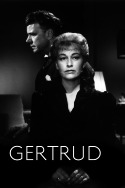
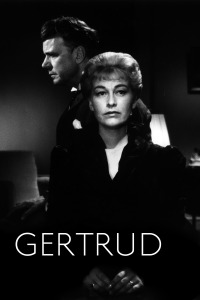
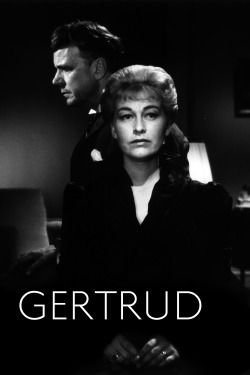
A failure when first released, Carl Theodore Dreyer's final film stars Nina Pens Rode, who is trapped in a loveless marriage but is in love with a younger musician. She leaves her husband for him, but soon learns her lover does not truly care for her when a past lover, now a celebrated poet, tells of that man's public derision of her.
While devasted, the poet asks her to come back to him. Plot may not sound like much, and Dreyer's theatrical style is initially offputting (characters never look at each other when they speak), but this is an arresting and emotional film.
A retired opera singer, Gertrud has spent much of her life in love, first with the poet, then in "something resembling love" with her husband, and finally with the playboy musician -- but all the while her men keep boxing her in.
They see her as distracting of work, as stricly a quiet and supportive wife, or as a temporary fling to be discarded -- her choice is neither of them, a life of solitude where she can be as she is. Through it all Gertrud retains her dignity, knowing that the power of her love is stronger than what these men can possibly offer -- this is one of the few films where the men are more emotionally demonstrative than the woman.
Cinematography, art direction and camerawork are as austere as all of Dreyer's work; and a fitting coda to the incredible career of one of cinema's more transcendent -- and feminist -- visionary filmmakers.
Based on the play by Hjalmar Soderberg.
This review of Gertrud (1964) was written by Tom A on 10 Mar 2009.
Gertrud has generally received positive reviews.
Was this review helpful?