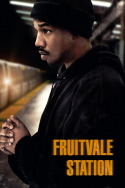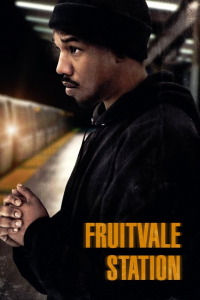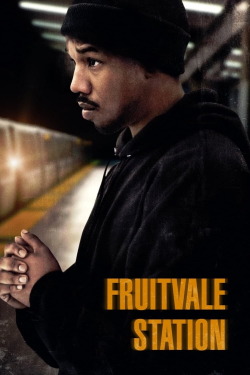
Review of Fruitvale Station (2013) by Shiira — 04 Sep 2014
This is the south: Mississippi in the late-sixties, an antiquated place where a peaceable black man can be arrested in an empty pool hall while waiting for the 4:05 train heading out to Memphis.Virgil Tibbs, a Philadelphia cop, in Norman Jewison's In the Heat of the Night, stares down a pointed gun held by the timorous, but racist deputy, who never bothers to check the visiting law officer for his I.
D. To Sparta's finest, all he sees is a black man, and a black man couldn't possibly have come by the wad of bills from his frisked wallet through honest means. It's obvious to Sam that the dark suspect had robbed and murdered Mr.
Colbert, a steel magnate, found dead on a badly paved road while on his nightly patrol of the small town's business district. This is Sparta: the Civil Rights Act of 1964 may be in effect, but only begrudgingly so, as when Mr.
Endicott, a cotton plantation owner, under suspicion of murder, tells Tibbs, "There was a time when I could have had you shot," after the black man returns his slap. Have things really changed? This is San Francisco.
Fifty years after LBJ signed the bill first proposed by President Kennedy, a black man can still be shot with little, if any, repercussions for the accused. Even now, to a man of the law, Virgil Tibbs is just another n*****.
Like Micah says, in Medicine for Melancholy, "Me, I'm a black man. That's how I see the world and that's how the world sees me." The filmmaker, however, unintentional or not, suggests that Micah, a San Francisco native, and his one-night stand, Angela, his adversarial addressee on race matters, go unharmed through the gentrified city, because they embrace the idea of integration, because they are de facto white; a transformation undergone, independent of their predisposed ethnography, through dating and cultural choices.
"Everything about being indie is tied to not being black," complains Micah. When the fleeting couple go clubbing, they dance to the whitest collegiate rock possible. No rhythm and blues; no jazz; no hip-hop.
But like it or not, despite Micah's protestations against his interpellation into a predominantly white lifestyle, he is, no doubt about it, the finished product of a culturally disparate upbringing, in which no visit to a black history museum can undo.
Theoretically, since Micah's apparel, and moreover, the mellow vibe he puts across suggests less gangsta than yuppie, this reconstructed black man increases his chances of being overlooked by the same BART officers at Fruitvale Station who order the proverbial "thug" off the train.
Angela wouldn't give Oscar Grant the time of day. He doesn't share her aesthetic sense and sophistication. Micah's exposure to the upper-middle class is undeniable, as evidenced by his evocation of the Mr.
Rogers' persona(in which he sings the theme song on her acoustic guitar), and not Mr. Robinson. the parodic character that Eddie Murphy performed on SNL. Angela doesn't want to live in that neighborhood, a ghetto.
Black Nationalism, the agitprop position that Micah is closer to undertaking with every passing day, ends up killing Radio Raheem in Do the Right Thing, when the boom box-toting teenager brings the Nation of Islam into Sal's Pizzeria, just before the cops arrive at the Bedford-Stuy eatery to instigate a riot with a disproportionate show of force.
But Oscar Grant, albeit a member of Palma Ceia, who trafficks in drugs; a felon with a hair-trigger temper, no longer wants to fight the power, no sooner would work forty hours a week at the supermarket if his former boss rehired him.
Whereas Radio Raheem was a segregationist, Oscar, like Micah, more than likely, could probably have lived in San Francisco without incident, as suggested by his easy way with white people, like the heart-to-heart talk he has with a web designer about the future, while they wait outside a store for their women to return from the bathroom.
Arguably, the filmmaker references Medicine for Melancholy, when Oscar, prior to his firework spectatorship with Sophina in SF, fills the mirror with nine-year-old Tatiana, using his finger as a toothbrush, just like Micah at the outset of the 2008 film, in which he and Angela employ the same method of oral hygiene.
During that fateful night Oscar Grant was shot, BART passengers acted as guerrilla filmmakers, shooting the incident with their phones. One of these immediate documentarians, Katie, had previously met Oscar at the fish counter and got to see the human side of this drug dealer, an ex-con.
The footage she shoots, the film within the film, becomes all the more tragic, because her narrative has the added benefit of a backstory that the other bystanders' films lack. To them, it's a real life Colors(the 1988 film that sees gangbangers as monsters); a drama, but through Katie's lens, from her camera eye, she doesn't see just an unarmed black man, but a human being with a Grandma Bonnie; a tragedy.
This review of Fruitvale Station (2013) was written by Shiira on 04 Sep 2014.
Fruitvale Station has generally received very positive reviews.
Was this review helpful?