Review of For a Few Dollars More (1965) by Tiberio S — 24 Mar 2018
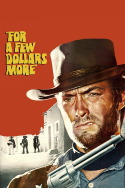
The Man With No Name rides into a new town (several this time), and the man guiding him has a little more money and scope, rewriting his imagination through a prolific dream filter, expanding upon ideas even if they are recycled... that man is Sergio Leone. The second of his six films, three of which are called the Dollars Trilogy, demonstrates an artist who might be a little OCD, expanding the depth of what is virtually A Fistful of Dollars remake, and even foreshadowing ideas that will appear in the followup. Leone is an artist who redrafts until new dimensions unfold, as is the result of this sequel.
The Man With No Name has a new name each film - Monco this time. Is it exactly the same person? Does he drift around changing his name? Or is each film slightly offset in an alternate universe? Perhaps when these characters see each other, it's like déjà vu from another dimension, but nobody can articulate it. Or is it just an idea, repurposed each film as a different character in a different world? Whatever the case, he's playing the same role as an inside man, except now he may or may not have a partner on the outside, depending on how things turn out between he and Colonel Mortimer.
The effect of recasting Gian Volonte as the key villain is multidimensional, speaking directly through the fourth wall to an audience familiar with his role from the first film. His entrance has a dramatic punch - he's back! But this is Indio, fare more vile and sadistic than the more businesslike Ramon Rojo. Perhaps failing in the first film deepened his commitment to the dark side in this other realm. His character has grown wearisome, as if he feels the exhaustion of his lifestyle from the first film - we see it when his head is tilted back in a daze, cigarette hanging. But there's a backstory too, one that culminates in a far more personal duel than Fistful.
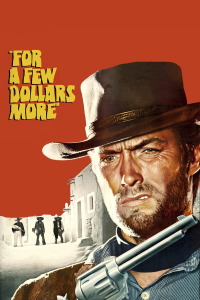
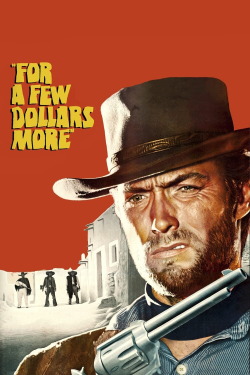
Irvin Kershner once said, "there's nothing more interesting than the landscape of the human face," except he didn't achieve that in his own films. But I wouldn't be surprised if in his mind's eye, he was seeing a Sergio Leone close-up [in CinemaScope], which has to be experienced to be understood. It frames somewhere between a standard and extreme close-up, nicking off a bit of the chin and the top of the head - the camera seems close to the actor, perhaps slightly wider than standard lens. Typically the light was high key, hard-lit, and filled, but not always. Part of his casting is to evoke the effect of this close-up and what it might say at any given moment. Clint Eastwood might've been cast for this reason alone, with his squinting eyes and signature thin cigar wrenched to the left of his mouth. But it's also used to remarkable effect on Gian Volonte, Mario Brega, Luigi Pistilli, Werner Herzog favorite Klaus Kinski, that guy with the bad teeth, and most especially, the man who was born for this shot, Lee Van Cleef (Col. Mortimer), who has one of the most cinematic Western faces I've ever seen.
Perhaps the unsung hero in all of this is production designer Carlo Simi. I shudder to think what a modern version of these films would look like. But back then, when a whole town had to be seen, it had to be built. Simi setup shop in the desert of Almería, Spain, and from there sprung up what appears to be a fully functional community. In a spaghetti western, the effect is more endearing than the cliché tumbleweed American counterparts, with it's dilapidated charm surviving the barren landscape. You can feel the blacksmith, bronco, buckaroo, bushwhackers without ever bringing them into focus. Add a stampede of horses kicking up dirt, backlit by the sun, and you can't possibly relate to the weight of this experience with a modern digital remake.
Leone is an experiential director. Not every moment is crammed with plot; often just the opposite, living with these almost comic book characters, stretching out every beat to it's last nerve. Monco checking into the hotel is all character; chasing out the pathetic patron, winning the adoring eyes of the desk lady, who's infatuated with his machismo. The Bank of El Paso robbery is built with painstaking suspense; the counting, the guard walking through layers of security like Max Smart, the sudden change when things don't go according to plan, the lingering full-shot on the safe. And perhaps the most prime example is the meeting of Monco and Mortimer - friend or foe? They'll shoot out each other's hats to find out if either is aiming for flesh. For all the violence, anarchy, unpredictability, and insecure living conditions, I love being in this world. There's a rustic charm through all the darkness, nature's monumental beauty shining over it in the end. Léone literally depicts this when we see our heroes riding away with the sun, a red-hued yellow sky wrapping these weathered faces in a not-too-polished halo.
Special shoutout moments: Groggy firing Indio's boot blade. Mortimer striking his match off of Kinski's hump. Mortimer's unrolling rifle saddlebag, and his choice of weapon and attachment, which Monco has never seen before. And of course, like the close-up, no words can describe the character of Ennio Morricone's score. It functions as more than music, playing a role at various points, such as Monco's falling hat, or a particular look from Mortimer.
This review of For a Few Dollars More (1965) was written by Tiberio S on 24 Mar 2018.
For a Few Dollars More has generally received very positive reviews.
Was this review helpful?