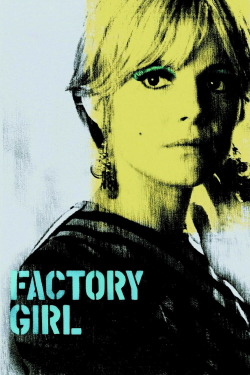
Review of Factory Girl (2006) by Erika L — 31 Jul 2008
The second track on Frank Zappa's 1979 album Sheik Yerbouti, a song entitled Flakes, features a half-sung, half-whined Bob Dylan impersonation from King Crimson, David Bowie and Talking Heads guitarist Adrian Belew. It is not an especially brilliant take on the trademark vocal style of the man formerly known as Robert Zimmerman but, seeing as it is a minor joke occupying barely a minute of song time, it succeeds on it's own rather modest terms. I mention this only because Belew's throwaway take on Bob Dylan is approximately one-hundred and sixty-seven times better than the one provided by Hayden Christensen in Factory Girl, in which the Star Wars and Jumper actor portrays 'the Musician', a harmonica-tooting, guitar-strumming folk superstar who bears a distinct resemblance to you know who. Christensen invests his character with all the charisma of a hedgehog who's been smeared across a roundabout, playing him as a whining, mumbling cartoon of a man. If Dylan had been such an unappealing, anaemic presence in reality then no-one would ever have given a flying haddock whether he went electric or not.
Thankfully, and as the title might suggest, Christensen's dismal turn is not the central thrust of George Hickenlooper's picture, his Dylan-lite figure merely cameoing in the story of real-life sixties It Girl and Andy Warhol associate, Edie Sedgwick, played here by Sienna Miller. Detailing the rise in media profile of socialite Sedgwick, as well as her dysfunctional friendship with Warhol (Guy Pearce) and her subsequent struggles with drug addiction, Factory Girl is clearly intended to provide us with a take on the dark side of the celebrity merry-go-round, tortured anguish in great clothes, set to a toe-tapping sixties soundtrack.
Sedgwick is given sympathetic treatment on the whole, portrayed as an intelligent young artist whose potential became obscured by her casting as beautiful rose in the decidedly thorny garden of the Factory. Yet this attempt to construct an empathetic connection between Sedgwick and the audience seems destined for failure, the suspicion surely being that most will find it difficult to care too greatly about the gradual decline of the former. While the actual story of Edie Sedgwick is a sad one (as is any of a young girl falling into hard drug use), in the context of the movie world she is not the most likable of figures, being seemingly fixated by celebrity, wealth and the vacuous scene frequented by the late-sixties hipsters of New York. Perhaps aware of this, Hickenlooper emphasises the supposed tenderness of the relationship between her and mentor Warhol, suggesting she was one of the few individuals ever to glimpse the man behind the aloof front. It is here the film is at it's strongest, with both central performances being of admirable quality. Pearce fills Warhol's wig in the committed manner one has come to expect from this actor, dispensing sardonic one-liners with wry relish and also hinting at the insecurities which prompted the construction of the Warhol public persona. For her part, Miller has been such a tabloid fixture over the last few years that it is easy to fall into the trap of thinking one has seen her in more films than the relative few she has actually made. She is actually very impressive here, investing Edie with a pronounced naivety which fluctuates between being endearing and brattish. Cynics will suggest the role of an attention-seeking clotheshorse can not have presented much of a test of the actress's ability, but one can only judge on the basis of what is on the screen and, on that criteria, her performance has to be deemed a success.
Unfortunately much of the picture struggles to match up to the standards set by the two leads. Aside from Christensen's irritating presence, the blatently low-budget provides a stumbling block, denying the film the chance to provide a really superior evocation of its' sixties setting. The script also runs out of steam as Sedgwick's problems result in an increasing deterioration in her behaviour, with the film-makers seemingly at a loss how to provide a suitable climax to proceedings. As a consequence events rather peter out, with the audience interest level dipping to near-subterranean depths as Hickenlooper cluelessly fumbles around for a conclusion.
Not disastrous then but, were it not for the performances of Pearce and Miller, Factory Girl would be in real peril of coming across like a slightly superior version of one of those made-for-TV movies shown on Channel Five every afternoon. Which, as recommendations go, is a bit of a limp one.
This review of Factory Girl (2006) was written by Erika L on 31 Jul 2008.
Factory Girl has generally received mixed reviews.
Was this review helpful?