Review of Faces (1968) by Blake P — 19 Jul 2015
The American Dream, from the '60s standpoint, was supposed to be a fantasy lived by Lucy and Ethel and the Bradys. But "Life", "Vanity Fair", and "Photoplay" tended to stretch the truth for the sake of eye catching imagery, all red lipstick, picnic baskets, Ford convertibles, and not much else. And while Debbie Reynolds and Dick Van Dyke told us how we should be looking, acting, feeling, the rest of the world shifted in its mindset, going from years of repression to a sudden soul searching state of disillusion, increasingly thrown off course by the sexual revolution, Vietnam, and Watergate. I'm sure some of the period's population was decently happy, but a time of changed attitudes and values can only lead sights and sounds into places unexplored before, unsatisfying at their revelatory peaks.
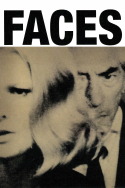
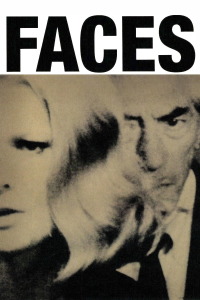
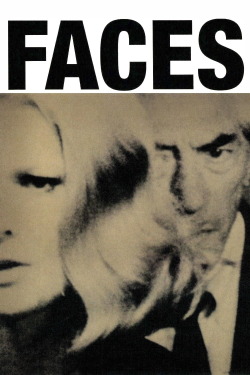
"Faces", a defining film in the astonishing breadth of the daring '60s, grabs The American Dream by its lapels and throws its ideals down a life-sized paper shredder, screaming in our faces that Doris Day and her well-off friends lied - adorable romantic misunderstandings and colorful lifestyles is not the America America knows. It's just a drippingly chintzy version of one. So with its grainy, 16 mm black-and-white, emotive actors, and innate directorial style (courtesy of auteur John Cassavetes), "Faces" is one of the few films that convincingly captures the hardships that lacerate everyday life, placing each and every one of its characters at the center of a crisis and watching, unsparingly, how they handle it.
Following the disintegration of a fourteen year marriage over the course of a series of drunken nights, "Faces" examines Richard (John Marley) and Maria Forst (Lynn Carlin) as they attempt to navigate their loose vulnerabilities after Richard suddenly announces he wants a divorce. The proclamation makes perfect sense to Richard - he's been cheating on his wife for years (the film opens with a boozy get-together that sees him and his friend entertaining a couple of prostitutes) - but the exclamation nearly tears Maria in half. Though she's been unhappy for far too long, there's an underlying feeling that she really does love her husband, and while the union has run its course, she doesn't want to be alone in this cold, cruel world.
They spend the next few nights figuring out what's going to become of them, growing increasingly depressed and increasingly retrospective, pensive. Richard busies himself attempting to shack up with a hooker without a heart of gold (Gena Rowlands), Maria fogging out her loneliness with her female friends, gradually meeting a hippie (Seymour Cassel) well-meaning but damaging in his unrelenting positivity. By the end of the film, the Forsts don't find themselves freed by their lack of marital responsibility - hanging over their heads is a question mark drenched in sleeping pills and liquor, wondering aloud if all there is to look forward to in life is misery.
"Faces" isn't the kind of film made for the pure sake of enjoyment - most, including me, would much prefer to sit through a two-hour Bond adventure than a depressing, jarringly styled character piece - but its blunt truthfulness and knee-jerking performances make it a tour-de-force rewarding in its mesmerizing account of a world more authentic in its bare bones anguish than most. Never has Cassavetes settled for anything less than honest, so it's only fitting that the majority of his films throw his characters into a pit of chaos and sees where they land. In his most famous moment, "A Woman Under the Influence", he details the dissolve of a housewife's psyche, taking her marriage down with her; in "Love Streams", he throws curveball after curveball at characters so lost in a maze of depression that it's only reasonable to predict that they'll never make their way out.
"Faces" is the movie that first bolded and underlined his filmmaking style, pulling out massive emotional punches and drawing out visceral performances from his stock of actors. His moviemaking instincts are difficult to love at first glance - but after getting to know the situation and the people, the shaky camera, documentary-like, heightens the gutsiness of it all, adding to the dire circumstances that befall nearly every scene. As we analyze the ensemble of "Faces", split in half most of the time, a sense of impending doom slithers along the cracks of the ceiling. None of these characters are stable, so much so that we can only ponder if they will die naturally or if they will inflict wounds upon themselves to make their demise come quicker. The women of the film, Rowlands and Carlin, cover their sorrows with fake laughs and unconvincing smiles; Rowlands makes the case that her character has always been that way - she plays a prostitute, therefore used to irrepressible gloom - but Carlin goes on a downward spiral resembling Monica Vitti's mental deterioration in "Red Desert", absorbing but absolutely gut wrenching. The men, Marley and Cassel, seem more in control: but it quickly becomes apparent that their masculinity can only cover so much ground before their weaknesses begin to present themselves loudly.
At 147 minutes, "Faces" is demanding to sit through, sometimes tedious. But, like in all of Cassavetes' movies, there is so much depth to the lack of glamour that we're left torn up, perhaps longer than we'd like to admit. Because the Technicolor world isn't real - the 16 mm one is, and it's hard to accept.
This review of Faces (1968) was written by Blake P on 19 Jul 2015.
Faces has generally received very positive reviews.
Was this review helpful?