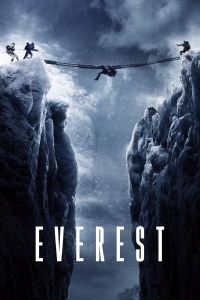
Review of Everest (2015) by Harry W — 22 Jun 2016
With a largely stellar cast and a big budget at its helm, Everest sounded like a solid mix of disaster, survival and solid acting.
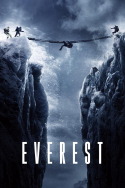
Everest has several makings of a standard disaster film: an ensemble cast, a shortage of character development and a reliance on spectacle. There isn't much of a story, but then again you wouldn't expect there to be in this case. Everest doesn't precisely provide audiences with actual characters, but it doesn't rely on melodramatic archetypes either. Everyone is present with the ambition of scaling the titular mountain for their own reasons. While there are moments that provide a greater perspective on why this is, it really doesn't matter for the story. Though this means that Everest doesn't get bogged down in obsessing over characters, it also means that all the dialogue they ramble on about is essentially rendered mute. There is a lot of this to put up with in Everest, and exteded periods of arbitrary conversation combined with countless shots of these characters just walking through snow and rock without much of a threatening feeling looming over them does not make for the most consistent entertainment. When the characters begin to face the harsh reality of mountaineering mortality, it comes without any human feeling and effectively solidifies that Everest is as cold and lifeless as the mountain itself.
Even though Everest has many of the less impressive features of a basic disaster fare, it lacks many of the better aspects. Attempting not to dramatize too many things or make Everest into any kind of overblown Hollywood spectacle, Baltasar Kormakur neglects the need to supplement it with actual character development which bypasses all the major facets of drama. As a result, the narrative delves aimlessly between each character as it pushes towards the peakrs of Mount Everest without sitting consistently on any one or giving viewers a reason to care. The entire experience is so atmospherically underdeveloped that when the characters finally reach the peak of the titular mountain, it caught me by surprise. My first thought wasn't about how the characters had made a remarkable achievement simply because I had no feeling of belief that it actually happened. In actuality, I just thought to myself "Oh, is that it?". There was about another hour of the film trying to be dramatic afterwards, but by that point the damage was done. Everest does not succeed as a triumph of the achievements of its real-life characters or a mourning of the suffering they experienced. It is simply a slideshow of scenery which suffers from any actual attempts at characters simply because it is not Baltasar Kormakur's foray.
Visually, Everest certainly offers an achievment in the art of cinematography. Rather than relying on set design and visual effects, Everest is actually shot on location. With genuine footage of Mount Everest at its helm, the realism in Everest is beautiful. The cinematography that captures it serves as a testament to the director's keen eye for imagery, and his ambition to do the film in a real-life setting as opposed to a green screen is definetely worthy of respect. Everest may not have the glory of conventional Hollywood disaster, but the real scenery is used provides a grand look at the large scale of Mount Everest with a series of techniques which assist in capturing the mood of each scene. The lack of depth and slow pace may blunt the emotional effectiveness of Everest, but the intended mood is graced by the cinematography and beautifully-composed musical score which ensures that there is at least stylish value in the experience. It wouldn't necesarrily be enough for me to reccomend the film, but for aficianadoes of mountain climbing or those with a deep fascination of nature there is a lot of imagery to behold.
Given that all the cast and crew had to work in the freezing climate of the actual Mount Everest, there is much respect to be given to all of them for the physically challenges of their efforts. With the cast you can actively see the struggles as they tremble in the climate and force themselves through the harsh reality to churn out performances. Even though characters are not a strong point of Everest, the efforts of the cast cannot be denied. It's difficult finding many that stand out since everyone is essentially forwarded the same series of challenges, but they all still push through. In terms of the actual physical struggle, the standouts of the cast would be Jason Clarke and Josh Brolin who get deeply involved with the mountain expedition and bury themselves underneath the cold ice in the process. It is clearly an intense physical challenge for them but they really pull through it, and the likable nature of their natural personas helps to give viewers someone to root for.
Jake Gyllenhaal adds a similar element to his performance. Being one of the most high-profile members of the cast it is a real shame that he receives such minimal relevance to the story, but he is a man of genuine handsome appeal and friendliness which gives him a likable edge. And as a fan of John Hawkes I was happy to see him amongst the cast.
Sam Worthington takes a step back onto the right track with Everest. While he has been fading off the grid in recent years, Everest provices him a chance to step back into the mainstream sphere without disregarding his Australian heritage. His role is small, but its genuine and likable which makes for a nice change of pace. But really, it is the supporting performance of Keira Knightley which stands out at the bottom of the mountain.
Everest gains credibility for being actually shot on the titular mountain with brilliant cinematography capturing the beauty of it all and a cast and crew who fought through the climate to create the film. Unfortunately, the film itself is a slow and overly-long animated postcard with meaningless dialogue, no character development and a lack of thrills.
This review of Everest (2015) was written by Harry W on 22 Jun 2016.
Everest has generally received positive reviews.
Was this review helpful?