Review of Everest (2015) by Omar K — 30 Nov 2015
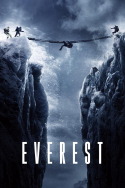
Who knew 29,029 ft would be the benchmark at which humanity would test their resolve, resilience and thirst for ambition. Mount Everest, part of the Himalayas, is the tallest peak and highest point on Planet Earth and coming in at 8,848 metres above sea level, it is a place where mankind cannot thrive or survive. With it reaching roughly the same heights as a Boeing 747, humans can hack just a few moments at the pinnacle of Earthâ??s crust, something which only professionals could do, until the idea of tourist climbing brought the whole world in on this challenge. Successful mountaineer Rob Hall quit climbing and proposed the idea of a high-altitude guiding business in which people would pay his group, The Adventure Consultants, a whooping $65,000 to escort them safely and reliably to the top of the world.
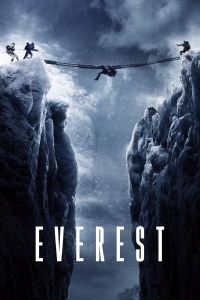
But such a feat will always be shrouded in death due to the sheer difficulty of it, and so 2015â??s Everest is a tale enveloped in tragedy where swathes of professional and tourist climbers were stranded high up the mountain during a torrential blizzard, an event now known as the 1996 Mount Everest disaster. Rob Hall, a married man with a daughter on the way, leaves his pregnant wife behind and prepares a group for an attempt to reach the summit of Everest. As Rob and his group merge with climbing expert Scott Fischerâ??s Mountain Madness at base camp, they are put through their paces with each ascent to different camps. But as their designated date to climb the mountain erupts into a sensational blizzard at night, once the morning comes, the skies are all clear and the climbers are allowed to summit. As Rob and a handful of climbers are delayed, they summit the mountain late, and before they know it, the blizzard returns and wrecks havoc on those stranded.
Everest begins steadily and has plenty of characters to introduce that it almost feels like a documentary of how to climb the mountain. It is the way to do it though because the tragedy strikes late on so to lure us in it needs to detail the full climb in order to maximise its impact. Everest goes through each stage of the climbersâ?? ascent so meticulously it can be used as a guide to understand many parts of the mountain. Their walk to base camp is a mountain in itself, and then the ascent to each campsite is equally ferocious as the climb to the top itself. The mountain proposes dangerous, yet different forms of obstacles to combat and overcome, and Everest excellently emphasises this problem facing climbers, making the whole 8,848 metres of Everest a challenge for any human. And to compound this, there are no bad characters, or any sign of a bad vibe, making the atmosphere around Everest pretty dull and in need of a spark of some sort. And that comes in the form of the mountain, the villain of the film, which takes almost an hour and a half to show its evil side, restricting Everest from any sort of suspense even if it has natural perils.
The second half of Everest though satisfies our desire to see the power the mountain possesses in which it embraces the tragic qualities of its story. Nothing too out of the ordinary occurs when tragedy hits as a simple gust of wind and freezing temperatures tear apart the characters. The air is simply too treacherous for a human to survive up there, and that uncomplicatedness is fatally stressed, but we cannot shiver along with them in the warmth of our homes or cinemas, even if Jason Clarke, Jake Gyllenhaal and Josh Brolin try their best to shudder with numbness. But, as the characters ascend the mountain and essentially give us a tour of it, the places they visit on the way up become zones for the camera to express the nuisances different altitudes create, and also quite simply as a marker for the audience to comprehend the size of the mountain and the task these characters face for survival. And that is Everestâ??s most successful feature because without this sense of encompassment, the gravitas of the situation would never have come to fruition and we would simply be watching Vertical Limitâ??s illusion of distress all over again.
The idea that no one can hear you at the top of the mountain, come to your aid, or save you from death, is truly palpable even if its documentary-like development and truly nice characters prevent us from feasting into this tragedy. But, when times get tough and the characters stare death in the eyes, the respective wives of Clarke and Brolin, Keira Knightley and Robin Wright, give the film that emotional stranglehold it hopes to seek over us, but with the women half-way across the world on the end of a telephone, their impact is somewhat short-lived. Long live however Salvatore Totinoâ??s vertiginous cinematography that brings Everest, as an experience, to rip-roaring life. Every sheet of ice, fraction of snow, drop of icicle, blitz of wind, battering of avalanche, steep and rugged mountain sides and monumental views from the summit altogether allow Everest to come alive and rivet every fabric of our imagination of what it could be like to conquer the worldâ??s tallest peak and admire the beauty of such an accomplishment.
The Verdict:
Being based on a true story limits the suspenseful terror of its natural disaster, but as an experience, Everest is well worth the tour.
â??â??â??â??â??â??â??â??â??â?? 6/10.
This review of Everest (2015) was written by Omar K on 30 Nov 2015.
Everest has generally received positive reviews.
Was this review helpful?