Review of Donnie Brasco (1997) by Steven C — 04 Nov 2012
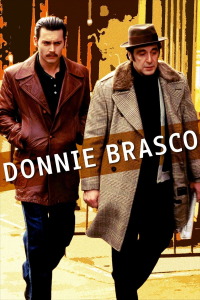
Donnie Brasco succeeds because of how many layers of complexity it stacks on top of itself. Johnny Depp's character, Joe Pistone, works for the F.B.I. but he increasingly allows horrible things to happen in order to take down the mafia he is pretending to work for. Al Pacino's character, Lefty Ruggiero, works for the mafia but he is not respected by the organization he continues to bow to. Both of them have hostile family situations, but both of them care for their families.
Donnie Brasco and The Departed have a similar feeling to them in that both of them deal with isolationism and identity. Pistone doesn't respect the F.B.I. officials that are telling him to be in dangerous situations. Pistone's wife and kids feel like he isn't there for them. Pistone feels some closesness to Lefty but is increasingly frustrated by Lefty's inability to stand up to his bosses. Pistone also finds himself lost in the brutal violence that he has no choice but to allow.
Al Pacino is great. So is Johnny Depp. Neither of their characters is entirely good or evil, which is what I have come to expect from good crime dramas. This one doesn't end in complete tragedy but it doesn't end very well either. It has an open ended awfulness that it exudes. Pistone doesn't want Lefty to go to prison because he feels a closeness to him and a pity of sorts. In the end, Pistone is once again isolated. The F.B.I. uses him and then gives him a meaningless medal. His family situation is uncertain. And Lefty, a sort of father figure at times, is sent to prison. Pistone worked for the good guys, but bad things happened on his watch. Guilt and loneliness are his reward.
This review of Donnie Brasco (1997) was written by Steven C on 04 Nov 2012.
Donnie Brasco has generally received positive reviews.
Was this review helpful?





















![[REC]² (2009)](https://cdn2.cinafilm.com/static/img/movie/aa4ee673/200/1-rec-2-2009.jpg)