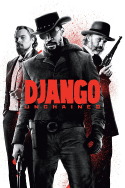
Review of Django Unchained (2012) by Benjamin Y — 02 Sep 2015
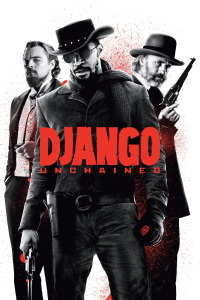
Quentin Tarantino returns with another masterpiece, his latest film to focus on another major historical event: slavery.
The film focuses on Django, a slave who is freed by German bounty hunter Dr. King Schultz, to aid him in finding three outlaws. Upon finding out that Django is married, Schultz agrees to aid him in finding his wife after they hunt down the three outlaws, which leads them to the enigmatic slaveowner Calvin Candie.
The film is classic Tarantino, acting as a brilliant homage toward Spaghetti Westerns. Tarantino has dubbed the film as a "Southern", since it takes place in the South. Also, the film takes place before the Civil War, in 1858.
The film is explosive and runs at a good pace. The casting is perfect, which can be said of all the actors in the film, a classic trademark of Tarantino's who is known for finding good actors to appear in his films. Jamie Foxx is terrific as Django, a role that had originally been written for Will Smith. For me, Foxx is better as the character, since Smith would have been more over the top as the character, probably because of his box-office draw. Foxx is silent and laidback, something that is necessary for the character. After being freed, Foxx manages to bring this new feel to the character, showing him as a man for vengeance, but also as a man bent on a mission. Foxx manages to bring a sense of chameleonic texture to the character. Christoph Waltz, as Dr. King Schultz, is outstanding. Waltz works with Tarantino for the second time, following his Oscar winning turn in Inglourious Basterds. Waltz brings a different performance to Schultz, depicting him as a friendly bounty hunter, who is repulsed by slavery. Waltz and Foxx work well together in the film, proving that they are not only friends, but also fellow partners. Kerry Washington is perfect as Django's wife, Broomhilda von Shaft, who has been sold to Calvin Candie, bringing a sense of fear to the character when necessary. In the scene where she is dragged out of the hot box, she puts forth a real sense of hurt in the character, who has been kept in the hotbox for several days. Samuel L. Jackson is villainous as Stephen, Calvin Candie's loyal house slave, instilling him with real menace and threat. The real, unexpected performance in this film is Leonardo DiCaprio, as the villainous Calvin Candie. DiCaprio goes up against his kind, leading man roles over the past few roles and depicts a ruthless, menacing, vile villain. DiCaprio had originally been cast as Hans Landa in Inglourious Basterds, but Waltz was cast when Tarantino wanted a German actor. DiCaprio works better here as Candie. He's kind when he needs to be and outright evil the next second. DiCaprio is a thrill to watch, always doing the unexpected.
Robert Richardson's cinematography has a nostalgic feel to it, supporting films of the 1970s, while the flashbacks are in a wonderfully thought out sepia tone feel. The film wonderfully has this sense as a homage toward Sergio Leone, director of the Spaghetti Westerns The Good, the Bad and the Ugly and Once Upon a time in the West, and Sergio Corbucci, director of the original Django. The cinematography in this film at times emulates the cinematography of those films.
The music is also really spectacular, with several tracks of Ennio Morricone. The theme from Django makes an appearance at the film's beginning, during the opening credits, while several pieces of music by Ennio Morricone from other Spaghetti Westerns make appearances in other parts of the film, as does Jim Croce's I Got a Name. Morricone also contributed to an original song in an important part of the film, as did several other musicians for a few other scenes. These original songs, most notably Freedom by Anthony Hamilton and Elayna Boynton in a wonderfully sepia tone flashback and John Legend's Who Did That to You, add perfectly to several scenes, further supporting the Spaghetti Western feel.
While the film is exceedingly violent, in an over the top way, it still the supports the film, in particular Tarantino's crazed mind. When the slaves get revenge on their masters, which results in large amounts of blood, you are actually pleased. There has also been criticism on the overuse of the N-word, but it's important to the film, due to its setting and feel. Tarantino in my opinion doesn't overdue or overuse it, but shows how the time was.
Some people have also remarked that Jamie Foxx doesn't have a strong leading role, noting that he isn't strong as Django, but I also disagree. I feel that he does a fine job and did what he had to do. Django stays silent, since he has to blend in after he's freed, which Foxx achieves perfectly. Even toward the end, he comes into his own, which is well achieved.
The end result isn't a film that feel over long, but a film that shows a genius storyteller and filmmaker at work. Job well done Tarantino and keep up the good work.
This review of Django Unchained (2012) was written by Benjamin Y on 02 Sep 2015.
Django Unchained has generally received very positive reviews.
Was this review helpful?