Review of Death in Venice (1971) by Stefanie C — 20 Feb 2010
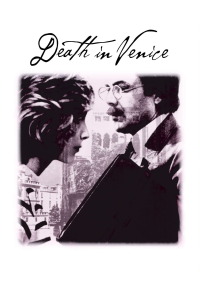
Like the sand in the hourglass, there is no stopping the passage of time. This cinematic achievement is unmatched in its visual eloquence, but remains an emotionally unsatisfying experience. Long shots, slow pans, and silence, only punctuated by Mahlerâ??s symphonies, create emotional distance.
On first appearance, Aschenbach is a man already in decline: His cultured facade doesnâ??t mask an underlying vulgarity. Alienated from his artistic and spiritual impulses, he recognizes an idealized and pure beauty in the form of a pre-pubescent boy, which does nothing to create a more sympathetic character.
His realization is much too late, just as the population in Venice is dying from pestilence, and a way of life is dying at the turn of the century. As we follow the boy, it is hard to tell if Tadzioâ??s glances, poses, and posturing are real or just Aschenbachâ??s fantasy.
During the final scene, we view the sea and sun, the promising horizon formed in the initial scene, but now glittering and hazy. Aschenbach, appearing clown-like with his whitewash and greasepaint, silently observes Tadzio pointing at the sun, and he also reaches out, as if grasping for communion, and dies.
Posited on the beach, there is a symbolic, unmanned camera, ready to frame Tadzio in a snapshot. Hauntingly, the final shots rest on Aschenbachâ??s dripping and smudged death mask, before he is toted off like the sands like garbage.
There is a statement about art, beauty, sexuality, and spirituality, residing in this film, but to me it was quite dead.
This review of Death in Venice (1971) was written by Stefanie C on 20 Feb 2010.
Death in Venice has generally received very positive reviews.
Was this review helpful?