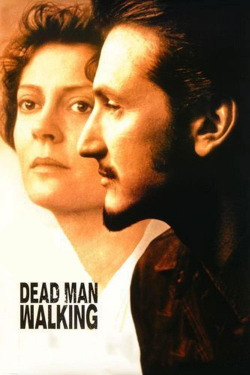
Review of Dead Man Walking (1995) by Mariano C — 15 Jan 2009
Tim Robbins knows movies. After all, he's acted in over 50 of them -- and has done so under legendary personalities such as Spike Lee, Robert Altman (many times), Frank Darabont, Brian De Palma, Stephen Frears, Steven Spielberg, and Clint Eastwood, the last of whom directed him to his only Oscar-winning performance in 2004 (Mystic River). But 14 years ago, prior to ever receiving an Academy Award-nomination, the venerated actor Tim Robbins created a profoundly resonant work of cinema -- one on par with any piece any of the abovementioned greats had concocted -- without once entering a frame. That work was Dead Man Walking, based on the same-titled non-fiction book authored by Roman Catholic nun Sister Helen Prejean.
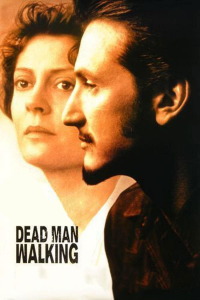
The man to whom the title refers is Matthew Poncelet (Sean Penn, in what is arguably his most imperative performance), an inmate awaiting death by lethal injection for murdering two teenage kids. He's a racist, pitiless individual, one who taunts his victims' parents as he passes them in court and praises historic evils like Hitler for "getting things done." Penn extends Poncelet's insidiousness with radiant subtlety and ensures that the film's audience agrees with his eminent dispatching. And then Sister Helen Prejean (played by Susan Sarandon, who won an Oscar for her performance) gives Poncelet the attentive faith that he'd been denied his whole life. To put it this way, viewers are subsequently more receptive to the notion that capitol punishment -- sentenced to anyone, including Poncelet -- is an act against the testament of God's preachings. It may sound like run-of-the-mill drama -- you might think you know how it will play out -- but it isn't -- and the end product won't vary for those who will or won't foresee its path; the experience is too efficient.
Robbins' second directorial feature (his first was a limp comedy called Bob Roberts, in which he starred in the title role), Walking is a mallet of poignancy whose veracious moral slams harder with each successive take. And it's dually the consequence of both the director's impassioned will and his actors' elite theatrical craftsmanship. The story's two headlining thematic elements -- religious and governmental exoneration -- seam together transcendently throughout, though never more distressingly than in the finale, wherein Poncelet is strapped into his deathbed -- feet together and arms spread wide -- and gassed, his eyes lastly beholding the gracious face of his newfound savior's missionary, Sister Helen. And Sarandon stares back with a beading look that personifies what her character and the film itself stand for. It truly will move you. And shortly following, it will crush you...and you'll appreciate it -- well, you should, anyway.
I don't believe I've ever been as emotionally affected by a film -- and perhaps more importantly its message -- as I was by Dead Man Walking. It is the kind of movie that exemplifies the very purpose of pointed filmmaking: to purvey an inspired significance through an entertainment. Rest assured that its significance is premier by Hollywood degree (and it's quite entertaining); nearly 15 years after its release, it remains the cinematic treasure that not everyone knew it was or would ever be. Dead Man Walking is vital -- few films have ever been so fundamentally, provocatively, and psychologically exigent. It's one of American cinema's most gracious deeds.
This review of Dead Man Walking (1995) was written by Mariano C on 15 Jan 2009.
Dead Man Walking has generally received very positive reviews.
Was this review helpful?