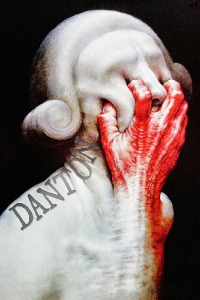
Review of Danton (1983) by Wut S — 22 Mar 2008
Little I know about the French Revolution, Georges Danton and Robespierre--so I did a little reading after having watched the film.
I learned that historians still debate on these FR figures, this led me to believe to that the film, adapted from the play The Danton Case by Stanislawa Przybyszewska, does not seek to represent historical accuracy, but to critique on the post-revolution instability and the horror of shattered idealism.
Robespierre's eventual abandon of his friend Camille parallels his deteriorating health and ideal--what he scripted and taught children no longer matched his action and speech once fueled by the revolutionary spirit. Though Danton symbolizes the admirable daring quality of the French Revolution, his end was inevitable; as we heard in the film: new tyrants would emerge to prevent the old. To me, Danton's antagonist, Robespierre, felt like the center of the film for me--at the end when he was realizing how he'd "changed" (which Lucille sublimely mentioned earlier), the finale so powerful rendered Danton as the vehicle, the forewarner of Robespierre's total malaise, not the core of the film.
This review of Danton (1983) was written by Wut S on 22 Mar 2008.
Danton has generally received positive reviews.
Was this review helpful?