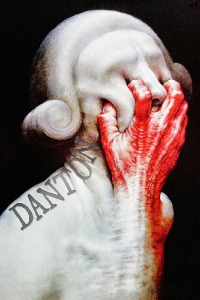
Review of Danton (1983) by Mark H — 03 Nov 2011
Even More Children of the Revolution Were Eaten Than the Movie Shows.
I had been planning to use that particular metaphor as a title even before it was used in the film. There is discussion at one point in the movie about whether it is the people or the government which lusts for blood, but it's really a moot point. Whoever it is gets plenty before the end. There are several characters who would not live long after the end of the film, themselves given over to be the suitors of Madame la Guillotine. This was the time in French history known as the Reign of Terror. In fact, no one knows how many people died in those days, but the number is in the tens of thousands. Many of them had been supporters of the Revolution in one way or another; it took very little to be sent to the National Razor. While the end of the Reign of Terror did not exactly restore peace and safety to the French people, the film highlights what dangers were emphasized by it.
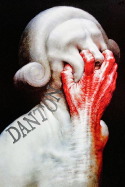
It is five years after the Revolution. France is run by a series of committees and two factions--that of Robespierre (Wojciech Pszoniak) and that of Danton (Gérard Depardieu). Robespierre holds more power and would like to keep it that way, and so he goes looking to bring about the downfall of Danton. There are a great many political machinations, most of which I missed and kind of don't care about anyway. But in the end, Danton and his closest friends and colleagues are brought to the Committee of Public Safety. The committee is really the tribunal, the procurer of victims for the guillotine. Danton, who was instrumental in the death of the king and the success of the Revolution, is confident that the people will not allow him to be killed. Robespierre is hesitant about having Danton executed, not least because they were once friends, but the whole thing has the same mad inevitability of pretty much the entire rest of the Revolution.
Gérard Depardieu is the French actor people have heard of, and he had already been in nearly fifty films in the fifteen years or so he'd been acting before [i]Danton[/i] was made. However, I think he was miscast. What's more, I think a large part of the film's failing comes from the casting of Depardieu in the title role. It seems clear that he's passionate about something, or anyway he yells a lot. He spends his entire trial in hysterical ranting. Which I can't, of course, say I wouldn't; every rule he helped come up with for the conduct of the Revolution and the Committee is being used against him. However, what comes across is not righteous fury but something more akin to rage about not knowing what's going on. While the two lead actors are of approximately the same age (Danton and Robespierre were only about a year apart), Depardieu somehow comes across as literally decades younger. It's hard to see how he could have been a guiding light in the Revolution, because he never seems to grasp what's going on.
Because of when it's set, you can't even really say that it's a pretty film. After all, it was counter-Revolutionary to dress in a way suggesting the old aristocracy, which seems to have meant with any flair whatsoever. One of the ways that we are shown that Robespierre is out of touch with the people is that he has barbers come in, wears a powdered wig. Dresses well. The women, and there aren't a lot of them compared to the named male characters (not that I had an easy time working out who most of the characters of either sex were), are all wearing that stodgy Revolutionary garb that kind of resembles a dressing gown. There is an unnecessarily lingering shot of the after-effects of the guillotine. No, I wasn't expecting the flowing white shirts which are required for productions of [i]A Tale of Two Cities[/i]. But that's just it--I know that's wrong, and I know that the real Revolution, despite paintings by David (Franciszek Starowieyski), just wasn't all that visually appealing.
In a curious parallel to the American rule that Bad Guys Have British Accents, close examination of the movie can show you whose faction any major character is in. All of Danton's men are played by actual French actors actually speaking in French. On the side of Robespierre, the actors are Polish and have had their Polish dialogue dubbed into French. Apparently, the movie is supposed to draw parallels between the Reign of Terror and what was happening in Poland in the early '80s. To be perfectly honest, I don't know enough about what was going on in Poland in the early '80s to say for sure one way or another. But it's worth noting that the director, who presumably made the stylistic choice of dubbing Poles, is Andrzej Wajda, himself Polish. Danton says that the Revolution will all fall apart without him, but I do not entirely get the impression that Wajda agrees. I think he thinks that everyone who led France to the state it was in thought that what they were doing was for the best. It's just that they were wrong.
This review of Danton (1983) was written by Mark H on 03 Nov 2011.
Danton has generally received very positive reviews.
Was this review helpful?