Review of Control Room (2004) by Vanessa V — 03 Sep 2007
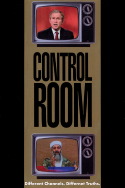
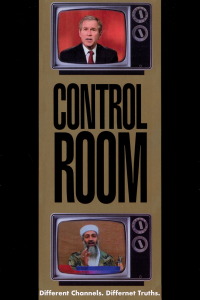
`Control Room' was a very insightful view into the minds of the Arab media, and the construction of the Arab perspective. `Control Room' highlights the role of the media in the age of information warfare, and Al-Jazeera is a player in that war. The way the documentary was made was very political from the onset, with the montage in the intro paving the way for creating politically motivated spectacles. For instance, the shot of the birds flying in the intro montage was a politically motivated scene, meant to imply anticipation and anxiety over the coming US liberation / invasion. The documentary almost seemed to mimic the political quality if Al-Jazeera, in that shots are judged on their appearance rather than substance.
Yes, there may be a myth of objectivity, however it is the job of the journalist to attempt to be as objective as possible. Al-Jazeera does have motivations, just as Fox News does, but that does not mean that Al-Jazeera gets a pass on the question of objectivity. The head of Al-Jazeera starts of by saying a military commander should put the media at the top of his priorities; he says that propaganda is a very important weapon in the arsenal. So it is only natural to expect that Al-Jazeera is more of an agenda setter and a propagator, rather than a straight news organization.
What was evident from the film is that Al-Jazeera does not think of itself as a participant in a war, just an observer. This is not the reality. By broadcasting enemy propaganda, the parade of POW's, Al-Jazeera sets itself up for conflict with coalition forces. Airing pictures of POW's gives ammunition to enemy ambitions, and endangers troops. Al-Jazeera didn't seem to get it, that they are not just a news organization, but also an active participant in the conflict. This is the threat that journalists face when entering a war zone; the threat of being a participant in the war.
`Control Room' illustrates these points in specific scenes. One of the reports says: "We lost Baghdad." I was left asking, who is we? "We lost Baghdad," is the "we" some Baathist sympathy, some pan-Arab nationalism, or just plain old anti-Americanism. That reporter is obviously rooting for `our' defeat. Not to say that journalist cant be people with thoughts and feeling, because we certainly have biased reporting here at home, but rather that personal opinions really should be displayed or communicated when reporting events. Even the Al-Jazeera correspondents couldn't manage to muster up a hint of objectivity throughout the film.
In the age of terrorism the role of the media has come to play a significant role in the outcome of conflicts. In fact, modern terror tactics specifically play to the media. When a bomb goes off in a civilian area, the objective is not tactical but strategic. That is to say that terror bombings are often designed to attract media attention rather than say engage a specific target. The so-called "propaganda of the deed." It seems that Al-Jazeera was manipulated back in 2003, used by the enemy to broadcast tactical war propaganda.
The film also was informative to the editorial decisions that are made at the media outlet. There was one instance that stands out in particular. At one point during the film we see a young boy screaming into the camera. He is screaming about someone being a Baathist, and screaming something akin to death to America if memory serves me. What kind of editorial decision was this? Number one: a screaming emotional kid is not news (he might not realize the consequences of his speech in a wartime), number two: it is very dangerous for that child to be on television making accusations and threats (what if some insurgent recognized this kid), thirdly: its just plain exploitation (going for sensationalism and ignoring the consequences). I fault Al-Jazeera for putting sensationalistic news above the safety of the source.
Another particular scene stands out as a mimic of the Al-Jazeera style of reporting. When Baghdad is first being bombed the film give the impression that the control room was being shelled. The camera was shaky and the audience is given the impression of panic and being under attack. It was an interesting device that speaks to the creation of spectacles. The control room was obviously not being bombed; Al-Jazeera is in Dubai, not Baghdad. This is subliminal deception on the part of the filmmakers which all too appropriate for a film about Al-Jazeera.
Conclusively, `Control Room' was a interesting film that needed to made for western audiences. The film gives us a look of the world for a new perspective and makes theses `enemy propagandists' a human quality that is hard to ignore. We see Al-Jazeera as not terrorist sympathizers, but rather frustrated voices coming from a bleak world of strife. Personally, I like have the Arab perspective from Al-Jazzera, it compounds the notion that world is not so black and white and that journalist are not `outside of the event,' but rather active participants in the story.
This review of Control Room (2004) was written by Vanessa V on 03 Sep 2007.
Control Room has generally received very positive reviews.
Was this review helpful?