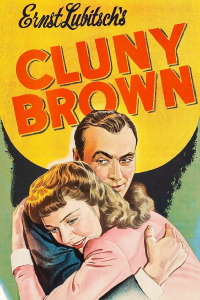
Review of Cluny Brown (1946) by Justine S — 14 Nov 2008
Cluny Brown plays on class systems and societal rules as the foundation for itâ??s comedy. Itâ??s message in plainest terms seems to be that rules are meant to be broken, especially when they are ridiculous as the British class system. Cluny Brown (Jennifer Jones) is the niece of a plumber and on one her impulses she goes to perform an emergency unclogging without her uncleâ??s permission. This sets the thematic elements, as well as the story well into action as here we meet Charles Boyer (a Czech professor on the run from the Nazis) and by a set of circumstances she is â??put in her placeâ?? (with little success).
Jonesâ?? naive exuberance and Boyerâ??s seasoned appreciation for steeping out of the line blend wonderfully, creating a full portrait of those who donâ??t quite fit comfortably in the confines of society. Lubitschâ??s direction plays off Boyerâ??s usual screen persona as the romantic European without (seemingly) a care aside from self fulfillment, and uses the audiencesâ?? preconceptions to create a fuller narrative. While on the surface he is very similar to his performances in films like Love Affair, his charming demeanour is an expression for his love of life but also a need for survival. He is after all, on the run and without a penny to his name. His manipulation is not motivated by greed, and he never takes more than he needs. We, as the audience, realise that it is his temperament that not only sets him as a misfit (especially in his disregard for the class system), but is what allows him to take action against the Nazis in the first place. Lubitsch demonstrates this with the utmost subtlety and while itâ??s clearly his intention he never feels the need to overstate his point. Happiness and joie-de-vivre donâ??t always mean being carefree, nor does it come from being free of responsibility. He suggests itâ??s something far deeper, and requires far more personal responsibility than those who are cynical and have a general contempt for humanity.
Jonesâ?? character is similar in personality, but lacking both experience and a deeper knowledge of self. Her energy is unfocused and anything that is new intrigues her. She is very naive, not only to their emotions (especially apparent with Charles Boyerâ??s non too subtle hints heâ??s madly in love with her), nor of the social expectations that people think she ought to live up to. All she knows is that she does not quite have a place, and even that she does not want one. Like Boyer, her eccentric nature and pursuit for self fulfillment are not greedy or careless. She cares deeply for those around her, and she has a natural glow that attracts people. The tragedy is, itâ??s the same glow and innocence that is the grounds for their dismissal of her later.
Most of the isolation and rejection that Cluny is subjected to is caused by strict societal norms, especially in relation to a rigid class system. The film is not about the oppression of the upper class over the lower class, as it shows that in every facet of society there are many nonsensical rules and expectations to live by. This is probably not the best film to deal with the subject (after all, the French arts prior to the Revolution often times seems solely dedicated to exposing the fraudulence of hierarchal society. Even today many French films/novels touch on these ideas, itâ??s probably more of a racial issue now though), but it is at the very least one of the funnier attempts. Notably through the exaggerated Head Maid and Butler who are so British, and even more proud of their place than the rich themselves.
Finally, the aspect that really made me love this film was the handling of love and romance. I think while there are others, the two important relationships in the film are between Cluny Brown and the pharmacist and Brown and the professor. They are tied deeply with each other, and I donâ??t think I could discuss one without the other. The first is an important one in revealing Jonesâ?? naivety, as well as providing much of the filmsâ?? comedy. Jones thinks she has fallen in love with a stuck up and boring pharmacist in town. He has a nasal voice, is self absorbed and is determined to live forever in the same house. At first there is little to grasp in terms of why she wants to be in this relationship. Itâ??s only when she is talking to Boyer that she reveals it reminds her of the family she never had (even though they arenâ??t particularly familial, itâ??s her imagination running rampant). She doesnâ??t appreciate the reasoning behind her actions, and even if Boyer does, he loves her too much to sabotage the affair. Itâ??s unfortunate that she ruins it herself when she acts on an impulse that shocks the family and friends. Cluny Brownâ??s scenes with Belinski (Boyer) are wonderful though, and even though you can feel the sparks between them, you also believe how oblivious Cluny is to them. She makes silly insistences that they can never fall in love with each other, and without ever realising it lets herself slip into saying something suggestive, even though she never catches on. My favourite instance of this is when she tells Belinski her dream that of them in Arabia, and how just before they go into his tent she kicks herself so that they donâ??t break their pact. Itâ??s amazing how well Jones delivers these lines and scenes that are so sensual without a single note of nervousness and awareness. Then you watch Boyer who is practically melting away. They make a great onscreen pair.
The filmâ??s comedy is centered on the unique quirks of eccentrics, or the black sheep of society. Itâ??s never taken in a mocking tone of either Boyer or Jones, but rather an appreciation for their very humanity and what makes them wonderful. The laughs are centered on their misunderstanding, and especially on Jonesâ?? naive understanding of what is expected of her, and how she really is. The film is filled with incredible joy, and the comedy is born out of good will and kinship with the characters. The fall of sophistication as a ridiculous societal creation and goal is a joyfully ironic turn for Lubitschâ??s last completed film.
This review of Cluny Brown (1946) was written by Justine S on 14 Nov 2008.
Cluny Brown has generally received very positive reviews.
Was this review helpful?