Review of Cinema Paradiso (1988) by Jake R — 02 Jun 2009
Italian cinema in the late 20th century had fallen somewhat behind as a leading art form without the talents of Fellini, Visconti and Pasolini making films that rocked the silver screen. It's fitting then that this brilliant film pays tribute to Italy's great cinematic past, as well as the mythical allure Hollywood exerted on the world in the 1940s.
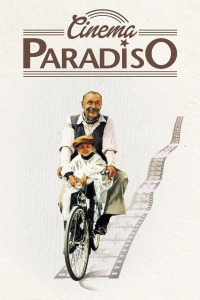
The story is tender and touching, telling of a young boy falling in love with the cinema against the wishes of all of those around him. He comes to learn that cinema is his real passion, he cannot share it and he faces being alone if he doesn't take a couple of steps back away from it.
It's the relationships in this film that make it work, most notably between Toto and Alfredo. WIthout a trace of sentimentality Toto grows up the hard way, experiencing far too few joys in his life. Come the end he realises how right everyone else was but, in a scene of untold sadness, Alfredo grants him one last happiness.
Tornatore's direction is taut but leisurely careful to move the story along with precision and detail. He displays an increasingly common technique of prolonging the ending only to deliver an emotionally powerful final scene.
However, the longer director's cut is far inferior to the theatrical version, shoehorning in a talky happy ending that undoes the gentle pain woven into Toto's life; we're far more satisfied with seeing him as a youth forced to move onto bigger things, rather than as a victim of tedious circumstances.
That said, the (shorter) film is a movie of near flawless construction. Kudos to Ennio Morricone for his lush, mellow score, ranking alongside his best. It's his spiritually affecting music that ignites a sub-conscious passion behind the film to touch the heart so warmly. A beautiful little film, unsung in its greatness but extraordinary in its weight and depth.
This review of Cinema Paradiso (1988) was written by Jake R on 02 Jun 2009.
Cinema Paradiso has generally received very positive reviews.
Was this review helpful?