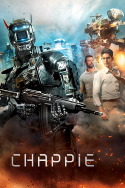
Review of Chappie (2015) by Mike G — 22 Sep 2015
With Neill Blomkamp having delivered two solid science fiction films in a row, a third one sounded bound to succeed.
Unfortunately, it sounded better than the resulting feature turned out to be. Building on what he established with District 9 and Elysium, Neill Blomkamp attempts to add another South African science fiction narrative to his line of success. Unfortunately, it seems all too apparent that he has run out of ideas on how to do so. Borrowing elements from Robocop, Chappie focuses on the concept of constructing robotics as a means of combating crime. This ultimately ends up rendering the feature a derivative piece which lacks any surprises whatsoever.
Chappie is a feature length adaptation of a short film by Neill Blomkamp, and it clearly lacks sufficient material to actively last the full two hours. Chappie takes a science fiction concept and then attempts to weave it into a multitude of other genres, beginning as an action film and crossing into crime drama with addition of sentimentality along the way. The way that the film characterizes the titular Chappie in certain scenes and lays down the atmosphere does manage to stir up a sense of feeling in the story, but honestly it's just difficult to consistently feel sorry for the character when he is ultimately little more than a CGI creation used for nothing more than comic relief. The main problem in Chappie is that it can't find a creative new way to innovate a familiar plot and instead attempts to find humour in it, creating a science-fiction comedy with the narrative of a kids movie. The genres and changes between comedic and dramatic moods do not sit right, particularly because the premise is obviously a serious one and the sense of comic relief is not able to change that, leaving it to serve as little more than an awkward distraction. And that pacing in Chappie is remorseless, jumping straight into its subject matter without taking a second to characterize anybody beyond being a mere archetype.
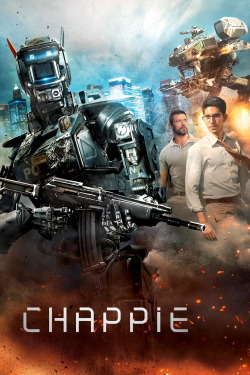
In actual fact, the only really great moments of the film were the action scenes which were ultimately so sporadic that they left minimal impact. This is a real shame because considering that the jolted laugh free narrative provides little to nothing of value to Chappie, it is left to the imagery to determine the level of success. Despite things being competently styled in Chappie, the feature is ultimately very repetitive in terms of imagery as the same basic locations are used countless times. They look good and are able to convey a crime-ridden wasteland, but they mostly provide little more than a background to the visual effects which aren't utilized with nearly enough creativity. Aside from the few good action scenes in the film, the visual effects in Chappie all focus themselves around the motion capture of the titular character without doing anything good with him. The design of the character is very effective and brings in a powerful motion capture effort from Sharlto Copley who also does some good voice acting in the face of a generic script, but since he spends more time speaking fractured English than engaging in combat with other characters, he fails to strike up much in the way of entertainment as an engaging character, an effective source of jokes or an action hero. Of course, the fault for this lies in the story and not him.
And the cast in Chappie end up stranded in a story which fails to really capitalize on them.
Dev Patel delivers a solid performance. Clearly an actor transitioning into mature dramatic material, Dev Patel brings a sense of sophistication to his role which works to convey that he really understands the complex science behind his characters' studies. But what's more impressive is the nature of his chemistry with Sharlto Copley. Convincingly interacting with a solid CGI creation, Dev Patel manages to contribute a strong effort into making the deeper themes of sentimentality come to lifef. The script is far from brilliant, but his dedication most certainly is.
Ninja also delivers a strong performance. The intended comic edge of his role fails to land many hits, but he really does a convincing job of playing South African street trash. Though his relentless nature is played off as a joke, the more the story goes on we can see him actively developing a relationship with Chappie which actively adds more meaning to the story when its shortcomings do nothing but cry out. Ninja delivers an edgy effort which turns a repetitive archetype into a sympathetic character by the end of the story, a challenge for even the most accomplished actor let alone a musician trapped in a thin script.
Yolandi Visser captures a similar feeling to Ninja, though she is predominantly more likable from the start.
Alas, the two biggest American stars of Chappie bring little to the table.
Even though a high-profile Hollywood star and Academy Award nominee like Hugh Jackman is present in Chappie, his screen time is ridiculously minimal. Without even giving him a character, the narrative quickly rushes him through a predictable narrative where the viewer gets hit over the head by cliches which quickly determine him as the bad guy. Hugh Jackman is an actor with enough talented grit to play an antagonist, but he needs actual screen time to do that. He doesn't get anything close to enough in Chappie even though his natural charisma is clearly an asset to the film, failing to flex his dramatic muscles in any kind of original way.
Even the presence of Sigourney Weaver is lacking in any kind of spirit. The woman is welcome in any film let alone science fiction when you consider the relevance of her legacy as the star of the Alien films, and I just wish that Neill Blomkamp had more appreciation for that.
So although Chappie has a talented cast and real potential, an obsession with unfunny comic relief and waste of high quality CGI leave the derivative and lifeless story of Chappie extremely obvious over the course of two action-less hours.
This review of Chappie (2015) was written by Mike G on 22 Sep 2015.
Chappie has generally received mixed reviews.
Was this review helpful?