Review of Capernaum (2018) by Bertaut1 — 08 Mar 2019
I wouldn't call it entertaining per se, but it's certainly provocative.
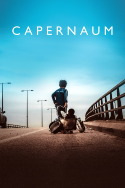
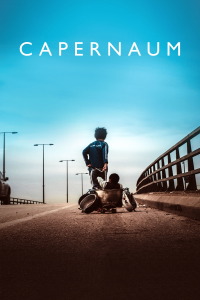
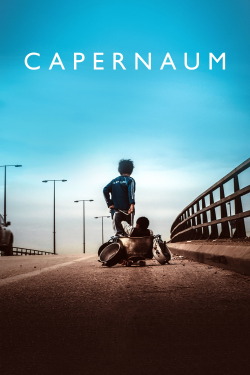
Taking as its subject the horrific plight of guttersnipe children in the slums of Beirut, Capharnaüm (the word means "a place marked by a disorderly accumulation of objects") is the kind of film of which a superficial reading might suggest miserablism at best, and "poverty porn" at worst. The third film from Lebanese writer/actress/director Nadine Labaki, the film is written by Labaki, Michelle Keserwany, and Jihad Hojeily and presents a milieu in which people are discardable, children are bought and sold for a few chickens; 11-year-old girls are married off so their family can pay the rent; babies are fed on ice cubes covered in sugar; refugees roam the streets; mental illness goes untreated; people without a Lebanese identity card don't officially exist. The film works because it never feels like it's exploiting, patronising, or trivialising the poverty it depicts, never attempting to manipulate the audience into feeling a preconceived emotion. On the contrary, it's notable for just how unsentimental it is. However, it's also deeply humanist, with compassion in its DNA and a quiet rage at its core.
Telling the story of Zain El Hajj (Zain Al Rafeea), a young boy from the slums who sues his parents for bringing him into the world, the film then flashes back several months, showing Zain running away from home after failing to prevent his parents selling his beloved 11-year-old sister Sahar (Haita 'Cedra' Izzam). Seeking refuge in a rundown amusement park, he meets Rahil (Yordanos Shiferaw), an Ethiopian refugee working as a cleaner. Taking pity on him, she agrees to let him stay with her in exchange for him looking after her one-year-old son Yonas (an absolutely astounding performance by Boluwatife Treasure Bankole) when she's at work, and the trio quickly form a close bond, until one day, Rahil doesn't return home.
Utilising a documentarian style, cinematographer Christopher Aoun sticks to handheld cameras and, for the most part, natural lighting. The scenes on the streets of Beirut are especially impressive, with Labaki shooting most of the material from roughly Zain's height, or slightly lower. This allows the scenes to adopt his subjective view of the world, without having to resort to less elegant POV shots. Chadi Roukoz's sound design is also superb in these exterior scenes, with the soundtrack crammed with car horns, shouting, crying, laughter, dogs barking, airplanes flying overhead, traffic on the streets. It's an aural overload, conveying just how the massive city is overwhelming Zain, and again, tying us to his subjectivity.
Labaki sets the tone for the film to come in the first shot, as we see Zain, filthy dirty, in only his vest and underwear. It's subsequently driven home multiple times that life is almost worthless here - Sahar is sold for rent money, Rahil is encouraged to sell Yonas in return for forged migrant documents. This is a world in which people think of children as commodities. In such a place, Zain somehow manages to retain his sense of empathy, although he too is infected with the concept that everything is transactional. Nevertheless, in a world where adults are reprehensible, and children their innocent victims, Zain is the story's moral compass, exhibiting a humanity far in excess of any kindness than has ever been shown to him.
In terms of problems, the framing device of the trial is awkwardly realised, and for the most part, serves only to interrupt the far more compelling story of Zain, Rahil, and Yonas. The scenes in court also come across as more heavily scripted than everything else. Obviously intended as a means to dramatize how Zain wants a voice, it is nonetheless a narrative contrivance that gets in the way of the more accomplished filmmaking seen elsewhere. Surrounded by the more naturalistic realism of the rest of the film, the court scenes stand out because they feel like a didactic plot machination. There is also something of a sense that Labaki overloads the story, pushing just one too many hardships on Zain, and on occasion, the film feels like it's going to collapse under the weight of human suffering and thematic nihilism. This is a shame because some of the best scenes are those involving Zain and Yonas just going about their day, and if Labaki had had the confidence in these quieter moments, she might have scaled back the socio-political content.
Never feeling exploitative, nor glorifying the poverty at its centre, Capharnaüm isn't even especially sentimental. The conclusion is disappointingly didactic, and the journey there harrowing and exhausting. However, in the last shot, Labaki dares to offer a very cautious bit of optimism, and ultimately, the takeaway is not despair, but compassion And empathy.
This review of Capernaum (2018) was written by Bertaut1 on 08 Mar 2019.
Capernaum has generally received very positive reviews.
Was this review helpful?