Review of Camera Buff (1979) by Eric F — 17 Jan 2009
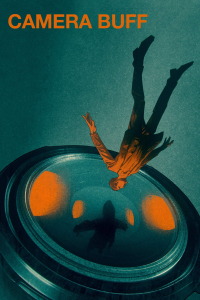
Although Polish director Krzysztof Kieslowski (who went on to direct the Three Colors trilogy, "The Double Life of Veronique", and the 10-part miniseries "The Decalogue) stated that "Camera Buff" wasn't necessarily biographical, it's not hard to draw connections between the film's camera enthusiast and just about any director. It's strange, however, that this isn't a loveletter to filmmaking - instead, it's a very dark cautionary tale about the sacrifices one makes with this particular passion. For the protagonist in "Camera Buff", he distances himself from everything in order to film it. Everything including his own family. In a pivotal scene in the film, after a fight with his wife, he holds up his fingers in the classical directorial fashion. Needless to say, this doesn't bode well when his wife catches him in the fact. Eventually, when he comes to the moment of realization that he's missed out on so much, his life has already passed him by. "Camera Buff" doesn't completely live up to Kieslowski's later masterpieces like "Blue" and "Red", but it reaches layers of complexity that many filmmakers never even begin to scrape.
Filip Mosz (Jerzy Stuhr, a longtime collaborator of Kieslowski) is an average, easy-going guy and a suspecting father. Anticipating the birth of his first child, Filip sets out to purchase an 8mm video camera. From the moment he holds the camera in his hand, he's hooked. First, he starts filming out his window at the construction workers across the street. When he goes out with friends he treats them only as subjects to be filmed. From the beginning, Filip is hopelessly attached and completely consumed by his newfound passion.
Noticing his love for the camera, Filip's boss at the factory he works at (Stefan Czyzewski) allows Filip to become the workplace's official chronicler. Filip's initial work is respected a great deal, however his boss always has a say in what he should show more and less of. Of course, he always wants the establishment to be portrayed in the best light possible.
The project Filip is the most consumed in is a film about a dwarf who works in the factory, using a voiceover to describe a man who does his duty despite having to live under an extraordinary handicap. While the dwarf is willing to cooperate and moved by the piece, Filip's boss disgustingly calls it exploitation. Filip is met with a big decision, however, as he's attracted so much attention as a filmmaker on television and talk shows that he doesn't want to sacrifice his best work for his boss' orders. Kieslowski started off as a documentary filmmaker, and one might compare this idea of censorship and the distances between filmmaker and subject to Kieslowski's own struggles.
"Camera Buff", although dealing with remarkably dark material, never hamfists it's messages down the viewers throat. In fact, this is fairly low-key and comic Kieslowski when compared to some of his later works. It works because we never feel the obvious construction behind the film, rather we're able to completely digest the story as if it were, in fact, biographical.
The film is all not completely dark, however, as it does very much elaborate on the power of filmmaking. Filip films a friend's mother just days before her passing, and when he shows this same footage to the man in mourning he is immensely touched. He then tells Filip that what he does is beautiful. It's important that we get scenes like that because it gets to the root of the passion at the same time as it almost dismisses it. Without these moments, it would be a film about a drug addict hooked to something that makes him feel only miserable.
I wasn't as captivated with "Camera Buff" as I was with the Three Colors trilogy, or even "The Double Life of Veronique", but this is still a masterfully constructed film. It's rich with detail and insight, and it's never overblown as a tragedy despite being terribly depressing at times. This is certainly a unique piece and an atypical self-destructive look at filmmaking.
This review of Camera Buff (1979) was written by Eric F on 17 Jan 2009.
Camera Buff has generally received very positive reviews.
Was this review helpful?