Review of Brief Encounter (1945) by Jake R — 15 Nov 2008
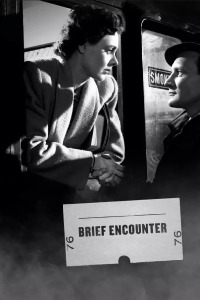
Completely overshadowed in cinema history, not only by its extraordinary director's monumental subsequent features, but by the sheer quality of cinematic output in the period, this is nonethless one of the greatest of them all. Taking such mininal elements, adapted from a stage play lasting only half an hour, David Lean, as ever, utilises and innovates to an unprecedented level to forge a work of sublime art.
Almost 65 years have passed since its release, during which a re-evaluation of context is essential. We return to a world of rigid class structures and typically British Conservatism, that old 'stiff upper lip' attitude in full flow after an exhausting war. By a bizarre turn of affairs this film would be pure escapism to the populous at the time, symbolising the slow shifts in social change but also as a reaffirmation of traditional values of honouring, and falling prey to, a powerful feeling of love. To see this older couple, firmly entrenched in ideal nuclear families, to suddenly begin to hunger after each other because of the simplicity of a Platonic happiness would be understandable, yet still come out heartbreaking. It's because the central concept is timeless: it's ok to make mistakes, but you can't destroy other people for your own expenses, not if you truly care for them. Which we undoubtedly see, painfully raw, almost reluctantly.
A modern day audience can apply a contemporary context yet yield a similar result. People these days are caught in an endless melodrama of broken and damaging reletionships, seemingly one after the other. To see a film where committment is such an important and genuinely real idea is the stuff of everyday fantasy. Who doesn't dream of finding the right person? To those that do, what of the consequences? Heartbreak, depression, a feeling of emptiness. Yet here, neither Alec nor Laura leave on sour notes. Both have enjoyed their guilty tryst but both have agreed to leave it there, before it can become something ugly, a regret. The lack of contact works wonderfully because it plays on the hints of something bigger, but with ambiguous results. When Laura fantasises about a life of happiness and exotic adventures with Alec she resigns to herself that it's only a fantasy, and that, even if she could have her own way, it's unlikely the real thing would ever be as good. It never is. But what keeps emotions and love alive is the ability to hope, and to feel accepted and loved back. This is why Laura and Alec can let go, because everything is out in the open. They know each other's feelings, and they acknowledge neither wants to feel any differently. To have the knowledge of making someone happy and to keep a special, powerful experience in one's heart forever.............surely doesn't that make it worthwhile? Again, this is all testament to Lean's expertise that he makes one think and feel so deeply from so simple a set of elements.
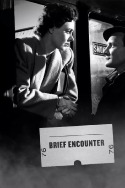
Of course this all hinges on the cast, which are outstanding. Supporting players are warm and witty, but it's the central pair which are the main attraction. Trevor Howard is impeccable as the classy British gentleman, all utter politeness and formal sensitivity. He knows the limits the affair can really go, but he inches further into more weary depths, innocently trying to find something that feels right. He makes for a believeable man to fall in love with.
Celia Johnson's Laura is the other pivot. With her wide eyes and round face she looks at home on the big screen, yet in her face hides a mountain of emotion, bubbling painfully beneath the surface. Using slow, measured body language her Laura is dimensional and mercurial, able to give in and resist in equal measure. Saving her smiles for exceptional occasions each one burns with an aching desire, something totally real on screen. It's wondrous.
Viewed in modern times as a classic, this is much more than that. It's the perfect example of British film making: casual, formal, mindful, immeasurably deep, and built to last as long as the stars. Though there's not a single tear in the film, there'll be millions outside it, justly so. A beautiful and delicate little thing, what we used to call 'cinema.'.
This review of Brief Encounter (1945) was written by Jake R on 15 Nov 2008.
Brief Encounter has generally received very positive reviews.
Was this review helpful?