Review of Blue Velvet (1986) by Greg D — 05 Jun 2012
When you sit down to watch a David Lynch film you have to understand what you are getting into. You have to understand the sort of sadistic pleasure that Lynch derives when creating the stories he does, at first, on paper, and then, visually.
His films are meant to shock you after slowly lulling you in with a smooth jazz score and dialogue that may feature four sentences in the span of one minute. Then there are characters in his films that completely juxtapose what has been set up.
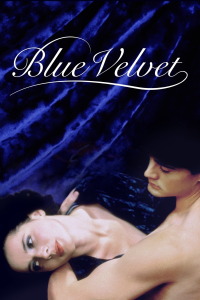
In the case of Blue Velvet, this character is Frank Booth (Dennis Hopper). He is a demented, sick (seemingly mentally and physically), and profanity driven lunatic who, for a lack of a better term, juxtaposes the tone the film has established in the first 20-30 minutes.
What is presented before we ever meet Frank is a murder mystery and a possible developing romance between Jeffrey Beaumont (Kyle MacLachlan) and Sandy Williams (Laura Dern). Jeffery first comes to Sandy for help but also does not want her to get in trouble with her father, a police chief.
But, of course, she is dragged into it. The two of them develop a scheme to break into a suspect of the murder's house and try to find any clues. This does not go as planned and Jeffrey finds himself trapped in the suspect, Dorothy Vallen's (Isabella Rossellini), closet.
The scheme and previous discussions before Jeffrey is in the mess he is in moves at the previously described slow pace without a real sense of urgency or intensity. Even when Jeffrey is first seen by Dorothy, the drama of the situation isn't as heightened as it could have been.
It is only when Frank enters the room and Jeffrey has to go back into the closet that the first sense of shock value is seen. Frank storms in and begins screaming "fuck" every third word. He yells at Dorothy demanding his bourbon, he chokes her on the ground in a non-sexual fantasy type way, and seems that he is going to rape her, but never does.
This is the introduction to Frank, and viewers are meant to be just as frightened as poor Jeffrey helplessly watching from the closet. But what really makes Frank a disturbing character in his portrayal, is the fact that with how sick and demented he comes off, it is hard not to laugh at him as a viewer.
His profanity is at another level and he tends to say things that make no sense at all that it is funny but yet still so frightening at the same time that it is hard to describe. He is truly a one of a kind villain.
With all of this mentioned, the true surrealist side of the film has not even been discussed. The juxtapositions described are part of it and shock value is also a part of it, but the sexual and violent imagery of the film make up the majority of what should be termed "Lynchian" surrealism and also contribute to the shock value.
Dorothy and Jeffrey wind up being lovers, finding passion out of lust and fear and thriving off of it. When they are apart, Jeffrey believes he loves Sandy. This winds up being the weaker part of the film when the two ladies finally clash when Dorothy reveals their affairs.
The confrontation cleans up a little too nicely for how the film has rolled out, but it may have been the only way to clean it up at the same time. The sex scene between Jeffrey and Dorothy isn't made to be steamy or pornographic, it is simply in the moment, just as any sexual moment driven by lust would be.
While the scene does provide some shock, the real shock value is seen during the climax of the film. In Dorothy's apartment, two men are seen dead, blood running down their faces. Jeffrey is forced to hide back in the closet when he first meets Frank, this time though, anticipating his arrival, the scene ends with Jeffrey putting a bullet through his forehead in an incredibly graphically violent moment.
These are the moments that elevate Lynch films, just as in Martin Scorsese's Taxi Driver, Travis Bickle shooting off the fingers of a man elevates the intensity of that climactic scene. These types of shock value moments give Lynch films a leg up over other surrealist attempts in the contemporary age (though it is rare to find any).
This review of Blue Velvet (1986) was written by Greg D on 05 Jun 2012.
Blue Velvet has generally received very positive reviews.
Was this review helpful?