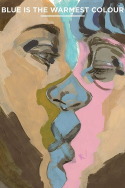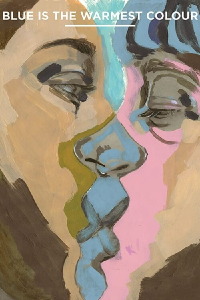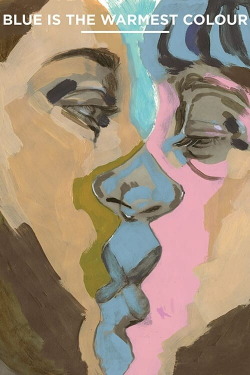
Review of Blue Is the Warmest Color (2013) by Michael N — 22 Nov 2013
Saying that "Blue is the Warmest Color" is the most realistic and believable account of lesbian romance that I've ever seen on film is saying very little, given the almost alarming absence of films dealing with lesbians in a sincere manner. But the film becomes more than that about halfway through: instead, it becomes one of the most realistic and believable account of romance, regardless of the genders of those involved. While the first half deals wholly with issues of teen homosexuality, the second half is purely about love and emotions on a genderless basis, and could have easily involved a man and a woman, or a man and a man.
This isn't to call the second half generic or unfocused - on the contrary, it serves to demonstrate the transcendence of love and sexuality beyond gender. At times I worry that the film will have a preaching-to-the-choir effect, in that it serves as proof of the relative 'normality' of lesbian relationships, but I don't think many people who don't already understand this fact (anti-gay viewers or worse, homophobes) would be willing to spend three hours on a movie that has become known first and foremost because of its graphic lesbian sex scenes. However, "Blue is the Warmest Color" still serves as an absolutely stunning and (to use this word again, because it bears repeating for a film such as this) transcendent affirmation of the power of shared emotions.
More can be said about the film than I feel I could even attempt to say: Adele Exarchopoulos gives a performance for the ages, literally - she ages and transforms over the course of the film so gradually yet strikingly that at times it seems as though the film was actually shot over the course of many years. It's a borderline miraculous performance, brought even higher by the fact that her chemistry by acting partner Lea Seydoux feels so real. The only downside (which will be a considerable boundary to many) is the 3 hour runtime, which is arguably necessary but definitely felt. In addition, the film also lacks payoff, as is common for art films of this kind. While I am fine with that ambiguity in the main plotline, some of the smaller threads that could have benefitted from some sort of finality also never get brought back again, which is arguably more annoying.
On the other hand, these loose threads did lead to one of the main takeaways of the film. In the last half-hour, I kept thinking the film was about to end, but it continues on. At some point, having sat for so long in this theater, I got the strange sensation that perhaps, impossibly, the film would never end. This is the true transcendent magic of the film -- in a way, since the film captures a certain essence of humanity so well, it really doesn't ever end. The spirit of the film and the essence of the characters live on forever, outside of the theater, and within the viewer. "Blue is the Warmest Color" isn't always a masterpiece, but when it is at its best, it feels like something more than just a masterpiece.
This review of Blue Is the Warmest Color (2013) was written by Michael N on 22 Nov 2013.
Blue Is the Warmest Color has generally received very positive reviews.
Was this review helpful?