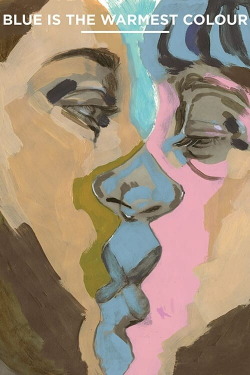
Review of Blue Is the Warmest Color (2013) by Blake P — 12 Nov 2015
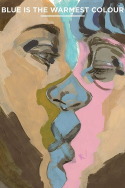
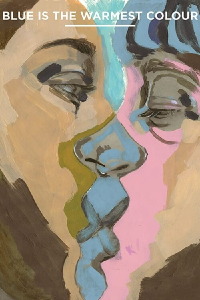
I have yet to see a movie as honest in its romance as "Blue Is The Warmest Color," a modern-day arthouse masterpiece likely to change the way the unruly cinematic landscape looks decades after its release. The winner of 2013's Palme d'Or, it is the kind of film that lands not with a thud but with a bang, a controversial tour-de-force likely to be considered a "great" in future generations, like the way we look at "Day for Night" or "That Obscure Object of Desire" now. Here is a coming-of-age film that depicts every scar on the mind and the body of its leading actress - an "event" doesn't designate her transition from childhood to adulthood but the existence of a long lasting first love, a first serious relationship.
Her name is Adèle (Adèle Exarchopoulos, giving one of the greatest performances of the 2010s), who, as the film opens, is a fifteen-year-old desperate for love but also in the painful throes of questioning her sexuality. Her friends, gossipy and immature, talk about boys as if they're the only conversational topic to exist; Adèle cannot help but daydream through their monotonous tell-alls. While part of her carries a passion for the opposite sex, something in her budding carnality suggests otherwise. She has a brief fling with an affectionate schoolmate, but after passing an ethereally beautiful blue-haired young woman (Léa Seydoux) on the street, she realizes that her desires are targeted in the direction of the female gender.
After much contemplation, she decides to make her curiosities a reality by visiting a lesbian bar, where the very same azure-maned woman, Emma, is coincidentally also attending. Seeing her alone and looking hopelessly lost, the latter gently begins conversation, which, in turn, spirals into a torrid affair that acts as Adèle's very first real relationship. The union lasts years, and, as "Blue Is The Warmest Color" is three-hours in length, we see every aspect of their romance, warts, euphorias, and all.
And when I say we see everything, I mean everything. The biggest conversation point regarding the film has to do with its graphic, lengthy sex scenes, which are extremely provocative and, depending on who you ask, extremely exploitative. "Blue Is The Warmest Color" is one of my favorite cinematic experiences of the past year, but I cannot give Abdellatif Kechiche a hall pass, despite his mostly brilliant direction - he gets much too carried away, as if he realized just how much control he had over these two breathtaking actresses and figured that making a quasi-porno for himself would be a crime easy to get away with.
But as "Blue Is The Warmest Color" is epic in length, the sex scenes, a combination of wildly uncomfortable and wildly titillating, do not much hinder the overall experience of the film: voyeuristic and all too real. We feel as though we're experiencing first love ourselves, deliriously happy during its best moments and embarrassingly pressed to shed tears during its worst. Kechiche's excellent decision to photograph the film mostly in close-ups only adds to the intimacy we feel toward Adèle and Emma; we experience "Blue Is The Warmest Color" through them. It is one of the few films where we feel as though the actresses are controlling its success, not the director.
Exarchopoulos and Seydoux give two of the finest performances of the past ten years. Never have I seen a relationship portrayed with such passion, such rawness - their initial meet-cute, as well as their climactic, sensationally acted break-up, are more convincing than anything I've ever witnessed in film. We feel the love Adèle has for Emma, and vice versa, both thoroughly different yet three-dimensionally portrayed. They are actresses that only come along every once in a while, blowing our minds away as they remain magnetic in a Monica Vitti sort of way. The fact that this is the first leading film role for the overwhelmingly talented Exarchopoulos is astonishing - at 20, she bears more nuance than actresses double her age.
By the film's end, "Blue Is The Warmest Color" will leave you emotionally stunted, so severely knocked off your feet that it wouldn't be much of a surprise if you find your feet in a theater fifty miles away. Films as wonderful as this come but once in a lifetime - it is a game-changer, an earth-shatterer.
This review of Blue Is the Warmest Color (2013) was written by Blake P on 12 Nov 2015.
Blue Is the Warmest Color has generally received very positive reviews.
Was this review helpful?