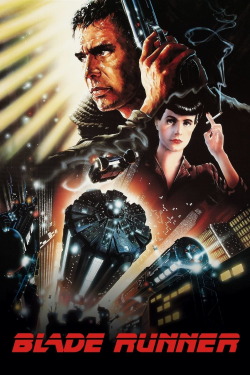
Review of Blade Runner (1982) by Thomas B — 30 Jan 2015
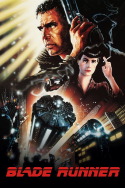
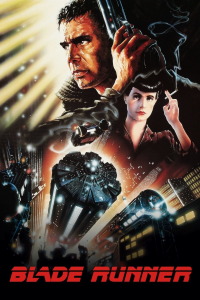
The thing to know about Blade Runner is, despite the futuristic setting, the story of cops and criminals and a whole assortment of other things which Michael Bay would jump for joy at, it's difficult to like the first time around. This is proved by the fact that there are around about a million director's cuts after the theatrical release, chopped and changed by the studio who also found it difficult to like the first time around. But after watching Ridley Scott's vision in the director's/final cut of the film more than once, the true genius of this film can be realised. .
We follow Rick Deckard, a retired Blade Runner, whose job description was "retiring" Replicants who are exactly what you think; synthetic humans. After a group of fugitive Replicants cause a stir on Earth, Rick is brought out of retirement to track them down. .
I am one of the few people who have read the book "Do Androids Dream of Electric Sheep?" Phillip K. Dick's sci-fi which the film is based on and, let me tell you, there's a marked difference between it and the film. The film's moody presence and foreboding atmosphere, its noir-centric style and its intriguing and troubled central characters are almost all products of the film, not the source material. It's a tribute, then, to Ridley Scott's vision that the film is all these things and more. Opening with hypnotic wideshots of a dystopian world where flames billow skyward from smokestacks below and moving into the opening sequence with Leon's interrogation, all underscored by a Vangelis electronica, it's clear that Scott's vision is not going to be easy going. Scott is unafraid of moving slowly through a scene; focussing on a detail or nuance for a time before moving on. This means that each and every moment hits with a thud without being trampled by the next one. He also shows his keen eye for visuals. There is a reason that Blade Runner is the preferred example for film teachers everywhere for matters relating to noir and Scott's imagery is why. Contrast and shadows abound with silhouettes and smoke creating a world with the same murky quality as the subject matter involved. Scott also manages several action sequences without breaking the movie's style, making each second rivetting in each scene. His production team must also be mentioned here, as the visuals in the movie would not have been as mesmerising without the incredible city design. Like Alien before it, Scott's film manages to create a future civilisation which is recognisable but so removed from today's world. It's a bleak outlook, filled with synthetic animals and synthetic humans alike, an almost sterile quality to the surrounds. Scott manages to bring this all together with the story seamlessly. .
Harrison Ford was already Han Solo and Indiana Jones by the time Rick Deckard rolled in. The character is so far removed from these two jovial heroes that it must have been a confusing choice to begin with. But the casting is perfect. Ford's comedic side occasionally comes to surface but his hard-bitten, cynical persona is the dominating one here and he portrays it brilliantly. His sarcastic smile is also out in force but it's the restraint which he shows which is the most fascinating here. Some scenes involve very few lines and Ford doesn't seem altogether willing to give much away to the viewers, preferring to keep them in the dark as to his true feelings. It's this sort of depth which gave the studios the idea to record a voiceover for Deckard, something which neither Ford or Scott wanted, for the theatrical release. But after repeat viewings his performance becomes more and more impressive without the overblown emotion or character arc which Oscars are given out for. Sean Young plays Rachael, Deckard's eventual love interest. Her performance is a hard one to nail down as she plays jumprope with the line between femme fatale and damsel in distress. It is easy to tell that it's amazing, however, as she's able to convey mountains of emotion and intention with a flick of her eyelashes. Her interview with Deckard is one of the best moments in the film and is filled with an uneasy sexual tension coupled with a testing each other out feel. She is a key player in a difficult film and as such the burden of responsibility must way heavy but she never seems to show it. The eventual sexual overflow reaches a climax when Rachel turns up at Deckard's apartment and the strained emotion is beautifully portrayed by both actors. The two of them apart are fantastic but together the two of them are spectacular. But stealing the show with a brilliantly batshit performance is Rutger Hauer as Roy Batty. His icy, detached yet fascinated glare is always intriguing and downright scary at times and his delivery of his perfectly left of centre lines is as alienating and magnetic as it gets. Ordinary lines like "police-man?" turn into pure gold with his performance and his genuinely disturbing turn to unhinged is an amazing thing to watch. And of course, there's that incredible line about c-beams and attack ships which might have been overly sentimental in someone else's hands but with Hauer it's so haunting and riveting that it'll stick with you for a while. .
Vangelis also adds to the film's atmosphere with a haunting electronic score, perfectly underscoring what's happening onscreen. Despite the fact that it's not very flashy or rousing, it's perfect for the film. The very first scene is one of the better opportunities which the score gets to shine, permanently marking Scott's skyline with its slowly invading hum. It's a brilliant piece of work in an incredible composer's repertoire despite being overshadowed by his work in Chariots of Fire. .
Hampton Fancher and David Webb Peoples' work with the script is something so often overlooked in a film glorified for its style and sumptuous imagery, but it's a masterclass in restraint and realism. Deftly moving between the strange romance between Deckard and Rachel and the ongoing police drama, Peoples and Fancher are able to manage all the aspects of their story with a strangeness and surreal quality which is almost impossible to replicate. It's almost reminiscent of Paul Schrader's ability to rivet and unnerve in the way that each scene is impossible to look away from but subtly disturbing in so many ways. It had to be an incredible script to support Scott's and it definitely is, in its realism and its restraint and Peoples and Fancher's ability to juggle so many complex relationships so fully. .
Ridley Scott's vision is beautifully realised in this cyberpunk masterpiece which will forever leave its dystopian mark on cinema. It's not often you see flying cars and unicorns in the same film. .
Defining Scene: .
It's tough to say but it might have to be the Batty and Deckard showdown culminating in that amazing line.
This review of Blade Runner (1982) was written by Thomas B on 30 Jan 2015.
Blade Runner has generally received very positive reviews.
Was this review helpful?