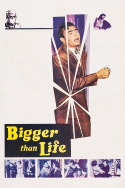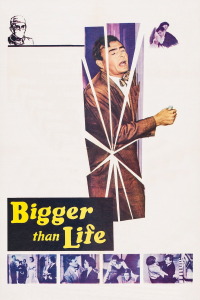
Review of Bigger Than Life (1956) by Hans L — 12 Apr 2009
Though its original release was underwhelming reflected in a poor box office and critical reception it's worthy of recapitulation in our post Prozac era. James Mason plays a schoolteacher, working a shameful second job as a taxi operator who is diagnosed with a rare life threatening inflammation of his arteries.
Faced with months to live Mason agrees treatment using the experimental drug (and hormone) cortisone. After making an initial full recovery Mason succumbs to drug addiction and the full side effects of the drug resulting in psychosis and disastrous consequences for his perfect wife and all-American football-loving son.
On the surface the film operates as a melodramatic study of drug dependency (and a burgeoning medical-industrial complex?) but it also serves as a persuasive critique of the 1950's nuclear family and traditional dominant values of conformity and an unquestioning obedience to arbitrary social norms and authority (such as doctors).
Its themes are proverbial ones for Ray but the central character is of note for not being typical of his gaze- thus exploring how all people are constructed and held captive by social pressures. The direction is typically bold by Ray (excessively stylish and expressive use of colour and framing) and in Mason's hyperbolic yet concise performance lingers the shadow of genius.
This review of Bigger Than Life (1956) was written by Hans L on 12 Apr 2009.
Bigger Than Life has generally received very positive reviews.
Was this review helpful?