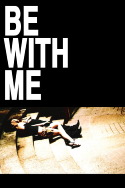
Review of Be with Me (2005) by Qing Yu A — 09 Sep 2005
In the full light of day and with the benefit of a week or year of hindsight, I'll probably wonder why I gave [b]Be With Me[/b] an 8, when it certainly feels more like a 7, and definitely recommendable rather than flat-out 'bloody good'. But, seeing as this is the first Singaporean movie that has really impressed me since Jack Neo's spot-on social commentary [i]I Not Stupid[/i], I feel as if I'm waving a little patriotic Singaporean flag here in saying: yes, it's an 8, yes, it's 'bloody good'... but, qualifier here, it's all that for a film inspired by and set in our sunny little island.
The film tells three stories, all meditations on the theme of love, largely separate but also woven together by the central figure of Teresa Chan, a deaf and blind elderly lady who plays herself alongside the fictional characters that people [b]BWM[/b]. Related through subtitles playing over scenes of Chan coping with life on her own, her inspiring life story, including tragedies galore (going deaf, then blind, and even losing the man she was going to marry to nose cancer), forms the backbone of the movie. Making an impressive film debut, Chiew Sung Ching stars in the first story as an old shopkeeper whose deep and abiding love for his very ill wife reminds us how we always keep the ones we love--and love deeply--with us. The second story focuses on Jackie (Ezann Lee) and Sam (Samantha Tan), a pair of young girls who meet online and fall in love... or at least, Jackie does. Theirs is a tale of painful, unrequited devotion, as is that of (blame IMDB for the politically-incorrect name and my Swiss-cheese memory for not remembering his name) Fatty Koh (Seet Keng Yew). Koh is a fat, lonely man, who works as a security guard and obsesses about Ann (Lynn Poh), the beautiful power-suit-clad nymphette who works in the same building... and is about as attainable as a goddess made of clouds. But Koh's story, despite its ending, is really about the hope that love gives you, as he finally plucks up the courage to deliver to her a letter expressing his feelings after myriad crumpled, rejected drafts.
Writer/director Eric Khoo does an impressive job of bringing these characters to life, the most interestingly developed being Chiew's shopkeeper, whose love for his wife and sorrow over her plight are made clear from the outset, but crystallise increasingly, even devastatingly, as the movie progresses. Koh is another such nicely rounded-out character: Khoo pulls no punches in portraying him as a fat, lonely loser who over-eats to fill an emotional void, and whose stalkerish tendencies are disturbing in the extreme. Rather than finding him revolting, as we're initially compelled to do (the amount of food Koh consumes in one extended sequence is, frankly, horrifying), we actually sympathise with Koh when he learn more about his oppressive family life, or his compassion for the tiny abused child next door. Jackie and Sam remain enigmas, but even that counts as interesting character development, since the respective depth and transience of their passions reflect the mysterious extremes between which hormonally-charged teenagers are permanently trapped. Chan's own life story could probably form its own riveting documentary, and here needs no embellishing to be compelling--her everyday struggle to not just survive, but to [i]live[/i], in spite of the dark, silent prison of her body is as (awe-)inspiring as you'd expect. Khoo is aided also by a great cast, none of whom is--thankfully--especially famous in Singaporean showbiz circles, as this only adds to the authenticity of the everyman characters. Chiew's time-rumpled face is as implacable a mask as you could wish for, hiding and revealing so much at the same time, while Lee and Tan are charming in their roles. On his part, Seet infuses his almost thankless role with a gravitas that keeps Koh from being a poor caricature at the beginning, and a paper-thin character at the end.
Although this might not work for everyone, Khoo gives the movie a broader appeal by grounding the characters in a genuinely Singaporean aesthetic, but keeping their struggles, passions, hopes and loves universal. Arguably, you could make this movie in any country in the world--it doesn't matter so much that it's Singapore, because the tears would fall just as much at the quietly raw, heart-rending ending whether the shopkeeper is from Europe or China. Of course, it plays that much better when you understand the cultural references (HDB mortgages, abundance of stewed pork!) and dialects employed (liberal sprinklings of Hokkien and Mandarin). In particular, Jackie and Sam's courtship through SMS is executed using firmly Singaporean lingo, which is dutifully translated into proper English by the subtitles, but thereby loses a little of its local flavour. But, in a way, these are the trappings of the world--Khoo's interest is really in the broad swathes of silence with which he cloaks his characters, for there, in their wordless longing, is where the universal notion of love lies. The shopkeeper's love for his wife is reflected in his routine of cooking her food and bringing it to her in the hospital, Jackie's commitment clear the moment she pauses while dancing in a disco to gaze at Sam with the sheer wonderment of love, and Koh's grunt of frustration when he realises the words he has written for Ann are inadequate to communicate his feelings to her.
This is probably as good a criticism as any of the film, if you really wanted to attack it for not being [i]really [/i]Singaporean. Sure, that's true of this film... but, to be honest, that's probably a large part of why I liked it as much as I did. What one must recognise in critiquing [b]BWM [/b]is that, unlike Neo's works, which proudly and [i]intentionally [/i]speak to an exclusively Singaporean audience (and there's nothing bad in that, as evidenced by the almost-brilliance he achieved with [i]I Not Stupid[/i]), Khoo is aiming for something entirely different. You can call it pretentious, you can call it arty-farty, but here he's moving beyond the local, using Singapore as a backdrop for a set of characters whose concerns aren't bound by artificial geographical boundaries.
What I feel really was the problem in this film is its patchy editing--Chan's story, though phenomenal and really inspiring, fits uneasily with the others. Khoo tries to keep [b]BWM[/b] from slipping into documentary mode by having Chan interact with characters in the film, mainly the shopkeeper's son (Royston Tan) and finally the shopkeeper himself, when he finally personally delivers to her a meal he's cooked, only to be confronted with the real-life woman who's helped him understand his feelings towards his wife. At first he scatters Chan throughout the movie with the other characters, but he just can't weave her into the overall structure, since she's entirely missing from two of the stories. Possibly at a loss as to where to include it or how to separate it, Khoo gives up the ghost and moves into full-blown documentary mode with a long, mostly uninterrupted section in the middle of the film that's devoted to Chan's backstory. This is told in subtitles as we watch Chan fending for herself--cooking, teaching children how to weave, swimming. But it does break the pace of the movie somewhat, and finally, when the shopkeeper meets Chan, provides a resolution that's as sad as it is slightly empty for the connections not being better-drawn.
In spite of this, I can understand why, when this film debuted at Cannes earlier this year, audience members were deeply affected and frequently in tears... and reportedly gave it a five-minute standing ovation. For that alone, and in spite of all its smaller flaws, this is a genuinely worthy, little gem of a film that I'm more than proud to acknowledge as Singapore's own.
This review of Be with Me (2005) was written by Qing Yu A on 09 Sep 2005.
Be with Me has generally received positive reviews.
Was this review helpful?