Review of Batman (1989) by Oliver H — 02 Mar 2016
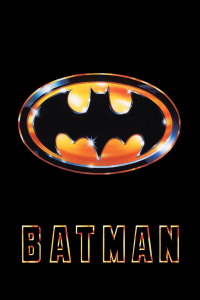
When it comes to Tim Burton's 'Batman', nostalgia is usually considered the biggest attribute for people's appreciation of it. As both an avid fan of Batman and the works of Burton himself, I often find myself disappointed at the results of the director's first venture into the Batman universe. As a piece of popcorn entertainment, it's enjoyable enough, and likewise, its resonance with Batman fans appears to be one consisting mostly of apathy. If you ever ask a Batman fan their opinion of the '89 flick, they're most likely to respond with: "It's okay." These are words that also sum up most of my feelings on the film, but that's not to diminish it's effectiveness in any way, and I would still recommend it for three main reasons:
The first is its gloomy atmosphere and set design. This was the first time studios had ever agreed to fund a darker and grittier superhero movie, and the movie's gothic setting is directly and deliberately in contrast to the shining, haven-like cityscape seen in Superman's Metropolis. Burton's depiction of the fictitious Gotham City is a perfect blend of 1920's noir and traditional staples of the gothic genre, mixing together skyscrapers and cathedral spires to create what I still consider to be the definitive onscreen depiction of Batman's home. Much like in the source material, Gotham is a character in of itself, a breeding ground of all things criminal and unholy, with corruption seeming to spread throughout its concrete body like some incurable disease. More than just a backdrop or a canvas on which to tell the story of the film, Gotham City is in itself the life and soul of Batman's universe. With some memorable locations such as the greasy chemical plant or the vast, echoing halls of Wayne Manor, much of the city's design is purposefully claustrophobic, and the design of the movie's setting is one incidence in which a restricted budget worked well in the film's favour.
The second, and arguably most obvious reason, is Jack Nicholson's appropriately wacky portrayal of Batman's nemesis, the Joker. Easily the most infamous and recognisable of Batman's already impressive rogue's gallery, this version of the Joker is arguably more ludicrous than his comic book counterpart. Unlike the intensely disturbed and deeply psychotic interpretation as seen in Alan Moore's graphic novel 'Batman: The Killing Joke' (also an inspiration for this movie) Nicholson deliberately plays up the clownish antics, offering a Joker than isn't unhinged so much as off-the-rails. Nicholson plays the Joker exactly as you'd expect: a gag-a-minute, overly exaggerated, childish clown, and for the most part it's very entertaining. Make no mistake, this is definitely what I'd describe as a 'pantomime' performance, meaning its purpose is solely to entertain rather than develop a character that's believable in any respect. There's nothing inherently wrong with this, and while he does use catchy phrases like "never rub another man's rhubarb" while employing a string of black-humored jokes, this isn't what I'd describe as a 'serious' portrayal of the character in any way. Nicholson's Joker is more cartoonish than most of his comic book counterparts, and although this portrayal may fail to delve into the Joker's twisted psyche, Nicholson is always fun to watch. It's just a shame he isn't more than that.
The third, which in my opinion is the most dazzling aspect of the movie, is Danny Elfman's beautiful and exhilarating musical score. Elfman composed for Batman what John Williams composed for Superman in 1977, namely an exciting and incredibly memorable theme tune. Most people will associate Batman with the campy theme music from the '60's Adam West TV show, but it goes without saying that Elfman's orchestral soundtrack is superior by far. His composition for Batman's theme, which can be heard in its full glory during the movie's opening titles sequence, was also adopted as the main theme for the equally outstanding 'Batman: The Animated Series' during the '90's, and is now more commonly associated with the animation than the live action movies. But it's not only the theme that stands out. Elfman's score is a perfect balance of heroic and melancholic themes that define this character, and the very presence of his orchestral score helps to elevate the overall enjoyment of the movie.
The trouble with everything else is how dull and uninspired it is. Batman in the late '80's was just teeming with sources of inspiration, with the arrival of graphic novels like 'The Dark Knight Returns' and 'The Killing Joke' to provide oodles of strong source material from which to work with, but Burton and the screenwriters appear completely uninterested. Rather than delve into any kind of depth regarding Batman's psyche or origin of a character, Burton and co seem more content to portray the Caped Crusader than the World's Greatest Detective (both nickname's for Batman.) The initial announcement of Michael Keaton's casting brought much controversy to Batman fans, partially due to his darkly humored role as Betelgeuse in Burton's own 'Beetlejuice', released just the previous year, making him an arguably inappropriate casting choice, and partially due to the lack of physical likeness to Bruce Wayne/Batman. The results were mixed, to say the least. While Keaton definitely tries his hardest to make the Batman appear tough and intimidating, he is restricted by a rather bland script than makes no attempt to explore Batman either as a detective or as a martial artist. Similarly, his depiction of Bruce Wayne seems totally indistinguishable from his vigilante alter ego, which is another major problem. Batman is three distinctive personas: the dark and vengeful Batman, the charismatic, social playboy Bruce Wayne as seen in public, and well hidden underneath it all, the real Bruce Wayne. But whenever Keaton appears onscreen, either as Bruce or as Bats, he simply fails to exude any sort of presence that would help to create a compelling hero, resulting in a performance that feels less like Michael Keaton as Batman and more like Michael Keaton pretending to be Batman. There is a difference. Similarly, there's no attempt to construct an origin story of any kind. Casual filmgoers will ask themselves: why does he dress like a bat and fight crime at night? The movie stoutly refuses to provide any sort of depth, instead relying on Batman's gadgets more than his actual character.
The remaining cast does their best, but they merely fulfill their roles rather than making nay lasting impressions. Michael Gough is appropriately cast as Bruce's butler/father figure, and Kim Basinger plays the beautiful blonde love interest/occasional damsel in distress, Vicki Vale, a reporter conveniently infatuated with both Batman and Bruce Wayne. Pat Hingle's Commissioner Gordon is barely even present, and Billy Dee Williams provides a cameo appearance as the city's district attorney Harvey Dent (who later becomes the villain Two-Face), but once again, the movie appears uninterested in anything beyond Jack Nicholson dancing to pop music and the Batman punching people in the face. It's not a bad movie as such, but there's just so little beneath its beautiful gothic surface to warrant any serious consideration, and it doesn't have a cent on any of the graphic novels it claims to take inspiration from.
This review of Batman (1989) was written by Oliver H on 02 Mar 2016.
Batman has generally received very positive reviews.
Was this review helpful?