Review of Barry Lyndon (1975) by Jay R — 14 Jun 2010
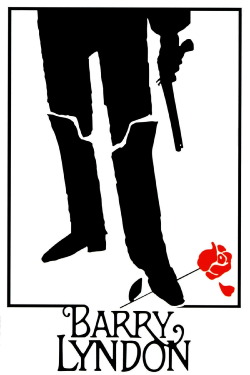
The 1976 Oscars had some serious competition for best picture that year. There was Dog Day Afternoon, Jaws, One Flew Over The Cuckoo's Nest and Stanley Kubrick's Barry Lyndon. These were all some fantastic films, but Cuckoo took home the prize. Even though Barry Lyndon is one of Kubrick's lesser known works, probably because of its star, it is a visually sumptuous and complicated fictional biography. At 3 hours, it is near impossible to get past the length and the achingly slow pace of Barry. Kubrick has fooled us with the slow pace. This slow pace makes you realize just how vast and vivid the journey for Barry Lyndon was. What starts off as a boy looking for a purpose turns into a journey into adulthood that is disturbing and harrowing to watch. What's very fascinating about Barry Lyndon, is how distant and detached we are from his perspective. Then Kubrick transfers over to some intimacy and explosive consequences without any hiccups. You realize that Lyndon has gone absolutely nowhere in life, despite the lifestyle he has come to live by sheer luck. At first, this may seem like something made for the history channel with the beautiful scenery and historian voice over. Kubrick knows how to keep themes and emotions simmering beneath the surface and due to Barry Lyndon's length, he can build them up with incredible grace. Barry Lyndon starts off very distant from Barry, but as he grows, we grow closer to him. There is a difference between watching paint dry and watching the Mona Lisa dry. One is tedious bore, the other is fascinating. Barry Lyndon is a transfixing portrayal of a confused boy who grows up with the illusion of invincibility.
Barry Lyndon is a movie that demands patience, but encourages discouragement. That statement may seem contradictory, but Barry (Ryan O'Neal) is a very complex character so it is impossible to know who he is right away. At first he plays the part similar to a schoolboy who tries to defy the odds and win the girl of his dreams. Try as he might, he just can't seem to catch a break. Kubrick has chosen to show you how bad luck can make a man over use his good luck. As he grows, he ends up in the army where he walks right up to the enemy in a straight line of soldiers with drums as the enemies fire upon them. He doesn't die and he makes it through the war. He even has an alluring affair with a local house wife on the side. I guess having a uniform has its benefits. Now Barry has the confidence he needs to try to get a life together. He befriends the man he was supposed to expose as a spy known as The Chevalier. The Chevalier is Barry's ticket into the world of fortune and hierarchy of which he comes out on the highest end. Barry has absolutely no skill sets within him. He does not have fatherly traits as most of his life he grew up without one. He cannot imagine the idea of responsibility and ownership because all he did in the army was shoot people. All he has is some discipline courtesy of whippings he received in the dreaded gauntlet and the boyish dream of becoming a wealthy and carefree playboy. Unfortunately for his, this dream quickly turns into a highly disturbing nightmare.
Barry had always been a man who was denied many of the wants that came to his interest. He was denied a woman, he was denied satisfaction and he was denied money. The woman took to another man, the man he shot in a duel lived because the duel was fixed, and he gets hustled on a horse route in probably one of the most formal and polite robberies ever on film. When he realizes that riches and pleasures are at his disposal, he loses sight of what he valued most. He fought with honour and loyalty in the war and he was a good son as well, serving his mother well. Honour and loyalty are replaced with personal indulgence and neglectfulness. He enters into the family of the Lyndon's after the husband of Lady Lyndon (Marisa Berenson) dies of a heart attack. At first it seems that Barry has entered to provide that fatherly figure the family needs, and to keep everyone intact with a sense of security. This is a false sense of security as Barry takes advantage of the fortune and commits numerous acts of infidelity, self-preservation and reassurance that he is a good person. Barry has always been a man who feeds off breaking the rules. He cheats on women, he impersonates officers and he is able to lie through his teeth without a whim. This makes him perfect for the position of father in the family of the Lyndon's. Now he can be everything he ever wanted to be and never have to work for it. However his stepson, Lord Boullion (Leon Vitali) grows and can see through the veil of lies. Once Bouillion cannot take seeing Barry with his mother any more, it is time for the sparks to fly. Barry's over compensation for what he never had ends up being his tragic flaw.
The more Barry tries to fix things with money, the more in debt he goes. His dreams are too big for his own wallet. Heck, the wallet isn't even his. Boullion grows much older to see his new brother be raised by the ever-loving father. Favoritism much? Barry only looks after his own blood and denies Boullion the love that he deserved. Boullion is merely the victim of a tragedy and his obvious impulse is to rebel against anyone that comes near his mother. He doesn't even has a chance to rebel as right after Lord Lyndon dies, Barry steps right in and marries Lady Lyndon. The infuriation and feelings of angst begin to layer on Boullion and over the years it grows to a point where he cannot take it anymore. He walks in on an orchestra led by his mother, with his brother wearing over sized shoes to create as much noise as possible. He declares he shall not be the son of Lady Lyndon as long as Barry is around. He has just called Barry an unfit man for his mother. Barry explodes is a devastating and chaotic beating with only the wavering camera in the middle of hell. Boullion leaves, but then returns because he feels the Lyndon estate is in a state of embarrassment while Barry is there. The decide to have a duel, that Barry has managed to win in his early life. However, Boullion's gun goes off early, and that counts as a shot. Barry shoots next, but shoots the floor next to him out of some attempt to redeem his past mishaps. Boullion isn't fooled, he cocks his gun, fires and hits Barry in the leg. This duel represents all of Barry's poor decisions and uncaring nature catching up with him. Barry ends up losing his leg and moving back to Ireland with his mom. Which is exactly where this movie started.
Barry Lyndon is a story of a man who thought he went somewhere when in fact he made no ground at all in his life. He started and ended living with his mother. Sure, he may be financially stable and living a comfortable life, but he is missing the one thing that Lord Boullion has. That is satisfaction. Barry loses his leg and loses everything. The narrator says he was a bad gambler, his reputation will be forever tarnished and forgotten and he has no family. He is still a boy. Barry may have aged on the outside, but he never moved on the inside. He could never grow up because he didn't know how. He disciplined his kids because that's how he was treated in the war. He bought his son a horse because he never had one himself. Both of these actions result in death, whether it be of a reputation, a marriage, or a human being. Barry Lyndon is an extraordinary journey, despite how slow and long it is. I wish that I felt more intimate with Barry. Kubrick zooms out with many of his shots, which distanced me from Barry. I wish I was with him as a friend instead of as his horse. I felt like Kubrick was playing off what the audience knows when I would have preferred him to play off what the audience feels. However, Kubrick manages to justify why he made this movie so long and why every event was of importance to Barry. He reflects only what he knows because he never had good values or parenting growing up. He could only do what he does best: improvise. Barry Lyndon isn't so much a film, but a biography of a man who had to go with the flow. Unfortunately, he could not see his faults until it was too late. Barry Lyndon is an extraordinary work of beauty and dexterity from Kubrick. Barry may have bullets miss him all the time, but the one that hit him did the most damage. This is some very complex and magnetic film making.
This review of Barry Lyndon (1975) was written by Jay R on 14 Jun 2010.
Barry Lyndon has generally received very positive reviews.
Was this review helpful?