Review of Barry Lyndon (1975) by Cameron J — 04 Jun 2013
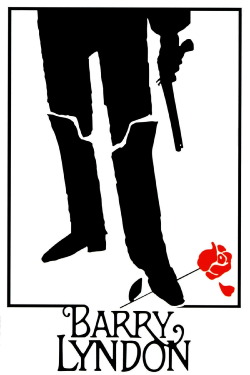
We're talking about "Barry Lyndon"... or "How Stanley Kubrick Tried to Make Up For Not Being Able to Make a Film About Napoleon Bonaparte". Shoot, with that sentence, I just made it sound more like the highly anticipated sequel to "Dr. Strangelove", but no, this is just Kubrick's not being able to do an epic about a legendary French leader and having to settle with some Irish adventurer who was just made up by the guy to wrote "Vanity Fair". I tell you what, Barry Lyndon may have luck (The name of the novel is "The Luch of Barry Lyndon" for those countless of you who don't get it), but Kubrick just couldn't catch a break, and yet, Ryan O'Neal still had it worse than Kubrick. Well, in all fairness, Kubrick still had a filmography full of classics that were lauded as groundbreakingly inventive achievements in films that have left Kubrick to become hailed as one of the most influential filmmakers ever, so his level of success raises a bit of a standard, but seriously though, have you even heard of Ryan O'Neal? Shoot, chances are that the reason why most people don't really remember this film is just because O'Neal stars in it, which is a shame, because he's good in this film, and plus, if I'm going to sit through a three-hour film, then I better remember it. Sure, this film isn't as long as "Spartacus", and doesn't feel as long as "Eyes Wide Shut", but this is hardly a brief affair, and I must say, that's okay with me, because this film is a good one. Still, while this film will suffice as a substitute for the good film that Kubrick's "Napoleon" likely would have been, Ryan O'Neal isn't the only thing that challenges the final product's engagement value.
Stanley Kubrick could have very easily gone a usual route for him and keep faithful to the dryness of this homage Olde European by keeping atmosphere pretty limp very often, but ends up keeping liveliness up more often than not, though not quite often enough, as there are still those points in which entertainment value lapses at the hands of cold spells in atmosphere that bland things up a bit and leave you to meditate upon the final product's being, of course, just too darn long. At over three hours in length, this film has plenty of time to meditate upon its layered subject matter, and is often tight in its thoroughly exploring the depths of the fictional tale of Redmond Barry Lyndon, yet for every tight piece of meat to storytelling, there is fat around the edges that drags the film along, sometimes into repetition, and consistently into a bit of limpness. There's enough momentum to the final product to sustain your investment throughout the whole three-hour shebang, but there are bloated and dry moments in this film, which cannot afford to slow down too much, and shakes engagement value enough with conventionalism. The film is hardly as generic as it could have been, hitting enough distinguished beats to feel reasonably refreshing on the whole, yet in too many areas, the film slips into tropes, and enough of them for the final product to take on something of a typical formula, whose familiarity is arguably most slowed down by a certain unevenness that plenty of films of this type are able to avoid, possibly due to a relative lack of ambition. The Tale of Redmond Barry Lyndon is heavy with intricate segments and layers that Kubrick audaciously aims to explore as thoroughly as he can, and such ambition is noble, but actually ends up crafting a formula that dilutes the wealth of this story more than augments it, taking on episodic segment after episodic segment until, before too long, focus begins to feel kind of uneven, giving you only so much time meditate upon a layer to this conceptually rich drama and get a grip on resonance. The film is compelling enough to reward as an epic-esque character study, but could have been more, and perhaps would have if it was more consistent with liveliness and focus, rather slow and uneven enough to fall short of its potential. Still, while the film stands to do more, it still does enough right to engage time and again as a rewarding, if lengthy watch, and one with plenty of artistic taste, even when it comes to music.
Aiming to pay homage to the elegant era in which its story takes place, this film doesn't appear to feature original score pieces, thus Leonard Rosenman creates an Oscar-winning soundtrack that is comprised of excellent adaptations of classical masterpieces that are both richly beautiful by their own right, as well as very carefully well-selected, so that they tightly bond with onscreen happenings and help in selling you on resonance every bit as much as they help in selling you on this era, at least from an audible angle. When it comes to visual representations of the 18th century, that is where art director Roy Walker enters and delivers exceptionally, crafting a tastefully distinguished, dynamic and lavish interpretation of this era's look and style that is brought to life by Ken Adam's intricate production designs and Milena Canonero's and Ulla-Britt Söderlund's lovely costume designs, and convinces you of this film's setting with a beauty that is, of course, made all the richer by something that Stanley Kubrick always had a tendency to deliver on: fine visual style. John Alcott was known for his doing a particularly iconic job of interpreting Kubrick's rich taste in visual style, and sure enough, his Oscar-winning efforts in this film are nothing if not upstanding, with a sharp shooting that is both well-framed and driven by natural lighting that presents warm and dynamic coloring that is often strikingly rich, if not remarkably similar to a lovely 18th century painting. Whether it be of a musical nature or of a visual nature, the artistry behind this film is arguably the most well-realized aspect of the final product, and while I wish I could say that substance is as strong as style, artistic value actually eleganty compliments substance that is nothing short of worthy of as much complimenting as it can get. The conventional, overlong and uneven take on William Makepeace Thackeray's story of a fictional historical figure hazes the full depths of this film's story concept, but you can still see a wealth of potential to this intriguing character study, partially thanks to emphasis by genuine strengths in the writing department, because as flawed as Stanley Kubrick's script is, it does a fine job of interpreting Thackeray's somewhat dated, but generally still-biting wit, as well as the era itself through a distinct, but believably restrained and impeccable capturing of 18th century sensibilities, though not at the expense of relatable, potently effective characterization, further sold by strong performances. I joke about how this cast isn't as star-studded as the casts of other Kubrick films, with names that are anything but notorious, but if the performers of this film are as strong in other productions as they are in here, then it's a shame that they have faded into obscurity over the years, as most everyone in this drama delivers, with leading man Ryan O'Neal standing among the standouts as a compellingly effective lead who sells you on the titular Redmond Barry Lyndon character's emotional and layered transformation from a both spirited and fearful young man of love, to a questionable and corrupt gentleman of tainted class, thus leaving O'Neal to reinforce the compellingness of this character study about as much as Kubrick, who does indeed raise a standard, at least as director, being too steady and uneven as a storyteller, but still with enough attention to depth and layers to grace the final product with rewarding resonance. The film stands to be sharper, being too ambitious of a project to be as truly assured as it probably should be, yet still inspired enough to do a fairly fine job of fulfilling ambition adequately, with enough sharpness to compel the patient as a rewarding character story.
In closing, structural dragging is made all the more glaring by atmospheric limp spells, while conventionalism within the film's storytelling formula goes broken up only by episodic unevenness that is bound to leave you with not enough time to soak up the full depths of this tale to see the final product as entirely successful in its attempts at fulfilling high ambition and potential, yet not so unsuccessful that it truly underwhelms, as there is enough loveliness to the score work, lavish convincingness to the production value, sharpness to the cinematography, and inspiration to the writing, direction and acting to craft striking resonance that leaves "Barry Lyndon" to stand as a flawed, but compelling study on the life and times of a historical figure who never was.
3/5 - Good.
This review of Barry Lyndon (1975) was written by Cameron J on 04 Jun 2013.
Barry Lyndon has generally received very positive reviews.
Was this review helpful?