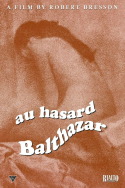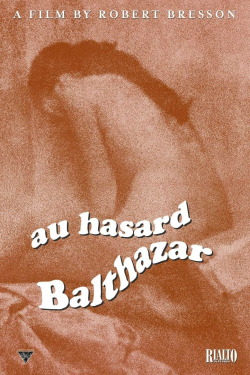
Review of Au Hasard Balthazar (1966) by Jonathan H — 09 Jun 2012
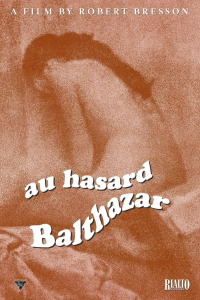
Godard once said that Au Hasard Bathazar, Bresson's fascinating allegorical study of spiritual transcendence, is "the world in an hour and a half." I think that's a fitting description. Perhaps only Bresson can take a tragic story about a donkey and within it find the story of Christ, but all be damned if he doesn't pull it off to miraculous effect. This film can be interrupted many different ways, but for me, Balthazar is Bresson's inspiring reassurance of the existence of God by the lack of even the slightest miracle or good fortune. What is not seen, the saving grace, is made more real and believable in its absence. The story, that of a donkey's life, is, on the surface, absurd; however, what Bresson can bring to it through the patient austerity of his camera work, the martyr like surrender of his characters (including the donkey Balthazar), is as transcendent and enlightening as a private epiphany. What is amazing is that he is able to project so much depth into an audience so unsuspecting. Like Ozu, he never judges his characters, he just presents them to his audience.
I feel compelled to comment on the ending. A powerful final sequence, it achieves an eerie grace, consistent with its almost unique tone - allusively Biblical and allegorical, yet resistant to specific meanings and interpretations. The plot is a narrative of human cruelty and escalating despair, but always with enough mystery in the motivation to ward off easy condemnations; and perhaps even to indicate divine guidance. Throughout, Anne Wiazemsky seizes on the donkey as a symbol of transcendence (her mother even calls it a saint in the end); it's formally christened at the beginning and undergoes something approaching a formal funeral, all of which gives its life the contours of a spiritual journey of discovery. The narrative encompasses both revelations (the interlude in the fair; new tortures like the mean old man who starves and beats him) and retrenchment; both life's austerity, its roots in servitude, and its enormous potential dignity. Never was a donkey filmed so evocatively - but as always with Bresson, the simplicity is thrilling too - there's no false artistry here; no dubious anthropomorphism. To be honest, I'm genuinely impressed that he got so much out of what appears to be so little. If you can withstand Bresson's detached style and elliptical narrative techniques, then you'll be rewarded with a powerful and soul-stirring cinematic experience.
This review of Au Hasard Balthazar (1966) was written by Jonathan H on 09 Jun 2012.
Au Hasard Balthazar has generally received very positive reviews.
Was this review helpful?