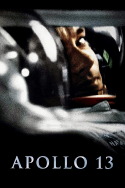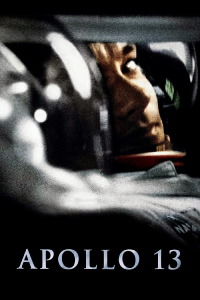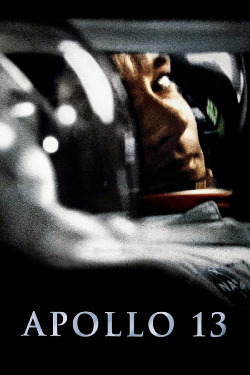
Review of Apollo 13 (1995) by Lisa P — 22 Jul 2018
NASA's Finest Hour told in Two.
Apollo 13 is a perfect example of how the underappreciated hands of filmmaking can fine-tune an otherwise cable channel documentary into a noteworthy historical film. Apollo 13 had 7 Oscar nominations, only 2 of which were nods towards the actors. It is a perfectly woven tapestry of music, sound effects, visual display and direction, brought together by a versatile and flawless cast. Echoing the very mission it depicted, the cast and crew of Apollo 13 (some legends in their own right) worked together as team with a common goal- with no one player competing for the spotlight and glory.
Directed by the legendary Ron Howard, this based-on-true-events drama tells the story a failed lunar mission. It had been less than a year since man first walked on the Moon, but as far as the astronauts Jim Lovell (Tom Hanks), Fred Haise (Bill Paxton) and Jack Swigert (Kevin Bacon) and the American public was concerned, Apollo 13 was just another routine mission. Before diving into the events of Apollo 13- ultimately deemed NASA's finest hour, the movie starts with the Apollo 11 lunar landing -NASA's biggest victory. Opening with literal trumpets- a James Horner signature, Hollywood's soundtrack specialist stayed true to his brass-laden compositions, laying the perfect auditory background fit to carry impeccably written dialogue and carefully chosen archived news reports.
Just as the set directors Michael Corenblith and Meredith Boswell settle the audience into the brown nostalgic couches of the era with Jimi Hendrix, The Who and Jefferson Airplane in their ear, the viewer is jolted back into the gravity of the film with the famous phrase, "Houston, we have a problem." Stranded 205,000 miles from Earth in a crippled spacecraft, the scheduled moon landing is called off. It is at this point in the film we see the emerging and meshing of unique contributions that turned individuals into heros. The triangular synergy of the astronauts, mission control and the family on Earth created a triangular synergy that was captured by the performances of Bacon, Hanks, Paxton, Ed Harris, Kathleen Quinlan (playing Jim Lovell's wife Marilyn) and Jean Speegle Howard (as Blanch, Lovell's mother).
It may have seemed that only the astronauts spent the better part of the seven day mission in a claustrophobic space capsule, but Mission Control, Marilyn and Blanch had their own types of confinement. Mission Control- led by Gene Kranz (Ed Harris) was tied to the constraints of limited technology, time and the very laws of physics. Marilyn and Blanch were confined to boxes that gave them news and information but little hope that their Jimmy would return alive. The cast collected to portray this symbiotic triangle possessed the same blend of raw genius, humility and versatility as the real heros behind the Apollo 13 rescue. Any tensions within the crew (movie or mission) that threaten the prime objective became an opportunity to project confidence and produce solutions- solutions like making a CO2 filter in space with a sock and cover of the flight plan, or salving the fears of the astronauts' children by demonstrating unwavering faith.
Much like the actual mission and rescue, the re-creation of Apollo 13 was not created in a Hollywood bubble. NASA equipment and aircrafts were used to film the zero-gravity scenes. Jim Lovell, who made a cameo at the end of the movie, lent the transcripts from his autobiographical account of the events. Astronauts, crew members, family and media from the actual mission were interviewed to help solidify the script and sharpen the scene sequence and set designs.
This was the perfect story to brought to life at the perfect time when technology could impactfully articulate to an audience the true peril these three astronauts were in and the literal gathering of the world to bring them home. Remember, this is a story that has been re-told multiple times. It is through painstaking lengths that Ron Howard went to create new footage, not simply re-use and re-organize previous narrations and imagines. It is with the tool of technology enhanced with perfectly curated music of the era and a symphony of brass compliments of James Horner that gave Al Reinert and Robert Legato a place for their script and special effects.
While some may say Apollo 13 is an outdated film, we are reminded that it is important to replay significant moments in history to remind ourselves how problems can be constructed into solutions with considerable collaboration. NASA's finest hour was finally told using Hollywood storytelling at its best. Apollo 13 may not have been a major box office hit, if there is one thing we learned is there is such a thing as a "successful failure".
This review of Apollo 13 (1995) was written by Lisa P on 22 Jul 2018.
Apollo 13 has generally received very positive reviews.
Was this review helpful?