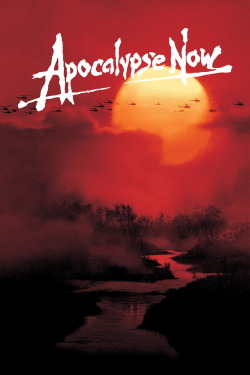
Review of Apocalypse Now (1979) by Noname — 01 Jan 2015
Review In A Nutshell:
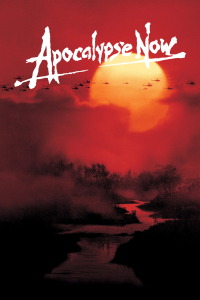
There is simply nothing like Apocalypse Now; a film that digs deeper into the souls of soldiers than any other war film. Francis Ford Coppola's peak was during the 1970s with winning back to back Best Picture at the Academy Awards and the Palme d'Or at Cannes Film Festival; the director's stronger work winning the latter. It is because of his previous accolades that he was able to make Apocalypse Now, given total creative control and a budget that is more than needed to tell a personal and intimate story such as this; with this, Coppola has definitely gone over his head, with principal photography along lasting over 16 months rather than six weeks that was asked from him; it is because of this sense of trust for the director that he was given this time and patience. I think Coppola had doubts about the film as he was making it, unsure on how he would tell it and whether or not it is remotely effective for the viewer. It is his ego that elevated the film to what it is, becoming more than what it intended to be. Honestly he could have made this film with a straight-forward direction and minimal effort and he probably would have made a masterpiece, as the story and John Milius' screenplay was already brilliant on its own, he simply had to translate and capture it through his camera. Though I'm still glad Apocalypse Now is what it is, because it is an epic piece of cinema that manages to capture the tortured destruction of war, both externally and internally.
Apocalypse Now is a deep and dark portrait of war, specifically the Vietnam War. It follows a soldier who begins daydreaming, envisioning his deep desires of being out there in the war and hunting down "gooks". He is a representation of the internal damages of war, finding a sense of addiction and craving to be out there in the jungle with a rifle, as the war has made this his core sense of purpose, stripping the emotional affection he has for those he once cherished before the war; his family and his home. This is a person who cannot leave Vietnam, because if he does, he would not be able to adapt to the horrors he has experienced; he hopes to stay within this bubble of destruction and murder, as a way of stabilising his mind and body. The idea of being idle is his worst enemy, leading him to poor alternatives of speeding up time; alcohol, sleep, and isolation. It is through these that the darker demons that grew and loiter within him during the war start to emerge; leading him to state of external madness and depression, unable to compose himself and placing himself in a state of physical pain and emotional harm. Only a mission, a sense of purpose and value, could save him from such a dire state.
A mission he most certainly gets, but this time, it is much more serious and stranger than he has ever come across. It involves the assassination of a soldier who once fought for the same side; he supposedly has gone mad, taking matters in his own hands and achieving his intended goals through unusual methods. It is here that the film begins to question on whether Colonel Walter E. Kurtz, the intended target, is truly a madman or is he the only one in this war that is committed to do something about it. His methods may be unusual and out of order, but it does gain results, and isn't that the intention of all this war and destruction, to achieve that larger goal? Why must many lives need to be spared for this to be achieved? Since the war has shown to drive everyone mad in their own sort of way, is Kurtz simply a madman shaded in a different colour; is he any different from Captain Willard or Lieutenant Kilgore? It is a figure, and a puzzle, that constantly grow on our minds, wanting to understand him; we naturally become attracted to the mystery that lurks around him. By the end, it never gave me the answer I wanted, but that is what makes the film so perfect; here it presents us a figure who seemingly have been stripped of human complexity, yet he comes off as an enigma through all of it. I could never pin him down as a subject or an idea, and because of this lack of resolution, the film attracts me into revisiting it, hoping that maybe I'll learn more about him.
In reaching to Kurtz, Willard is accompanied by four other soldiers by boat, taking him up the river that ends with his intended destination. It is in their journey together that kept me hooked throughout, a story of a man sending these four gentlemen to their eventual madness, indirectly breaking them to a point where repair back to normality may be impossible. It is at the start of their journey where they all had a conscience, being able to look at their world with innocent and logical eyes; but as they journey closer and closer to their destination, they pass by and encounter areas or events that one by one breaks away the pillars of their sense of humanity, reaching closer and deeper into their primal instincts; becoming animals, like a tiger in a jungle. It is the fact that these were four individuals, who were simply there as escorts and supports, unintentionally losing and indirectly destroying themselves for someone else's cause; it becomes an even more painful experience with each revisit, as we have the burden of knowing their fate, knowing that nothing can be done and we have to simply just sit there and watch them disintegrate.
Visually, Apocalypse Now is a stunning picture, a film that perfectly captures the horrors of war. A film filled with visual destruction and internal depth, which is something very few war films have been able to do. The film was photography was handled by Vittorio Storaro, who has worked on other notable films including The Last Emperor and The Last Tango in Paris. Though I personally found The Last Emperor a much more superior work from the cinematographer, his contribution to Apocalypse Now is nothing short of amazing. He perfectly captures the film's scope through the intended use of location shooting and using an abundance of practical effects to mimic the honest conditions of the war. Storaro and Coppola has conjured up some of the most iconic images ever to be put in cinema; how can one forget the amazing helicopter assault on the coast, it is simply a breathtaking experience that created deep chills shooting up and down my spine. The film also manages to perfectly capture the film's internal story, capturing intense moments during their journey by boat, conveying character development in all of its characters. It allows the audience to get under the skin of its subjects, feeling and understanding their fears and joys. The film then becomes more stylish and personal during the end of the river, where we finally see Kurtz and his compound. A sense of darkness looms over the environment and the character, projecting rich detail of the mysterious character; refusing to shine the character in a warm and welcoming light, keeping the audience in constant thought and wonder.
The performances in this film were outstanding, with Martin Sheen arguably at his best as an actor. He perfectly breaks the cool, laid back image he projected upon me in Terrence Malick's Badlands, and finally shows the actor in a more harsh and painful light. His entire contribution in this film, including his usage of narration, elevates the film's story and visuals; conveying the film's deeper themes and ideas without resulting to obvious execution. Marlon Brando was also great in this film for the very short time he has on it, but I still feel that Sheen was the better performer; though I did enjoy the many monologue he gives in the film, coming off more as poetry rather than speeches. Robert Duvall as Kilgore was also fantastic in the short time he is in, coming off as eccentric and unpredictable. All three are roles that I cannot imagine another actor inhabiting; perfection like this is truly hard to come by.
Apocalypse Now is tied with The Conversation as Francis Ford Coppola's magnum opus, but it does lead the charge as my favourite war film of all time. There will never be another Apocalypse Now but there will be many imitations that would further add the brilliance of Coppola's film.
I have owned the film for about two years now and I still haven't given the Redux cut an attempt. Is it necessary for me to see it? I already consider the original cut of the film to be perfect. Will the addition of the French plantation sequence improve the way I would see the film? Let me know in the comment section in regarding to this predicament.
This review of Apocalypse Now (1979) was written by Noname on 01 Jan 2015.
Apocalypse Now has generally received very positive reviews.
Was this review helpful?