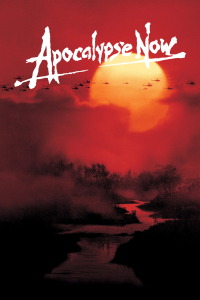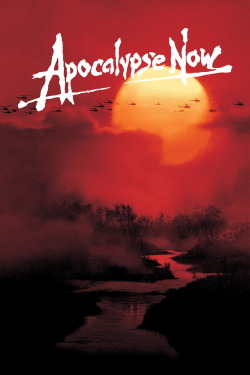
Review of Apocalypse Now (1979) by Cinefiles — 28 Apr 2015
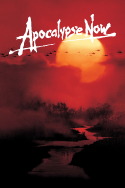
Since its 1979 release, Apocalypse Now has been widely regarded as one of the most powerful and influential films about the Vietnam War. Were it not for the final thirty minutes, I might agree. There's little doubt that the bulk of the movie, which features actor Martin Sheen's trek from the normality of Saigon to the backwaters of Cambodia, is compelling material. But Apocalypse Now falls apart with the arrival of Marlon Brando. Putting aside the simple fact that the ending is anticlimactic and disappointing, the picture's final half-hour is borderline-incoherent, badly written, and highlights a pair of poorly realized performances (Brando and Dennis Hopper).
In 2001, director Francis Ford Coppola returned to the footage of Apocalypse Now and assembled a new cut, which he christened with the lugubrious title of Apocalypse Now Redux. Approximately 50 minutes of additional footage was inserted, 90% of which added little to or actually detracted from the plot. There are a couple of new scenes that are important, but they are overwhelmed by two lengthy exhibitions of bad acting, bare breasts, and verbal diarrhea. The original Apocalypse Now clocked in at about 2 1/2 hours - long, but not unreasonably so (although I would argue that the length of Brando's appearance should have been cut to resemble his extended cameo in Superman, which arrived in theaters a year earlier). Apocalypse Now Redux drags on for more than 3 1/3 hours; the bloated size of the director's cut is matched only by the ego of the man who assembled it and the girth of the best-known actor.
The essential story, which is loosely based on Joseph Conrad's Heart of Darkness, is straightforward. Coppola's goal with Apocalypse Now is twofold: to display something of the absurdity or war and to provide evidence of what it turns human beings into. In the process, the director provides a vivid understanding of why the United States lost the war. Unlike other Vietnam films, such as Platoon and Full Metal Jacket, Apocalypse Now is neither highly politicized nor especially controversial. With a notable exception (the sampan massacre), it does not dwell on American atrocities perpetrated upon the indigenous population. In fact, the Vietnamese are at best supporting characters. They show up occasionally, but the movie isn't really about them. In fact, few changes would be necessary to re-locate the story to almost any other setting with a long river surrounded by a hostile jungle. That, after all, was the premise of Conrad's book.
The troubles encountered by Coppola during filming have been exhaustively documented. The shoot, originally scheduled to last about 4 1/2 months, stretched to 16 months. A typhoon temporarily halted filming and devastated the area. Martin Sheen suffered nearly-fatal health problems. Marlon Brando arrived substantially overweight and insisted that he only be filmed in shadow, where his waistline could be hidden from the camera. Drug use and adultery were rampant. Coppola nearly lost his mind. One could argue that the behind-the-scenes story is more compelling that what ended up in the movie. George Hickenlooper's 1991 film, Hearts of Darkness: A Filmmaker's Apocalypse, documents the shoot, using cast and crew interviews and footage shot by Coppola's wife, Eleanor, to offer a starting look inside the madness of the production. Considering the chaos of the shoot, it's no surprise that the ending of Apocalypse Now is so incoherent and fuzzily focused.
The trip up the Nung River is powerful and haunting, and captures the essential insanity of war in a way that other films, including remarkable efforts like The Bridge on the River Kwai and Platoon, have been unable to do. This war isn't about winning or losing, or even surviving. It's about remaining sane. It's about entering a world that is almost prehistoric and not losing oneself. When it comes to presenting the movie's theme, the Kurtz scenes are redundant. They merely reiterate what Coppola delineates during the boat trip.
While I recommend the original theatrical cut of Apocalypse Now as it is in my top 10 films of all time, I cannot be as positive about Apocalypse Now Redux. The longer, re-edited version is a dud compared to its older sibling, killing momentum with badly-acted, wordy, dull sequences. The primary value of having Redux available is to illustrate how more can be less. Despite having 20 years of down-time for tinkering, Coppola has not been able to improve upon the product of instinct and necessity that reached screens in 1979. Apocalypse Now is one of those flawed films that contains enough masterful sequences to compel a viewer. Redux is merely a curiosity, and of interest only to those die-hards who believe this movie to be one of the greatest pictures ever to be projected in a theater.
This review of Apocalypse Now (1979) was written by Cinefiles on 28 Apr 2015.
Apocalypse Now has generally received very positive reviews.
Was this review helpful?