Review of Anna Karenina (2012) by Patricia O — 24 Jan 2013
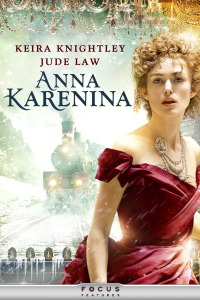
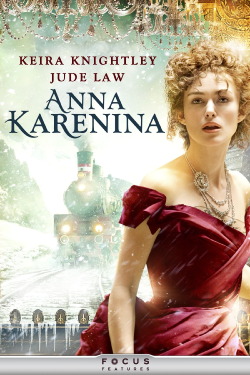
The film that wanted to be a ballet or an opera or a play but not really; what it became is a fascinating staging interpretation of the novel on the part of the director Joe Wright.
In the LA Times he stated "...[in] Orlando Figes' book 'Natasha's Dance,'... a cultural survey of Russian history, Figes "talks about Russian society of the time living their lives as if upon a stage. ... They were constantly performing for one another; life seemed to have been a bit of a performance for them. So the theater seemed like an appropriate metaphor.".
And so it is, but the great cataclysm that is about to occur to Russia is about feudalism and class and the adoption of a radical idealism. I want to think of the great Jean Renoir film, Rules of the Game, about the decadent class and the forfeiture of their place. They pay as the rules change and become expendable by their loss of character and integrity as they wallow in status, culture, and luxury.
Tolstoy's solution was another romantic dream - the perfect farm society. Levin's story of goodness and found grace runs starkly parallel to Vronsky's. The metaphor fails to support this integral half of the narrative.
What struck me immediately is that Anna's suicide is modern and angry; not a glorious romantic love death of the 19th century, but the act of a pitiful wilted being who has lost every shred of self-possession she ever possessed.
In the first scene, a dirty poor engine tender accidentally falls under the train, and Vronsky responds to the sympathetic murmurs of the platform crowd, none of whom try to help, by giving his family a wad of rubles.
It's as if Anna has become so desperate in her need of Vronsky that she will seek to remind him of the most lowly figure to whom he has ever attended, in order to regain her lost self, and their lost love.
Will Vronsky marry the young princess his mother puts forward?
In the novel I recall him volunteering to go to war, sitting on the train, his own self now fully lost, seeking action to replace meaning and selfhood.
The film character Vronsky has already decided to marry her, I think.
Anna senses this and it is the event that causes her to choose her death beneath the wheels of the journeying train.
It's a lovely and vivid film of an elegant and timeless novel.
This review of Anna Karenina (2012) was written by Patricia O on 24 Jan 2013.
Anna Karenina has generally received positive reviews.
Was this review helpful?