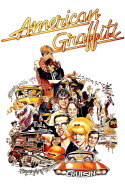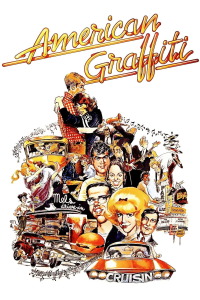
Review of American Graffiti (1973) by Brett C — 09 Feb 2014
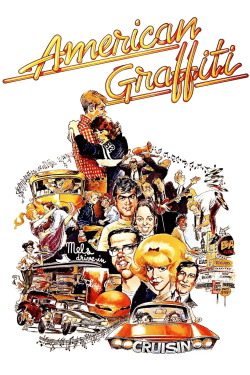
In this generation, when we think of George Lucas, we see Star Wars, Indiana Jones, THX, science fiction, and visual effects. What most people don't know is his little work on 1973 called American Graffiti. Pure Lucas fans have probably known about this film and have probably watched it. I came into this with excitement, it'll give us something fun with an amazing story, which is commonly found in all of his other films. Sadly after watching this a couple of times, it never created a huge impact on me and was sorely disappointed with it.
The film was written by George Lucas along with Gloria Katz and Willard Huyck. They have written a story that is centred around the culture and youth of the early 1960s. This was an interesting choice in year, because along with the film's story of the last night before heading off, it was also the time when the culture of the youth has started to shift to this more serious and mature take on things. Music, films and art during this time were becoming much more experimental, and was going in a direction that will forever change the perspectives of America's youth. American Graffiti is a story of change. How each character is handling the situation of become an adult and having responsibilities. Curt's story is definitely a highlight because it touches on the themes of change, responsibility, attachment to the past, unattainable love, and maturity. This is where I was truly having the most fun, as it was so entertaining to watch a man who is so stuck to the past because he knows it's safe and reliable. But also he was reluctant on leaving because he feels there is still something that he has missed out on and hasn't truly captured the full experience of his youth. It's as if he knew that ahead would be a bad road and this is the only opportunity he has left to suck all of this in. A lot of people can relate to his problems and those issues are still present in today's youth. We all know that after we graduate, things will start to change, not just us but also the environment that surrounds us. Teenage years in each generation is different and one can't predict how it would turn out next. This is why Curt, and also us the viewers, were so attached to the past as it seems to be a time where things were fun and we never felt more safer. Also that moment with the DJ was a great moment. Milner's story on the other hand was more as a sub plot, and is only present for a fun and hilarious ride, though others may see it differently as there could be more in the story between him and the young girl, like a clash of two cultures. My main issue with the film lies on the lack of an interesting story, aside from Curt and John's. There was never a point where I cared about the relationship between Steve and Laurie and to whatever was happening to both of them throughout the film lacked drama. It needed a bit more story or plot in order for me to empathise for these characters' personal intentions. I never felt it was clear on why he wanted to cheat on her in the first place, which had me thinking about it throughout the film. Terry's story about his desperation to be different and cool, was a let down. It never really taught me anything and the events that unfold was just not interesting. I never found the character hilarious or empathetic, instead I just felt pitiful for him. The film also doesn't have a central plot, which kind of bummed me out and found it a bit difficult to be excited for an ending. Also the climax of the film, the race, was so disappointing and there wasn't enough hype built up around it that it just came off as a forced attempt to show an action sequence. I thought it was gonna end great, with a shot from the plane looking down at the white car, but instead it adds a written narration filling up the screen detailing on what have become of them. I never thought that this was necessary, because it was already clear that the film wanted to say that it's important to move on and gain a sense of closure to this chapter of your life. The dialogue for this film is a hit and miss for me, as some moments felt natural and nostalgic and others just felt over the top and irritating to listen to. True, that this can also be in fault of the actor's ability to deliver it, like the actor who played Carol, but there were just times that felt a bit off and took me out of it.
The film was directed by George Lucas, and this was coming off his debut film THX 1138. Lucas wanted this film to be true nostalgia and really have us be immersed in the period. This is where I was a bit annoyed by this, as Lucas put so much emphasis on the nostalgia, that it kind of drives us away from the story from time to time. This was one of the reasons why I found it hard to care for the story of these characters. Lucas also didn't balance the film right. Normally a film would have a more concentrated story, with maybe a few subplots surrounding it but never to a point of main emphasis. The film should have put most of it's focus on Curt's story, as his is the one that truly meant something and the one that the audience is mainly rooting for, but instead the film juggles back and forth too frequently on others that we end up forgetting the development that was happening in the other story. The film also felt quite slow at times, but this mostly due to it's poor and non-engaging script, and Lucas could have trimmed the film around 20-30 minutes of it in order to move the film along at a better pace. If Lucas had put more focus on the film's main theme and repeatedly touching on it, then it would have been an entertaining film, and I would have forgiven the film for it's lack of driving plot. I also was disappointed with the director's execution of the race scene at the end, as he wasn't able to build any excitement on the build up and during the actual race. The film may feel accessible but once you get in, you don't take much out with you.
The film's cinematography was handled by both Jan D'Alquen and Ron Eveslage. This film and It Ain't Easy were the only films that they have worked on. The film's photography was average, as there was very little to praise about. The good aspects were that the film truly captures the period it was set in, along with the amazing production design, it looked truly authentic and beautiful.The colors truly pop, and it is very rare to see a shot in the film that felt depressing or dark, as Lucas wanted this film to stay with it's optimistic tone. The shots chosen didn't really show anything more of it's characters, as how the actors project them on the surface is pretty much it. The cinematographers just want to show what is needed in order to tell the story and not add anything stylistic or a sense of depth to it, which was quite disappointing.
The film doesn't consist of an original score but instead takes the soundtrack approach, which was a great decision. In order for Lucas to have us believe that it's the late 50s-early 60s, is to play the music that was popular during the period, and he has chosen some great tracks. Most are quite upbeat and campy, this is what gives the film the energy that prevented this form being a total disaster. There are very few moments in the film that doesn't contain a song playing in the background, almost like listening to the radio. Once a song ends, it's not long before it starts again.
The acting in this film was quite good, with most of them showing a little more than what is required in order to sell the role. All characters may look like stereotypical characters of that era but the actors make them feel grounded and relatable. They don't feel too distant from the youth of today. Richard Dreyfuss has always had this youth quality to him, and he shows it here. Dreyfuss shows this uncertainty ,that we have all felt when we were at his age, of the future and what lies ahead. He plays a man who wants to keep his youth as he gains comfort from it. His performance was definitely the best in this film. Ron Howard as Steve was fine, and so was Cindy Williams as Laurie. The chemistry between the two was believable and both have a youthful look which allowed their relationship to not seem too mature. Paul Le Mat was fun to watch as his clashing with Mackenzie Phillips was hilarious and for the most part fun. Charles Martin Smith was quite annoying to watch as I felt he was over the top and tries to be funny, but his comedic execution was kind of off.
I think this film would be more appreciated to the people who experienced this generation, as at the time of release, it come off as a photobook of such recalling the trademarks and unique aspects of that time period. I personally was disappointed with this film, I felt like this could have been more.
This review of American Graffiti (1973) was written by Brett C on 09 Feb 2014.
American Graffiti has generally received very positive reviews.
Was this review helpful?