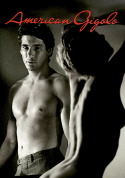
Review of American Gigolo (1980) by Jason M — 16 Mar 2010
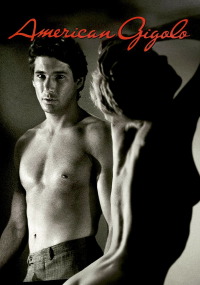
American Gigolo is probably writer-director Paul Schrader's most memorable film. Richard Gere is perhaps too well cast as a strutting, smug hustler brought low by his egotism and blindness to the reality of his life. The love story "redemption" centering around Lauren Hutton is pure front-office placation. The real subject of the film is exactly the sexy surfaces the story somewhat hypocritically pretends (but not too strongly) to condemn.
In fact, the film's most memorable sequences are both dedicated to hard-edged commodity glitter and have nothing to do with the love story. In the opening credits, Gere shops on Rodeo Drive then drives down Pacific Coast Highway. Deborah Harry loudly sings out to "Call Me" in the background, Gere smirks in the sunny breezes behind the wheel of his 450SL, while the camera lovingly caresses the bumpers and hub caps. In the famous dressing scene, Gere throws one exquisite jacket, shirt and tie after another on to his bed as he ponders the most effective combination. Both scenes are wonderful evocations of svelte narcissism, cheeky self-satisfaction made into an art.
To achieve these surfaces, Schrader owes a deep debt to cinematographer John Bailey, fashion designer Giorgio Armani and especially "visual consultant" (production designer) Ferdinando Scarfiotti, who is probably chiefly responsible for the film's famous "European" look. It also doesn't hurt that the story is almost exclusively limited to the sleeker parts of LA and Southern California-Beverly Hills, Westwood, Malibu, a side trip to Palm Springs, with a touch of Hollywood grunge thrown in for some kicks and kink. It all adds up to a creamy, pastel-tinged vision of LA as a show-biz Riviera, where class and style don't come from centuries of breeding, but can be purchased for the price of a designer shirt.
It is not too much of an exaggeration to suggest that the unsympathetic, vacant characters and ludicrous plotting are there to wear the clothes. Intentionally or otherwise, that hits at a truth about LA that makes the film stay in the memory (particularly since life in the city has changed little since it was made). It's not just the combination of the sleazy and the silky, the cooled-out camerawork gazing alternately at rot and luxury, but the film's realization that in LA, "How much?" is not just the beginning of a financial transaction, but the only question of value people understand.
This review of American Gigolo (1980) was written by Jason M on 16 Mar 2010.
American Gigolo has generally received mixed reviews.
Was this review helpful?