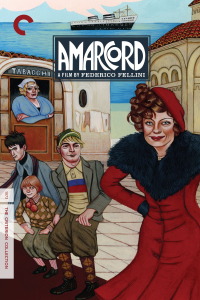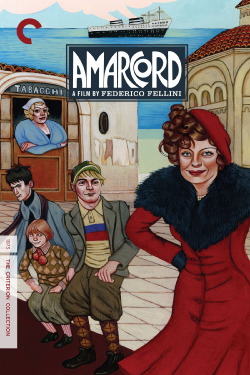
Review of Amarcord (1973) by Ryan H — 02 Mar 2010
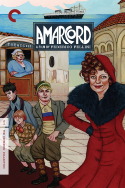
Not even Fellini was too good for a fart joke. Some of the humor caught me off guard so much that I would love to watch it again to really pick up on what he was trying to say about his childhood in his hometown of Rimini.
Fellini was born in 1920, and the movie takes place in the 30s. He shows the beginning of Fascism in his small town, but more importantly he shows the everyday lives of the townspeople and their traditions.
Everything feels dreamlike. His camera movements are swift, the colors are beautiful, and in a way Gilliam seems like a modern day Fellini. Everything Fellini does within this film is based on an idea.
The film goes from the puff balls floating in spring all the way to a marriage the very next year. In between are images of what life was like, and what they imagined life was like for things they didn't know.
The main character is Titta, but it's difficult to place him as the focus. Yes, we know him more than anyone else and follow him, but the main focus is on the fictitious town in which Fellini puts us.
This is without a doubt the most accessible film I have seen from Fellini. Something that films that want to introduce the audience to something brand new and personal usually bring in a character who is experiencing it for the first time as well.
To me, this is a cheap and easy way to move along a plot like that. Instead Fellini does what he does best, tells a story exactly how he wants. I would be surprised if the makers of Animal House wouldn't admit that they were highly inspired by Amarcord.
This review of Amarcord (1973) was written by Ryan H on 02 Mar 2010.
Amarcord has generally received very positive reviews.
Was this review helpful?