Review of Alita: Battle Angel (2019) by Hnestlyonthesly — 07 Oct 2019
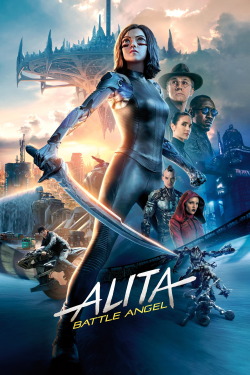
Alita: Battle Angel is the story of a utopian society where guns have been outlawed and regular people are paid to enforce the law by their corporate overlords at night, because the mechanized military force can’t be bothered and everyone else is too busy Ubering women home from the club to their doom.
The plot is fairly muddled: Alita doesn’t know if she wants to be a manic pixie dream girlfriend or a naïve cyborg daughter or a rebellious teenager or the leader of a sci-fi rebellion or a professional roller skater (sic). Which is fine, but it means that there are points when it seems like the movie is being drawn and quartered by romantic and action plots, like the moment when she’s lined up for the Big Game and she simultaneously gets phone calls from both the Doctor telling her to abandon her post and her boyfriend who needs her help in a completely different place. It’s easy to imagine that what the film intended was to show that Alita contains multitudes and wears different masks for different people, a bit of powering wish fulfillment here and an emotionally accessible boyfriend there, but in some sense Alita comes off as a little shallow and restless.
Christoph Waltz’s backstory is pretty shady, which is also fine–there’s something to be said for leaving the audience wanting more, creating drama through mystery. It’s unclear what his daughter’s deal was that required him to build her “fast legs,” or if he was just unwilling to live in a world where his daughter would have to–god forbid–wheel herself around like any other person with a mobility issue. Which brings up a point about disability in the year 2400: it certain seems like a lot of people who would otherwise just be heads and spinal columns are turning into enhanced bounty hunters for little or no money. The doctor’s moral objection to rocket ball racing don’t seem to be that hard and fast when Alita decides it’s the only way she’s going to be able to jog her amnesiac memory–even though it seems like the “demon” of his former involvement spawned his disgust.
If I were the nurse from this film, Dr. Ido’s assistant, I would be a little miffed. She had some lines and she clearly is helping keep the business afloat, but Alita kind of creepily avoids her in any scene where they’re together. She calls the doctor “dad” in front of her, snuggles up with him on the coach, under the nurse’s grossed out frown, without so much as a “hello” or a “thank you for playing a role in reviving me twice.”.
With an eye squarely on the ending of the film: it seems like Alita isn’t actually able to accomplish very much aside from her journey of self-discovery. At no point does it seem like she’s in danger of facing a competent foe. The lackeys of the villain are constantly depending on sub-optimal grunts to do their dirty work, which makes it a little surprising when they are able to score even a little scratch on the most advanced piece of (Martian?) weaponry in centuries. The villain relies on a form of hypnosis (which I find narratively boring) in order to project himself on the lower world. I know that this is an adaptation of a manga and that that magna exists as part of a certain aesthetic of sci-fi dystopias, but where I’ve seen it done best is in Rick Remender and Sean Murphy’s Tokyo Ghost, which for a number of reasons finds ways to transcend the clichés of the genre.
Tokyo Ghost, if I can get off track for a moment, still has the consumerist battle royale race car scenes, the man-to-man brawls, the journey of self-discovery, the empowered woman hero, and the anti-war critique, but it does not give itself over completely to those flashier elements of storytelling. It grounds itself in issues of environmental destruction and corporate oligarchy. So, I bring it up primarily to point to it as a path not taken in the conception of the original source material.
For a different perspective, Friend has always been a big proponent of “original sci-fi” movies and liked everything about this movie except all the scenes with the boy, who was terrible–this was constant critique whenever he saw the trailers. Wife seconded that by saying that at no point does he seem like a nice guy. He spends a lot of time creeping on a two-day old cyborg teenager, despite being old enough to drink alcohol with the owner of the race track. He cuts their dates short to do horrible things to innocent people on the streets. And he just generally spends a lot of time committing sins of omission, besides being a poor jumper.
Film in general seems like it was a bit of a mess, but no so outrageously stupid that you should avoid it. For more on uncanny valleys and the disappointing CGI check out the Imaginary Worlds podcast, unfortunately behind a Spotify paywall. Also look at Josh Spiegel’s take on “the pitfalls of sequel-building,” and take heed of calls punish high profile producers of the film.
This review of Alita: Battle Angel (2019) was written by Hnestlyonthesly on 07 Oct 2019.
Alita: Battle Angel has generally received very positive reviews.
Was this review helpful?