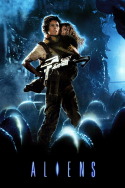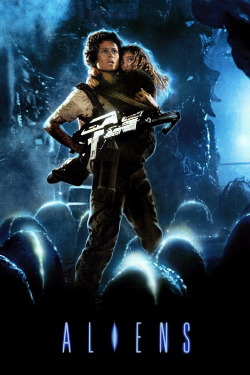
Review of Aliens (1986) by Olaolu A — 08 Feb 2014
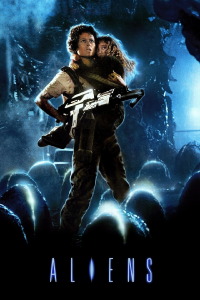
A masterpiece of the genre and a member of that oh-so rare group of sequels that improve upon the original rather than disgracing the memory of it. The 1979 original was an excellent sci-fi/horror hybrid that relied mostly on a slow build-up of tension and chilling atmosphere to keep viewers riveted; this time around, while the sense of atmosphere is still just as claustrophobic and overpowering as it was before, the original film's slow-burn approach has been replaced with a taut and relentless pace that doesn't allow for even a moment's relief. What James Cameron has done with this landmark 1986 picture is to take the core elements from the original film and use them as a blueprint for a superior action/adventure effort; in the process, he managed to craft what is arguably the best film not only in the franchise but also on his own personal resume as a filmmaker - and considering how immaculate his track record was and continues to be, that's saying something! To put it another way, if Ridley Scott laid the foundation with the original Alien, Cameron built the house with Aliens.
The first half hour of the film is relatively calm as the character of Ripley gets reestablished and new characters are introduced into the story. I'm not gonna delve too deeply into this part of the film since most people have seen the movie and already know what happens (besides, I don't wanna ruin it for those who somehow *haven't* seen it). Things move a little slowly during this segment but by no means is it boring or laborious and it effectively accomplishes the task of setting up the story. Once the locale shifts to planet LV-426 however, this is where we truly get into the meat-and-potatoes of the film and things really kick into high gear. Cameron turns up the intensity several notches as he serves up one suspenseful set-piece right after another with occasional breaks in the momentum to flesh out the characters and to allow the audience to catch its breath, if only for a second. As with the original Terminator, and all of his films thereafter, the director's knack for big, bold and energetic action sequences is very much on display here but unlike most of his contemporaries, Cameron is a meticulous craftsman. He understands how to film action in a way that quickens the pulse but isn't deemed incomprehensible by too many flash edits and quick cuts. This way, we can admire the skill and craft that's on display while still remaining on the edges of our seats.
As superior as Cameron's instincts are for creating and sustaining an adrenaline rush, he doesn't just leave it at that and forget about the individuals populating his films. Action and special effects may be his means but his ends have always been his characters and their stories, which is another reason why he's still considered to be amongst the elite in his genre (any doubts about his abilities to bring depth to the characters in his stories were shattered in 1997 with Titanic, easily the most dramatic of his films). Here, he takes time to nurture the most crucial human relationship, the one between Ripley and her adopted "daughter" Newt (knowing that Ripley lost her biological daughter so many years ago adds an extra element of poignancy to this dynamic). The fact that we have such a strong emotional investment in these two elevates this above the level of just a well made sci-fi/action flick and gives this film its beating heart. In fact, this relationship is a huge part of what drives the climax of the film as Ripley has to save Newt from the clutches of the queen alien, who herself is also a mother. The Newt/Ripley dynamic may be the emotional cornerstone of the film but Cameron doesn't skimp when it comes to the other characters either. Several of the Marines are given enough personality to escape the low orbit of being "just another grunt"; these aren't deep and complex individuals but they are likeable enough to capture our sympathies and get us on their side.
Hell, even the aliens themselves are given some depth and dimension; certainly we learn more about them here than we did in the first film. Their structure is similar to that of a typical insect colony (as one character observes at one point) although these creatures are deadlier and far more intelligent than an average bee. One important aspect of the original film that Cameron employs here is that less is better. Even though the aliens have multiplied this time, we still don't get a very good look at them until near the end and this enhances their menace. They make appearances at the just the right moments but then, like any seasoned predator, they retreat just as quickly as they show up. These creatures are implacable in terms of their threat but by no means are they the only villains in the story; we also get a human villain in the form of a slimy bureaucrat named Burke (Paul Reiser) who's only concern is with profit above all else including and especially the lives of his fellow crew members.
Sigourney Weaver is the only returning cast member from the original and her performance here is even more intense than it was before. The somewhat carefree nature of her character in the original has been replaced with a sense of urgency; the Ripley of this film is an emotionally and psychologically distressed woman who's found something to live for in protecting and caring for her adopted daughter. Weaver is rightfully credited with developing the first archetype for a female action-hero - or, more appropriately, action-heroine - and this film, more so than the other Alien films, was a huge part of establishing that reputation. Not only does she have an impressive physique but Weaver can kick ass alongside most male luminaries of the genre, including another Cameron regular, Arnold Schwarzenegger. Unlike most action stars however, Weaver has legitimate acting talent and it comes through during the more dramatic moments of the film, especially her scenes with Carrie Henn (the actress who played Newt). Weaver managed to earn a surprise Oscar-nomination for her acting here, while the film itself would earn several nominations for its impressive technical attributes. The rest of the cast is solid including past and future Cameron "regulars" like Michael Biehn (as the brave but stoic Corporal Hicks), Bill Paxton (who provides most of the film's comedic relief as Hudson), Jenette Goldstein (as the rather butch Vasquez) and Lance Henricksen (as the mysterious Android, Bishop). The aforementioned Paul Reiser is also surprisingly good as the slimy Burke (surprising considering the actor's reputation for playing likable but neurotic individuals).
For James Cameron, The Terminator may have been his calling card as a filmmaker (for me, it's my second favorite film of his next to this one), but with Aliens, he announced that he was here to stay. He would go on to achieve massive success in his career both creatively and financially (as of this writing, both Titanic and his most recent film, Avatar, stand side-by-side as the top box office champs) but as excellent as all of his films have been, for me at least, he hasn't quite surpassed what he was able to achieve with Aliens. Whether you wish to approach this as a science fiction film or an action/adventure - in fact, quite frankly, if you want to consider films of *any* genre or variety - you'll find that few offer as complete and as exhilarating of an experience as this one does. This isn't just a superior white-knuckle ride, it's a superior motion picture by any substantive standard!
This review of Aliens (1986) was written by Olaolu A on 08 Feb 2014.
Aliens has generally received very positive reviews.
Was this review helpful?