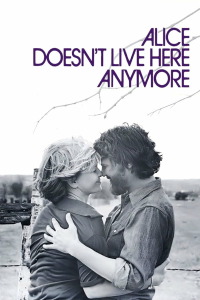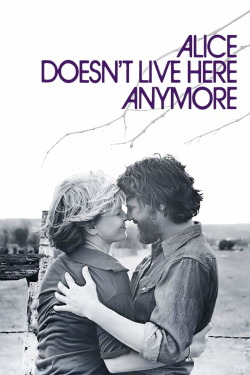
Review of Alice Doesn't Live Here Anymore (1974) by Laurence C — 16 Jul 2009
Delightfully humane-- if you showed me this film without telling me that the king of tense macho New Yorker stories directed it, I would never be able to guess who did. It's true : Scorsese is surprisingly comfortable at handling a story about an independent woman travelling across the Southwest to forge an identity for herself, beyond the expectations and demands of men. Back in 1974, the man had only directed three films, so perhaps it wasn't quite as surprising to the public as it it to me by now-- but after decades of gritty urban dramas about self-destructive men stuck in suffocating situations, we have come to expect something a least a bit formated about The Martin Scorsese Picture... and I do not mean that in a pejorative sense, not in any way.
Either way, Alice Doesn't Live Here Anymore remains a shocking opposite of his usual work, and if it isn't a perfect picture on its own, one can say it is very much the kind of film whose flaws cannot be dismissed because they are part of an intensely compelling whole. For starters, it is dominated by a phenomenal lead performance by Burstyn, whose vitality, conviction and vulnerability earned her a much-deserved Best Actress Oscar. She is onscreen for practically every scene, and she occupies the frame with an intensity that can't quite be described with words-- but inhabiting a woman whose dreams have failed, and then who finds in a tragic situation the opportunity to rekindle those aspirations (even if it means to give inhuman efforts in the proceedings) and reclaim her own freedom is miraculously free of any kind of miserabilism. It is very much one of my favorite performances of all time-- from Burstyn's body language and delivery, you can absolutely feel a connection with the dreamy avant-garde opening scene establishing how much her childhood fantasies have vanished over the last 27 years.
Built out of short scenes that cut abruptly for the most part and devoid of a common dramatic crescendo, the film has an interesting spin on the 'road trip' structure. Without spoiling any major plot point, Alice slowly comes to understand that she is done with having a man tell her what she oughts to be as a person, and she comes to accept that there is no knight in shiny armor (or Robert Redford) that is bound to save her. Her travels bring her to understand that there will always be somewhere (or someone) else to crave, and that a companion will always, always be necessary. The journey will last until you die-- and if she is able to make the world a better place for those that surround her (if they are willing to do the same), then perhaps this harrowing struggle has a purpose, after all. All of this is not a revolutionary statement, especially from a so-called feminist P.O.V, but it's made clear and it is delivered with a great deal of strangely impressionist honesty.
If the dialogues between Alice and her son Tommy sometimes feel a bit forced, and if the screenplay gives a feeling of floating uncertainty in its middle third, there are more than enough outstanding elements to counterbalance those minor flaws. Scorses brings his all, and with flourishes that range from the sublime aforementionned introduction to the stuffy, exciting atmosphere of the Diner at which Alice ends up working, the film still remains by today a lovely and captivating story made even more awe-inspired by its central powerhouse performance.
This review of Alice Doesn't Live Here Anymore (1974) was written by Laurence C on 16 Jul 2009.
Alice Doesn't Live Here Anymore has generally received very positive reviews.
Was this review helpful?