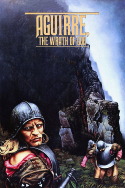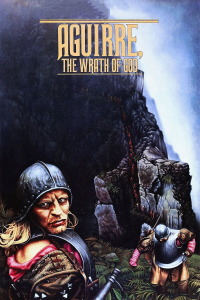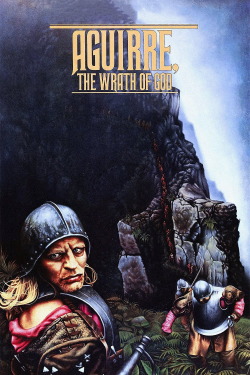
Review of Aguirre, the Wrath of God (1972) by Gilbertkz . — 21 Nov 2007
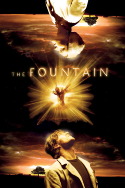
I really, really love haunting films - ones that can move me, trouble me, grab hold of me emotionally and just don't let go. The Seventh Seal does that, and The Fountain and Gates of Heaven do great jobs at it too.
Watching Aguirre, Wrath of God tonight for the first time, I had deja vu of those brilliant films, and forsee myself not being able to rid my memories of this film for a very long time. While nowhere near as polished, mesmerizing, or important as the previous flicks I mentioned, Aguirre, in all it's rough glory, still managed to move me to tears in the end and is just so hypnotic, so dreamlike, so fascinating that it's impossible to look away.
I had never heard of the film before reading it on Roger Ebert's 10 Best Films of All Time list. I had only ever seen two Werner Herzog films prior to that, Grizzley Man and Invincible, neither of which I was much impressed with.
But after seeing this flick, I wanna rush out and get all the damn Herzog films I can find. After the first two acts, I thought to myself "Very strong - but the third act really needs to blow me away".
Boy, did it ever. The final half hour is some of the best filmmaking I've seen in a long time. It's so hypnotic and trance-like and strangely beautiful that even as you watch at least a dozen people slaughtered on a boat, the film somehow feels.
..transcendant. I never thought I'd use that word in a film review, for fear of sounding like a terribly snobbish bastard. But if there was ever a flick to use it for, this is it. The movie will not be for everyone, for it moves slowly and at a glacial pace.
It's about a large group of Spainards conquering the new world. There's a mutiny, and a small band mostly led by the psychotic and dangerous Aguirre (there's occasional other leaders, but they don't last long), decide to journey down the river and through the forest to find El Dorado themselves.
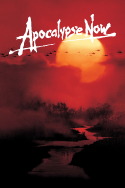
Obviously, this is a doomed expedition. The first passages of the film state that the priest's journal was the only thing recovered (not true, since this was made up for the film, but anyway). So unlike Apocalypse Now, which was inspired by this film, there is no final destination we anxiously await - we know these men and women are doomed to a brutal death, but we are nevertheless transfixed on the screen to see how it plays out.
Herzog films this movie like a documentary, which is perfectly at odds with the material - the film is dreamlike and, especially in the final passages, not to be taken literally (also reminding me of The Fountain's conclusion).
But it somehow works. We feel really there on the rafts, the makeshit boats, admist the trees with the natives throwing spears and arrows at us. We feel like that, because the filmmakers were right there in it.
The flick is rather famous for it's off screen perils - the cast and crew actually faced starvation and death in the real forest it was filmed in, and Klaus Kinski was threatened with his life by the director, who also threatened to shoot himself if anyone left the set.
This tension is apparent on screen in the performances of the actors and of the camera, and it elevates the screenplay (which, in all honesty, would be a really dull read). The first two acts, like I said, are interesting from a technical point of view, but I never really felt into the story.
During this hour, I thought about how cool it was to have the main character of the film be a villian, how most of the violence and deaths are offscreen, how most of the close ups leave room above the heads of the characters to suggest space between them and God, how the haunting music perfectly captures a mood of unease in you.
But I wasn't emotionally involved. That all changed in the last half hour. A man is taken to his death, and I felt something. His sister then storms right into the forest full of Indians, deciding to take her death with a newfound enemy rather than with Aguirre.
Then the fevers and hallucinations and starvation start to set in, and the priest is unable to write in his journals any longer. Which gives Herzog the freedom to craft the ending in such a metaphorical, spiritual, wonderful, shocking way that I was both stunned and had watery eyes by the time the credits rolled.
Scenes and events are no longer meant to be taken at face value - when a ruthless character has a spear thrown into his chest, he silently says "Long spears are growing in fashion", and then falls into the water.
During the final onslaught, as the main characters are slowly being murdered by the natives, they proclaim that what is happening isn't real - "This arrow isn't real", "This blood isn't real", "This rain isn't real".
It was such an operatic and strangely beautiful presentation of human nature, of how even in the face of death we can never accept what is actually happening....well, I got pretty choked up. And by the time we see the final shot of Aguirre alone on the boat, filled with dead bodies and monkeys, planning out his conquests that will never happen, I knew I had seen something special.
Now, that's not to say the movie is perfect. This review makes it sound like a 4.5 star film, which this is close to and might be on future viewings, but right now I can only give it 4 stars. It's just too rough to award it much higher - the blood is an orange colour, sound and sound effects often completely mismatch, the production values are dated and sometimes rather shoddy.
But it's the story and how it's told that matters most, and with such a beautiful film, it's hard to really complain about anything.
This review of Aguirre, the Wrath of God (1972) was written by Gilbertkz . on 21 Nov 2007.
Aguirre, the Wrath of God has generally received very positive reviews.
Was this review helpful?