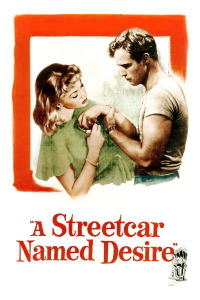
Review of A Streetcar Named Desire (1951) by Stephanie P — 26 Jan 2014
This movie is certainly not a classic for nothing. The acting is stunning (although, sorry Marlon, you weren't the best), the plot riveting and suspenseful, and the sights, sounds, smells and music of New Orleans in the 50s, brilliantly captured.
Adapted from Tennessee William's screenplay, it has almost a 'musical' feel about it and one keeps expecting Stanley, (Marlon Brando), to jump up on the kitchen table and burst into song (sadly this doesn't happen as he's too busy glowering menacingly or destroying things).
Stanley and Stella (Kim Hunter) are a working class couple living in a seedy part of town but not in the least bothered by the incessant noise, hustle and bustle and habitual punch ups that pop up throughout the film.
Stella's somewhat fragile and slightly mad sister, Blanche, (Vivien Leigh), comes to stay with them after being told (or forced?) to take a break from her 'school teaching job'. From the very start, Stanley is suspicious of Blanche and thinks she is hiding an inheritance from the former family estate.
Leigh is nothing less than brilliant as the neurotic, flouncy, age-obsessed Blanche, who appears to be living in a by-gone age/fantasy world and, rather mysteriously, has arrived with trunks and trunks of expensive gowns, wraps, stoles and jewelry (which pisses Stanley off even more) and leads him to 'investigate' Blanche's life prior to her move to New Orleans.
Although Brandon certainly looks the part in Streetcar - the muscly, attractive, sweaty, working class, 'man's man' - I found his acting just a teeny bit stilted and over-dramatic at times; I'm sure some people will want to kill me for that statement, but it's a risk I'm willing to take.
In any case, as the movie unfolds, Blanche's neuroses, fears, desperation and longing for her former youth escalate - as does Stanley's temper. There are no shortages of slanging matches and physical violence between the two (or, for that matter, between Stanley and Stella).
Blanche is horrified that her sister is married to such a brute and tries to convince her of his 'commonness'; "He's like an animal!", "there's something sub-human about him!" but, all to no avail; Stella loves him and seems to rather enjoy their rough and tumble relationship - this really irks Blanche.
As Blanche tries to convince herself that she's still young and eminently desirable, she descends further into a dream world. Meanwhile Stanley, through his ambiguous 'research', has 'discovered' that all that stuff about Blanche being a schoolteacher and carer to her elderly relatives was a bunch of hooey and becomes convinced, that in reality, her life was much seedier.
.....MUCH seedier. At this point, he ramps up his 'brutishness' and even though Stella tries to stop him, he continues to terrorize the ever-more loopy Blanche. I shan't give away the ending but let's just say the 'truth' about Blanche's former life could open to interpretation - and that's always a good thing in a classy movie.
I recommend Streetcar for its authentic New Orlean's ambience, remarkable and creative cinematography and, above all else, Leigh's no-holds-barred characterization of a woman slipping into the abyss of complete and utter madness.
You'll be captivated and impressed, that I promise.
This review of A Streetcar Named Desire (1951) was written by Stephanie P on 26 Jan 2014.
A Streetcar Named Desire has generally received very positive reviews.
Was this review helpful?