Review of A Streetcar Named Desire (1951) by Graeme H — 08 Aug 2013
"I've always depended on the kindness of strangers.".
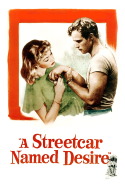
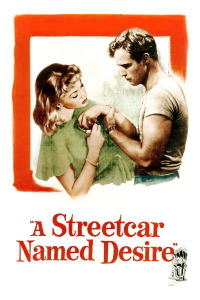
Marlon Brando revolutionized the term acting, inspiring such future actors as James Dean, Steve McQueen, Paul Newman, and Clint Eastwood. His first huge role in Hollywood was A Streetcar Named Desire, based on the famed Broadway play that Brando also starred in and directed by Elia Kazan, who would later reteam with Brando in the Best Picture winner On the Waterfront. But as for Streetcar Named Desire, it's disturbing and brutal... but filled with powerful and compelling performances that it's hard to turn away from the screen.
Blanche Dubois (Vivien Leigh), a Southern belle with a very bad reputation, hops on the streetcar named Desire and heads to New Orleans to visit her pregnant sister Stella (Kim Hunter), who's married to the drunken and violent Stanley Kowalski (Marlon Brando). Stanley believes Blanche to be an annoying girl who's only involved in using other men and is convinced that she has some inheritance money that truly belongs to Stella, especially when a baby is on the way. Trying to forget her troubled past, Blanche falls in love with Stanley's friend Mitch (Karl Malden), but eventually realizes that the past cannot be forgotten and the film leads to a disturbing and tragic ending that will never be forgotten in Hollywood cinema.
A Streetcar Named Desire is one of the most controversial movies ever made, and it had a hard time with the film censors of the day, especially with scenes of implied rape and talk of implied homosexuality and romantic scandals between a teacher and student. Due to the censors, these scenes were cut and left some audiences puzzled. Later on, the scenes were added back in, making A Streetcar Named Desire one of the most powerful films ever made.
While it's a great movie, I cannot recommend this film to everybody. Some will be disturbed by the disturbing and brutal performance of Brando (it's probably why he lost the Oscar to Humphrey Bogart in The African Queen), while others might find the film too long, slow, and depressing. But for me, depressing or not, A Streetcar Named Desire is a film that remains powerful after over 60 years of release.
The moody atmosphere of New Orleans is stunning, with black-and-white cinematography that stuns to the limit. There's also a super jazzy score that also delivers in the romantic tensions and powerful story. The direction by Elia Kazan is strong for a drama like this.
But what really makes A Streetcar Named Desire the great film it is is the powerful acting in the film. Vivien Leigh, who received top billing over Brando cause at the time, she was the more famous star, gives a performance reminiscent of her Scarlet O'Hara role in Gone With the Wind, but it's more chilling, disturbing, and insane. Leigh won an Oscar, and it was well-deserved. Kim Hunter, who played Stella, also delighted in the acting abilities as well, and also won an Oscar. When I first saw Karl Malden on the screen, I was unimpressed. I kept thinking he was in the wrong movie. I just kept thinking that's Patton's friend, and not Mitch. But as the film progressed, I could see why he won an Oscar for his role, cause his character goes from a used bum to a crazy and disturbing soul. But it's Marlon Brando as Stanley who really brings the acting down. I can see why he delighted the ladies of the day in this, with his tight T-shirt and good looks. My favorite moment with Brando, and it's the most famous, is where he goes out and hollers "Stella. HEY STELLA!" with his ripped up shirt making him look like Tarzan. But his brutal and disturbing expressions was a little too much for some, and he lost the Oscar to Bogart in The African Queen. For me, Bogart is always the better actor, and he deserved the win for that film. But is Streetcar was released in a different year, then I would have gladly given the award to Brando.
Last thing I have to mention is the ending. It's said that old films always have a happy ending, but it's not the case for Streetcar. Some characters end the film on a depressing note, particularly Leigh and Brando. The ending also leaves you to think, and those are sometimes the best endings. In the case of Streetcar, this thinking ending works and I applaud Kazan for not Hollyoodizing it to make it a happy note.
I can't recommend it to everyone, but for those who enjoy compelling and brutal dramas, then ride the streetcar and enjoy one of the most powerful, compelling, and controversial movies ever made.
This review of A Streetcar Named Desire (1951) was written by Graeme H on 08 Aug 2013.
A Streetcar Named Desire has generally received very positive reviews.
Was this review helpful?