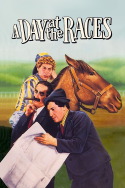
Review of A Day at the Races (1937) by Travis H — 10 Jul 2004
[font=Arial][color=darkorange][b]High and Low (Akira Kurosawa, 1963- 12th Kurosawa Film)[/b][/color][/font].
[b][font=Arial][/font][/b].
[font=Arial][/font].
[font=Arial][color=darkorange]I continue to be bewildered by the lack of respect for Kurosawa?s non-samurai films. Sure, Yojimbo, Sanjuro, and Seven Samurai are all fun to watch, but I have been more consistently impressed by his dramas. The reason Kurosawa?s dramas have never quite received the word of mouth of his samurai films may be because his films that have had the biggest impact on American cinema are his samurai films, a few of which have been remade in the United States.[/color][/font].
[font=Arial][/font].
[font=Arial][/font].
[font=Arial][color=darkorange]High and Low is structured like Ikiru, in that the film is broken up into two parts. The first part follows Mr. Gondo and the police searching for the boy and Gondo?s moral dilemma between choosing the money or the boy. The second part focuses mainly on the police?s search for the kidnapper.[/color][/font].
[font=Arial][/font].
[font=Arial][/font].
[font=Arial][color=darkorange]The first half of the film reminded me of 12 Angry Men since it is set in one location for the entire time (12 Angry Men in the juror?s room and High and Low in Gondo?s home). This leads to an interesting style of cinematography where Kurosawa favors medium shots over close-ups. This allows the audience to often see the entire room and all the people in it. Seeing all the reactions of the characters gives the film a tenser atmosphere and a sense of continuity. This also strengthens the performances by the actors, who with more screen time are able to delve deeper into their own characters. For example, later in the film, an ex-coworker comes to Gondo?s house and is forcefully told to ?get out?. But at the same time that this is happening in the background, we see the police?s reaction in the foreground.[/color][/font].
[font=Arial][/font].
[font=Arial][/font].
[font=Arial][color=darkorange]Overall, the second half of the film is just as impressive, with clues leading to the kidnapper giving away at a slow, but still thrilling pace. Only when they actually find the kidnapper and slowly track him down does the film loose momentum. Maybe it works showing the patience it takes to break a case, but it didn?t work for me.[/color][/font].
[font=Arial][/font].
[font=Arial][color=darkorange]Eventually the police do arrest the kidnapper and return a good portion of the stolen money to Gondo (the rest was spent on cocaine). In his cell the kidnapper demands to speak with Gondo, after refusing to speak to a priest. The discussion between Gondo and the kidnapper delivers a haunting look at the kidnapper?s psyche. While the scene is brief, it is effective, as is Kurosawa?s method of filming the scene so while one of them is talking, the reflection of the other is right next to his face. The final shot is one of the most frightening ever?the kidnapper suddenly throwing himself against the glass and yelping, two guards restraining him and putting him back in his cell, and the barricade separating Gondo and the kidnapper closing.[/color][/font].
[font=Arial][color=#ff8c00][/color][/font].
[font=Arial][color=darkorange]This isn?t second rate Kurosawa; in fact I would place it among his best films.[/color][/font].
[font=Arial][/font].
[font=Arial][/font].
[b][font=Arial][color=darkorange]Spider-Man 2 (Sam Raimi, 2004- 2nd Raimi Film)[/color][/font][/b].
[b][font=Arial][/font][/b].
[font=Arial][/font].
[font=Arial][color=darkorange]If there?s one thing that I can say I was impressed with in Spider Man 2, it would be that I never felt the filmmakers had run out of ideas and were making the film just off of the success of the first one. That?s a pretty big compliment considering that most sequels are made without a clear vision or a strong expansion of the original?s plot?just a rehash of the first?s material. Down the line could the Spider Man franchise run out of ideas? Most definitely, but if the directors and actors (if Maguire, because of back pain, was unable to be in this one and was replaced, this film wouldn?t have worked) stay on board, some good summer blockbusters are right down the road.[/color][/font].
[font=Arial][/font].
[font=Arial][/font].
[font=Arial][color=darkorange]Well, as far as comparing it to the original goes, I think I liked this one better. Characters were expanded upon, the villain was more frightening, and the battles more inspired. Unfortunately, two of the film?s core performances (Franco and Dunst) and much weaker than in the original and the dialogue is often cringe-worthy. Franco?s performance lacks any emotion, and Dunst seems uncomfortable with each delivery of a line. Both performances seem insipid compared to Maguire, who has delivered a string of great performances. Maguire has turned Parker/Spider Man into the most believable and sympathetic of all the comic book heroes. [/color][/font].
[font=Arial][/font].
[font=Arial][/font].
[font=Arial][color=darkorange]Most times, I dislike the cliffhanging endings that exist only to draw the audience back for a sequel, but this one was necessary to show the sacrifices that Parker and Watson are willing to take to be with each other.[/color][/font].
[font=Arial][/font].
[font=Arial][/font].
[b][font=Arial][color=darkorange]Jean de Florette (Claude Berri, 1986- 1st Berri Film)[/color][/font][/b].
[b][font=Arial][/font][/b].
[font=Arial][/font].
[font=Arial][color=darkorange]Jean de Florette is not an epic film in the sense that most people thing of the word ?epic?. It doesn?t have the large battles of a film like Lord of the Rings, or the gigantic disasters of Titanic, or the elaborate set design of Moulin Rouge. No, it doesn?t remind me of the modern ?epic?, it did however remind me of the films of David Lean, director of Lawrence of Arabia, Bridge On the River Kwai, and Doctor Zhivago. Like Lean?s films, Jean de Florette is filmed on a huge scale with beautiful locations, a morally complicated storyline, and when including Manon of the Spring, the film?s continuation, (which I haven?t seen, but will soon), reaches a four hour length (all of three mentioned Lean films have run times near or over three hours).[/color][/font].
[font=Arial][/font].
[font=Arial][/font].
[font=Arial][color=darkorange]There?s even one sequence that is worthy of a Herzog/ Kinski comparison. It comes in the scene where, in an overhead shot, Jean stumbles outside of his house in a maddened state praying for rain. As in Aguirre, the film focuses on the obsessions of the main characters?obsessions that lead to their demise, and eventually?for Jean?, death. The three main characters in Florette all have goals. Jean wants to start a successful farm and breed rabbits; Ugolin wants to grow carnations; and Cesar to help his cousin, Ugolin, achieve his goal. Yet, it is impossible for all three men to achieve their goals since they all depend on the other man?s failure. But these men with their proud, and sometimes arrogant, attitudes can?t remove themselves from the situations enough to realize they?re destroying the other man?s life. There are two particularly heart-breaking scenes. One is when Jean asks Ugolin if he can borrow his mule to haul water. Ugolin has begun to sympathize with Jean so he considers giving him his mule, but his uncle coldly dismisses the idea. Seeing how much that Jean has suffered, it?s painful to watch as Ugolin makes up an excuse of why he can?t borrow it. The other is the ending that left me begging for the continuation. As the wife and daughter (who bares a remarkable resemblance to the girls in Picnic at Hanging Rock with her eerie presence and cold stares) of Jean leave the farm, the daughter hears something of in the woods and goes to see what it is. She finds the two men opening up the water supply that they had hid from her father.[/color][/font].
[font=Arial][/font].
[font=Arial][/font].
[font=Arial][color=darkorange]An amazing film that has beautiful visuals, great characters, great storylines, and relevant themes and morals. An epic. [/color][/font].
[font=Arial] [/font].
[b][font=Arial][color=darkorange]Le Corbeau (Henri-Georges Clouzot, 1943- 1st Clouzot Film)[/color][/font][/b].
[b][font=Arial][/font][/b].
[font=Arial][/font].
[font=Arial][color=darkorange]Clouzot is the equivalent of Hitchcock in his home country (France), though based on this film I think their comparisons can only be taken as far as genre lines, because their styles aren?t very similar. Hitchcock is a more precise, stylized filmmaker compared to Clouzot who is more substance based and produces a messier product. Le Corbeau is a very good film, and Clouzot has a style that immediately drew me in, but it lacks that ?x factor? that keeps it from being great. It was an especially controversial film upon its release, so maybe it has lost its sense of urgency and relevancy overtime. Regardless, the execution by the director is always strong and it is an always engaging and interesting film. Since this is at its core a ?whodunit?, the constantly changing suspects are believable and well thought out.[/color][/font].
[font=Arial] [/font].
[font=Arial][color=darkorange][b]A Day at the Races (Sam Wood, 1937- 2nd Wood Film/ 8th Marx Brothers Film)[/b][/color][/font].
[center][color=darkorange][font=Arial][b]Chico: [/b]One dollar and you'll remember me all your life. [/font][/color][/center].
[center][color=darkorange][font=Arial][b]Groucho: [/b]That's the most nauseating proposition I ever had.[/font][/color][/center].
[font=Arial][/font].
[font=Arial] [/font].
[font=Arial][color=darkorange]I hadn?t seen a Marx Brothers film in a while when I wrote in my brief comments of Life of Brian, ?When at their (Monty Python?s) best in this film they surpass the best work of the Marx Brothers and Woody Allen (two of my favorite comedians)?. After seeing another Marx Brothers film, my memory was refreshed of comedic genius, and I can say that I was wrong. The Marx Brothers, while most of their films as a whole are inferior to Allen or Python, are the best pure comedians, and Day at the Races one of their better films.[/color][/font].
[font=Arial][color=#ff8c00][/color][/font].
[font=Arial][color=darkorange]Groucho plays?well?Dr. Hackenbush, although he is pretty much playing itself. His one-liners are as sharp as ever (Whitmore: ?Isn't it awfully large for a pill?? Groucho: ?Well, it was too small for a basketball?), as are his visual gags (his fast paced walk never gets old). The doctors? check-up on Emily, the book selling, and ?Thank yuh? scenes are all among their best moments. [/color][/font].
[font=Arial][color=#ff8c00][/color][/font].
[font=Arial][color=darkorange]But as a film it is the prime example of great comedy diluted by superfluous, and extremely tedious, musical numbers and subplots. At almost two hours it is too long for a film that is better suited for a 75-minute runtime. When I think back on most of the Marx Brothers? films, I seem to forget the musical numbers and just remember the best bits, so this one is bound to improve over time. My current ranking of their films: [/color][/font].
[font=Arial][/font].
[font=Arial][color=darkorange]1. Horse Feathers 2. The Cocoanuts 3. A Day at the Races 4. A Night at the Opera 5. Duck Soup 6. Monkey Business 7. Animal Crackers 8. Room Service (next entry I'll have my comments on this one)[/color][/font].
This review of A Day at the Races (1937) was written by Travis H on 10 Jul 2004.
A Day at the Races has generally received very positive reviews.
Was this review helpful?