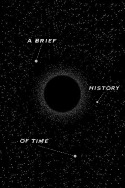
Review of A Brief History of Time (1991) by Josh G — 23 Dec 2008
A Brief History of Time, in its opening credits, claims to be based on the book of the same name by Stephen Hawking. It's an odd claim to make for a documentary, and one that's not entirely true. The movie isn't about the cosmological physics of the book -- at least not in its entirety. The film does tackle these subjects, albeit in a much more limited way, but also tells the story of Hawking's life.
It's a somewhat sugar-coated account of his life, as Ebert pointed out, in that it doesn't examine his failed marriage at all. But expecting A Brief History of Time to express every facet of its subject shows a pretty poor relationship with the work of director Errol Morris.
Morris has never been interested in showing the broad scope of a subject, so much as centering in on a specific facet of it and mining that area for all that it's worth. So it is that the narrative in the film isn't just about Stephen Hawking's life, but more specifically about Hawking's disease and how it affected his mentality toward his work.
While this thread is moving forward, there is a simultaneous description of different ideas that Hawking and his colleagues have come up with, the discovery and retooling of the concept of the black hole, the idea of the expanding universe and what it will mean for the chronology of time once the universe begins to enter its second stage: collapse, or "the big crunch" as Hawking calls it.
It can all seem to be very heady, but it's actually pretty simplistic and more of a theoretical discussion than a factual one. Which is probably just what Hawking loves. One of the people interviewed (I am totally in the dark on who anybody was in the movie) mentions that Stephen will debate anything, and he is especially fond of debating theology because you don't need to worry about bothersome things like facts and evidence.
It can seem as though A Brief History of Time is a straightforward tale about one man's life, but as with all of Morris' documentaries there is much more than meets the eye. The movie ends up being about the human struggle in general, about our place in the universe and our relationship with it. To quote Douglas Adams, although the film seems straightforward, on closer inspection it really is about "life, the universe, and everything".
And it's not just the deeper layers that provide entertainment for the viewer. The interview subjects all have wonderful anecdotes to share, the recounting of the many hardships in Stephen's life becoming more and more unbelievable and outstanding. And listening to Stephen's robotic voice is endlessly entertaining; not to be rude, but I loved hearing him talk in such a monotonous voice about how he was upset at having missed his birthday dinner of goose, which he was very fond of.
Stephen Hawking has led a remarkable life. Space and time are remarkable concepts. The film tackles both of them with a ferocity that is admirable. If it still feels slight, you may need to step back a moment to rethink what A Brief History of Time is really trying to accomplish and whether it can accomplish a history of time within a mere eighty minutes. This may not be Errol Morris' best documentary, but it is still a fantastic flick.
P.S. Seeing this now out-of-print film marks the final Errol Morris documentary that I have yet to see. I may be a bit of a Morris apologist by now, but I maintain that his films are consistently spectacular. So although my predispositions about Morris' work may have helped me to find more to enjoy here, I do believe that that influence is negligible because, again... his documentaries are brilliant.
Just thought I'd throw that out there.
This review of A Brief History of Time (1991) was written by Josh G on 23 Dec 2008.
A Brief History of Time has generally received very positive reviews.
Was this review helpful?